
Where to Go in Vancouver—and Which Sights Actually Fit Your Trip
Start with six prominent city options, then compare cost, weather and car-free access. Capilano, Lynn Canyon and Grouse Mountain are North Shore destinations.
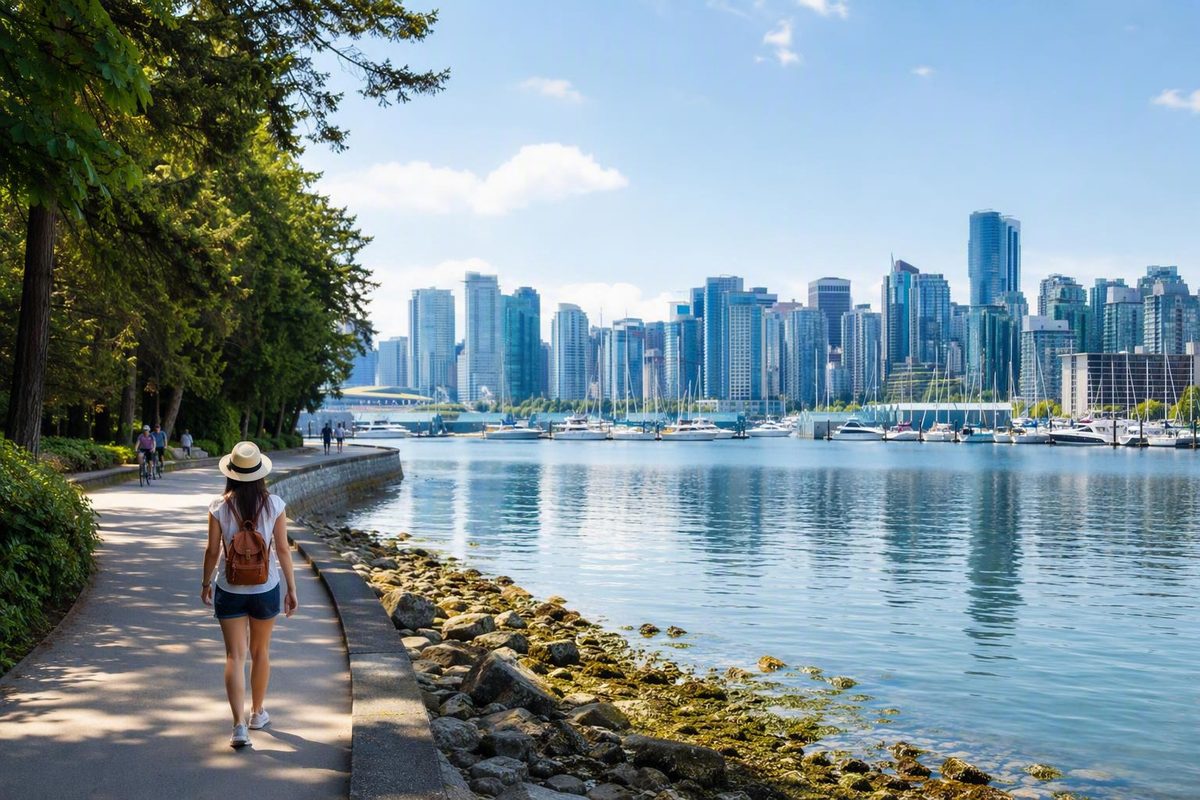
Vancouver rewards geographic discipline. A first-time visitor can combine a downtown waterfront, an urban forest, and a beach without spending the entire day in transit—but only when nearby places are grouped sensibly. Add a North Shore mountain or a ferry-dependent regional destination without accounting for connections, and a relaxed sightseeing day can become a transportation exercise.
The practical way to compare Vancouver Canada tourist spots is not to rank everything from “best” to “worst.” Start with location, choose the experience you want, and consider the total effort required to reach it. Stanley Park, Granville Island, Gastown, Canada Place, Queen Elizabeth Park, and Dr. Sun Yat-Sen Classical Chinese Garden recur across the supplied visitor guides. That repetition indicates broad visibility, not objective proof that any one place is essential.
Start Here: A Location-First Shortlist of Vancouver Tourist Spots
For a first visit, begin with six prominent options:
- Stanley Park for forest, shoreline, park landmarks, and the Seawall
- Granville Island for food, artisan studios, performance spaces, and False Creek
- Gastown for heritage architecture, shops, cafés, restaurants, and the Steam Clock
- Canada Place for harbor views, cruise activity, and a compact waterfront stop
- Queen Elizabeth Park for gardens and elevated views, with Bloedel Conservatory as a separate attraction
- Dr. Sun Yat-Sen Classical Chinese Garden for a focused cultural visit in Chinatown
These places are not interchangeable. Stanley Park can anchor a substantial outdoor outing; Canada Place may work as a shorter stop. Granville Island emphasizes food, arts, and waterfront browsing, while the Chinese Garden offers a more concentrated cultural experience. Their value depends on your interests, weather, pace, and route.
The most important geographic distinction is this: Capilano Suspension Bridge Park, Lynn Canyon, Grouse Mountain, and Lonsdale Quay are on the North Shore, not in the City of Vancouver. Squamish, Whistler, Victoria, and Butchart Gardens are farther away and should be treated as regional excursions.
The labels below—short stop, half-day anchor, and substantial excursion—are editorial planning categories, not fixed visit times. Weather sensitivity is also an editorial judgment based on how much of the experience is exposed or dependent on visibility.
Vancouver proper
| Spot | Neighborhood or municipality | Primary experience | Free or paid category | Setting | Weather sensitivity | Broad car-free access | Planning role |
|---|---|---|---|---|---|---|---|
| Stanley Park | Vancouver, beside downtown | Forest, shoreline, landmarks, Seawall | No general park admission; optional attractions and rentals may cost extra | Mostly outdoor | Mostly exposed | Walk, bus, bike | Half-day anchor |
| Granville Island | Vancouver, False Creek | Public Market, food, arts, shops, performance | Public areas can be browsed without admission; food, shopping, ferries, and events may cost extra | Mixed | Partly sheltered | Bus, bike, False Creek ferry | Half-day anchor |
| Gastown | Vancouver, downtown east | Heritage streets, architecture, dining, shopping | No admission to walk the neighborhood | Mostly outdoor | Partly exposed | Walk, bus, SkyTrain | Short stop or cluster component |
| Canada Place | Vancouver, downtown waterfront | Harbor views, architecture, cruise activity | Exterior public areas do not require attraction admission | Mostly outdoor | Mostly exposed | Walk, bus, SkyTrain | Short stop |
| Queen Elizabeth Park and Bloedel Conservatory | Vancouver | Gardens, viewpoints, indoor tropical conservatory | Park access has no admission; check current conservatory admission | Mixed | Park exposed; conservatory sheltered | Bus, walk | Half-day anchor |
| Dr. Sun Yat-Sen Classical Chinese Garden | Vancouver, Chinatown | Ming dynasty-style garden | Classical garden and adjacent public park have different admission arrangements | Mixed | Partly sheltered | Walk, bus, SkyTrain | Focused cultural stop |
| Science World | Vancouver, False Creek | Interactive science displays and exhibitions | Check current admission | Indoor | Comparatively sheltered | SkyTrain, bus, ferry, walk | Half-day anchor |
| Museum of Anthropology | Vancouver, UBC | Northwest Coast First Nations art and material from other cultures | Check current admission | Indoor | Comparatively sheltered | Bus | Half-day anchor |
The no-admission classifications for Stanley Park, neighborhood walks, Canada Place, Granville Island public areas, and Queen Elizabeth Park are supported by the supplied free-sightseeing guides; optional transportation, food, rentals, and attractions can still add costs. Queen Elizabeth Park and Bloedel Conservatory are separate visitor experiences, as are the ticketed classical garden and adjacent public park (local guide to Vancouver attractions).
North Shore
| Spot | Municipality | Primary experience | Free or paid category | Setting | Weather sensitivity | Broad car-free access | Planning role |
|---|---|---|---|---|---|---|---|
| Capilano Suspension Bridge Park | District of North Vancouver | Suspension bridge, Treetops Adventure, Cliffwalk | Ticketed attraction | Outdoor | Mostly exposed | Bus or shuttle; verify current service | Half-day or substantial excursion |
| Lynn Canyon | District of North Vancouver | Suspension bridge, forest, trails | No general admission | Outdoor | Mostly exposed | Bus plus walking | Half-day or substantial excursion |
| Grouse Mountain | District of North Vancouver | Gondola, views, dining, seasonal activities | Check current admission and activity charges | Mixed, with visibility-dependent outdoor elements | Highly visibility-dependent | Transit plus mountain access system | Substantial excursion |
| Lonsdale Quay | City of North Vancouver | Food, shopping, harbor and skyline views | Public waterfront and market setting; purchases cost extra | Mixed | Partly sheltered | SeaBus | Short stop or excursion component |
Capilano’s three named experiences and Lynn Canyon’s no-admission bridge-and-trail setting are documented in the supplied attraction and local guides. Current prices, trail access, reservations, and operating conditions require direct confirmation (Vancouver Attractions overview).
Regional excursions
| Spot | Area | Primary experience | Free or paid category | Setting | Weather sensitivity | Broad car-free access | Planning role |
|---|---|---|---|---|---|---|---|
| Squamish | Sea-to-Sky region | Mountain scenery and outdoor attractions | Mixed; check each destination | Mostly outdoor | Visibility-dependent | Intercity or organized transport | Substantial excursion |
| Whistler | Sea-to-Sky region | Mountain resort and seasonal activities | Mixed; check each activity | Mixed | Visibility-dependent | Intercity or organized transport | Separate full-day or overnight trip |
| Victoria and Butchart Gardens | Vancouver Island | Historic city and major garden | Mixed; check each destination | Mixed | Conditions affect outdoor portions | Ground transport, ferry, onward transport | Separate full-day or overnight trip |
Before fixing an itinerary, check current admission, hours, reservations, attraction-specific accessibility, transit or ferry schedules, and closures with the relevant operators. This is particularly important for trails, mountains, ferry connections, and waterfront transportation.
Downtown Waterfront, Gastown, and Chinatown: The Easiest Central Cluster
Canada Place, Gastown, and Chinatown make more sense as one central cluster than as three isolated checklist entries. The route suits a first sightseeing day, a limited cruise-stop window, or travelers prioritizing architecture, waterfront scenery, food, and cultural institutions without repeatedly crossing the city.
Begin around Canada Place, a downtown waterfront complex recognizable by five sail-like structures. Its exterior walkway includes historical plaques, while the surrounding waterfront provides views of harbor and cruise-terminal activity. Jack Poole Plaza and the Olympic Cauldron are nearby. Together, these stops offer a compact introduction to Vancouver’s relationship with the harbor (Viator’s Vancouver attraction overview).
Continue into Gastown. Its appeal comes from the streetscape rather than one major attraction: heritage buildings, cobbled streets, Victorian architecture, boutiques, cafés, restaurants, bars, and the Steam Clock. It works best as a browsing, architecture, and meal stop rather than a sequence of monuments to be completed quickly.
From Gastown, continue toward Chinatown, where a useful itinerary should include cultural interpretation rather than treating the district only as a photography backdrop. Dr. Sun Yat-Sen Classical Chinese Garden is a Ming dynasty-style garden. It is distinct from the adjacent public Dr. Sun Yat-Sen Park, so check which space you intend to visit before arrival.
The Chinese Canadian Museum is another cultural option. The supplied attraction source describes it as occupying three storeys and including a rooftop garden (Vancouver Attractions). Because exhibitions, admission arrangements, and operating details can change, confirm those directly before deciding the day’s sequence.
A sensible route follows this pattern:
- Canada Place and the harborfront
- Jack Poole Plaza
- Gastown architecture, the Steam Clock, and a food stop
- Dr. Sun Yat-Sen Classical Chinese Garden or the adjacent public park
- Chinese Canadian Museum, if its current hours and exhibitions fit your interests
This sequence is not a promise that every traveler can or should walk the entire route. Mobility, weather, construction, luggage, and time spent inside cultural institutions will affect what is comfortable. The planning advantage is simply that these places occupy one relatively compact central sector.
Stanley Park and English Bay: Vancouver’s Core Urban-Nature Day
Stanley Park is the strongest recurring urban-nature anchor in the supplied evidence. That does not make it an objective “best attraction,” but it does make the park a practical starting point for visitors who want Vancouver’s forest-and-waterfront character in one outing.
Stanley Park is a Canadian National Historic Site in Vancouver. Its landscape includes coniferous forest, rocky shoreline, wetlands, gardens, wildlife habitat, monuments, cultural features, and the Vancouver Aquarium. Visitors can choose among the Seawall, Lost Lagoon, Siwash Rock, the Hollow Tree, Beaver Lake, Prospect Point, First Nations art, and totem poles. The City of Vancouver provides a digital map and separate planning information for park landmarks, gardens, routes, and facilities (City of Vancouver’s Stanley Park guide).
The First Nations art and totem poles should be approached as more than decorative photo opportunities. The City connects these works with the stories of the land and its original peoples. Visitors seeking deeper interpretation should prioritize information from the relevant Nations and Indigenous-led institutions rather than assuming that a brief park stop supplies complete cultural context.
The most useful decision is not whether to “do” the entire park. It is whether you want a waterfront-focused route or an interior route.
Option 1: Waterfront-focused Stanley Park
Choose part of the Seawall and build the outing around shoreline views. Depending on your starting point and current route conditions, possible stops include:
- The totem poles and nearby cultural features
- Views across Burrard Inlet
- Prospect Point
- Siwash Rock
- A selected beach or an English Bay finish
Walking and cycling create different outings. Cycling increases the shoreline you can cover; walking leaves more time for individual viewpoints and detours. Bike rentals are available around Stanley Park, and the supplied transportation guide reports that Vancouver has more than 300 kilometres of designated cycling routes (Lonely Planet’s Vancouver transportation guide). Check current providers, park route rules, and detours before setting out.
For the overall route shape, use Vancouver Know’s guide to planning a Vancouver Seawall day. It frames the outing as a loop or one-way waterfront route rather than an endurance target.
Option 2: Interior park route
Choose forest, wetland, garden, and cultural features instead of maximizing waterfront distance. Lost Lagoon, Beaver Lake, wooded paths, gardens, monuments, and the aquarium can form a slower park day.
An interior route is not automatically simpler than a waterfront route. Current surfaces, gradients, maintenance work, and detours can alter the experience, so review the City’s map and notices before departure rather than relying on a fixed route description.
Finish at English Bay
English Bay works naturally with either version. It can provide beach time, a sunset-oriented waterfront finish, or simply an endpoint for a shorter Seawall segment.
This creates a useful release valve. If the park is taking longer than expected, skip distant landmarks and finish at the waterfront rather than forcing a complete circuit. Conditions and current route information should determine the final plan.
Granville Island and False Creek: Market, Arts, and a Scenic Ferry Ride
Granville Island is less a conventional single attraction than a district centered on browsing, eating, making, performing, and watching activity on False Creek. Its Public Market is the most recognizable component, but the wider area also includes artisan studios, specialty shops, theatres, workshops, restaurants, and performance venues.
That mix makes the destination flexible. Visitors can browse the market and waterfront without paying attraction admission, or spend more on meals, shopping, performances, workshops, and transportation. “Free to enter” does not mean that the overall outing will be cost-free.
Small False Creek ferries connect Granville Island with several downtown-area docks. Routes, fares, hours, and accessibility depend on the operator and should be confirmed before travel.
Granville Island also offers complimentary bicycle parking, one practical reason cycling can fit this stop. That fact does not establish rental availability, parking security, or route suitability, all of which require separate planning.
Avoid pairing Granville Island with a distant North Shore or regional excursion unless you have a specific reason to accept the additional transfers. Its natural companions are False Creek and Science World.
Science World is an indoor, family-oriented attraction with interactive science displays, changing exhibitions, and an OMNIMAX theatre. Verify the current program before planning around a particular exhibition or film (RUNVAN’s Vancouver attraction listings).
Version 1: Food-and-arts Granville Island
Build the outing around:
- Public Market browsing
- A meal or several smaller food stops
- Artisan studios and specialty shops
- A theatre, workshop, or performance if the current schedule aligns
- Waterfront time beside False Creek
- A ferry journey in one direction
This version rewards flexibility. Leave room for an appealing studio, shop, or food counter rather than imposing a minute-by-minute itinerary.
Version 2: Family or rainy-day False Creek route
Use a False Creek ferry as a scenic connection, then combine Granville Island’s covered market spaces with Science World. This is more weather-resilient than an all-outdoor route, but exposed transfers, ferry operations, queues, and attraction schedules can still affect the day.
The budget distinction is straightforward:
- No attraction admission: entering Granville Island and browsing its public areas
- Possible expenses: ferry fares, food, shopping, workshops, performances, parking, and Science World admission
Gardens, Viewpoints, and Museums Beyond Downtown
Several worthwhile city attractions sit outside the downtown peninsula. They justify the trip when they match a clear interest, but they should be grouped by geography rather than added casually to an already crowded downtown day.
Queen Elizabeth Park and Bloedel Conservatory
Queen Elizabeth Park is a no-admission city park with gardens, elevated viewpoints, picnic areas, and recreation spaces. It suits travelers who want a public viewpoint without building the day around a mountain or observation attraction.
Bloedel Conservatory is a separate attraction in the park area. The supplied attraction source describes its indoor tropical environment as containing exotic birds, koi, and more than 500 kinds of tropical plants. Confirm current admission, hours, accessibility, and operating conditions directly.
Together, Queen Elizabeth Park and Bloedel can form a coherent garden-and-viewpoint outing: outdoor gardens and views when conditions cooperate, followed by a sheltered conservatory visit.
VanDusen Botanical Garden
VanDusen is a more substantial garden-focused destination. RUNVAN describes it as a 55-acre site with more than 7,500 plant species (RUNVAN’s attraction listings). Because collections and visitor services evolve, verify current details with the garden before visiting.
Choose VanDusen when the garden is a central experience, not merely a quick add-on between distant neighborhoods.
UBC museums
The Museum of Anthropology at UBC presents traditional and contemporary Northwest Coast First Nations art alongside material from other cultures. Its campus location means it is better treated as a UBC anchor than as a quick downtown museum stop. Visitors should engage with the institution’s interpretive framework and current exhibitions rather than treating Indigenous works as a generic regional aesthetic.
Combining the two may be geographically efficient, but whether both fit depends on current opening hours, admission arrangements, and the depth of visit you want.
The Bill Reid Gallery, by contrast, is downtown and focuses on contemporary Indigenous Northwest Coast art. It can complement a broader culture-focused itinerary, but the supplied evidence does not support a complete side-by-side comparison with the Museum of Anthropology. Their locations and scales differ, so current exhibitions should guide the choice.
The planning trade-off is geographic:
- Pair Queen Elizabeth Park and Bloedel Conservatory for gardens, views, and a sheltered tropical stop.
- Treat the Museum of Anthropology and Beaty Biodiversity Museum as a UBC cluster.
- Use Bill Reid Gallery as part of a downtown cultural day.
Do not combine UBC, the North Shore, and several downtown attractions in one rushed route. Confirm attraction-specific admission, accessibility, exhibitions, and operating hours before departure.
North Shore Excursions: Capilano, Lynn Canyon, Grouse Mountain, and Lonsdale Quay
Capilano Suspension Bridge Park, Lynn Canyon, Grouse Mountain, and Lonsdale Quay are North Shore destinations. That distinction matters on a one- or two-day visit because crossing Burrard Inlet, waiting for connections, and reaching a forest or mountain attraction consumes time that could otherwise go to Stanley Park, Granville Island, or city museums.
Capilano Suspension Bridge Park
Capilano is a ticketed attraction built around three named experiences:
- The suspension bridge
- Treetops Adventure
- Cliffwalk
Its appeal is not simply “a bridge.” It packages several constructed experiences within one managed attraction. Published third-party bridge dimensions conflict, so consult the operator if those measurements matter to you.
Lynn Canyon
Lynn Canyon offers a no-admission suspension bridge and a public forest-trail setting. It should not be understood merely as a free replica of Capilano. The experience is shaped more heavily by current trail access, the route selected, and outdoor conditions.
No admission does not mean no expense. Transportation, food, and equipment can still add costs, nor does free access guarantee a particular crowd level or trail experience.
Capilano versus Lynn Canyon
| Consideration | Capilano Suspension Bridge Park | Lynn Canyon |
|---|---|---|
| Admission | Ticketed | No general admission |
| Core setting | Managed attraction | Public nature setting |
| Main experience | Bridge, Treetops Adventure, and Cliffwalk | Bridge and forest trails |
| Planning emphasis | Tickets, reservations, and operating details | Access, trail conditions, weather, and route selection |
| Best fit | Visitors wanting multiple constructed experiences together | Visitors prioritizing public forest and trail time |
| Main trade-off | Added cost and itinerary commitment | Greater dependence on outdoor conditions and route planning |
Neither is universally better. Capilano may suit someone who wants a packaged attraction with several components. Lynn Canyon may suit someone who prefers a public forest setting. Mobility and accessibility requirements should be checked at the attraction level rather than inferred from these broad descriptions.
Grouse Mountain
Grouse Mountain is a mountain attraction with gondola access, views, dining, and seasonal activities. Weather and visibility can materially change the visit, while current activities and access arrangements vary.
Do not plan around an optimistic headline journey time. Account for travel to the departure point, waiting, connections, the mountain access system, and the return trip.
Lonsdale Quay and the SeaBus
Lonsdale Quay can serve as a food, shopping, or waterfront stop after crossing Burrard Inlet by SeaBus. It works particularly well at the beginning or end of a North Shore day because the crossing itself provides harbor and skyline views.
Supplied publications describe the SeaBus crossing as approximately 12 minutes and 15 minutes, respectively; neither figure represents total door-to-door travel time (Lonely Planet, Destination Vancouver). You must still reach Waterfront Station, wait for departure, disembark, and make any onward connection.
Destination Vancouver’s itinerary, updated in March 2026, identifies SeaBus from Waterfront Station and bus 236 for continuing to Capilano. Treat this only as a planning lead: confirm current routes, fares, timetables, and service notices with the transit operator.
For a short Vancouver visit, the North Shore is a substantial outing that competes directly with city sightseeing time—not a minor add-on.
Choose by Budget, Weather, and Travel Style
A location-first plan becomes easier when filtered through practical constraints. Budget, forecast, mobility requirements, and group interests often provide a clearer answer than generic attraction rankings.
Free or no-admission shortlist
Consider:
- Stanley Park
- Canada Place exterior areas
- Queen Elizabeth Park
- Vancouver beaches
- Gastown and other neighborhood walks
- Granville Island public areas
- Lynn Canyon
These places do not charge general admission for the basic public experience described here, according to the supplied free-sightseeing guide (free things to do in Vancouver). Transit, parking, bike rentals, food, shopping, and optional attractions can still cost money.
Rainy-day or weather-resilient shortlist
Consider:
- Science World
- Bloedel Conservatory
- Granville Island Public Market
- Museum of Anthropology
- Beaty Biodiversity Museum
- Bill Reid Gallery
- Chinese Canadian Museum
“Weather-resilient” is more accurate than “rainproof.” Getting to these places may involve exposed walks, while transportation and operating changes can still affect the plan. Granville Island also combines covered and outdoor spaces rather than functioning as one fully enclosed attraction.
Family-oriented shortlist
A manageable family plan might combine:
- Science World
- Bloedel Conservatory
- Granville Island
- A selected portion of the Stanley Park waterfront
Do not assume that a full Seawall circuit, a long museum sequence, or a mountain trail suits every family. Select a limited route based on current facilities, transportation, and the needs of your group.
Culture-focused shortlist
Prioritize:
- Museum of Anthropology
- Bill Reid Gallery
- Chinese Canadian Museum
- Dr. Sun Yat-Sen Classical Chinese Garden
These institutions can provide more substantive context than using Chinatown, Gastown, or park artworks solely as photography settings. Examine current exhibitions and interpretive programs before deciding which aligns with your interests.
Scenery-focused shortlist
For no-admission or low-commitment scenery, consider:
- Queen Elizabeth Park
- Stanley Park
- English Bay and other Vancouver beaches
- Canada Place and the downtown waterfront
- False Creek
- Lonsdale Quay waterfront
Paid scenery experiences may include Grouse Mountain, observation attractions, gondolas, or seaplane sightseeing. Those options offer different perspectives but add costs and are more dependent on visibility.
Mountain viewpoints, gondolas, beaches, suspension bridges, aerial experiences, and outdoor trails are especially exposed to changing conditions. Keep a sheltered alternative available instead of making every day depend on an outdoor reservation.
Visitors with limited mobility or specific accessibility requirements should consult official attraction and transit information. The supplied evidence supports broad car-free access across the region, but it does not establish the suitability of every trail, bridge, beach, heritage property, ferry dock, or attraction.
Vancouver Attractions also advertises tiered savings for bundles of participating attractions. A discount is useful only when every attraction fits your itinerary. Check eligibility, restrictions, comparison prices, fees, and cancellation terms before buying; do not build an unrealistic schedule merely to reach a larger advertised percentage.
One-, Two-, and Three-Day Plans Without Unnecessary Backtracking
Central Vancouver is generally practical without a rental car. Walking, cycling, buses, SkyTrain, SeaBus, and False Creek ferries can connect the principal clusters. The right mode depends on weather, luggage, mobility, fare rules, and where you stay.
If you have not selected accommodation, start by choosing a Vancouver neighborhood base. A well-connected base can reduce repeated cross-city journeys before sightseeing begins.
One day: central waterfront, Gastown, and Chinatown
Use Canada Place as the opening anchor, then continue through Gastown and into the Chinatown cultural area. Choose one substantial cultural visit rather than trying to enter every institution.
A workable sequence is:
- Canada Place waterfront
- Jack Poole Plaza
- Gastown streets and a food stop
- Dr. Sun Yat-Sen Classical Chinese Garden or Chinese Canadian Museum
- Either Granville Island by transit or ferry or a relaxed downtown waterfront finish
The final choice depends on current opening hours, ferry operations, conditions, and your pace. If the cultural visit runs long, skip Granville Island and preserve it for another day.
One day: Stanley Park and English Bay
Make Stanley Park the day’s anchor:
- Enter from the downtown side
- Select a Seawall segment rather than assuming a full circuit
- Choose a few landmarks, such as the totem poles, Lost Lagoon, Prospect Point, Siwash Rock, or an interior feature
- Finish around English Bay if conditions and energy allow
A bike can expand the route, while walking supports a slower, more selective outing. Check current route direction, detours, rental arrangements, and park information first.
Two days: city highlights without rushing
Day one: central and False Creek
- Canada Place
- Gastown
- One Chinatown cultural institution
- Granville Island
Day two: park plus one secondary anchor
- Stanley Park and a selected Seawall segment
- Then either Queen Elizabeth Park and Bloedel Conservatory or one museum choice
Do not assume that both Queen Elizabeth Park and a UBC museum will fit comfortably after a substantial Stanley Park visit. Choose according to conditions and interests.
Three days: add one focused expansion
Use the first two days for the central clusters above. On day three, choose one:
- UBC museums: Museum of Anthropology, Beaty Biodiversity Museum, or a carefully chosen combination
- Garden and conservatory outing: Queen Elizabeth Park, Bloedel Conservatory, and possibly VanDusen if current schedules and your pace support it
- North Shore excursion: Lonsdale Quay plus Capilano, Lynn Canyon, or Grouse Mountain
Do not try to fit all three expansions into one day. They point in different directions and demand different types of attention.
For a broader transportation framework, see Vancouver Know’s guide to experiencing Vancouver without a car. Use walking for compact central clusters, transit for cross-city connections, False Creek ferries for Granville Island, and SeaBus for the North Shore.
Keep regional destinations outside the core itinerary
Bowen Island, Nanaimo, Squamish, Whistler, Victoria, and Butchart Gardens are regional excursions. They require separate transportation planning and substantial time.
Victoria is particularly easy to underestimate. The standard route involves reaching a ferry terminal outside downtown Vancouver, completing the ferry crossing, and arranging onward transportation from the island terminal. Butchart Gardens introduces another destination and transfer into that island itinerary. Whistler likewise requires significant travel along the Sea-to-Sky corridor. Neither should be treated like an ordinary Vancouver neighborhood attraction.
Before departure, verify:
- Official opening hours and last entry
- Current admission prices, taxes, and fees
- Timed-entry or reservation requirements
- Attraction-specific accessibility
- Bus, SkyTrain, SeaBus, ferry, and shuttle schedules
- Weather and mountain visibility
- Trail and bridge access
- Seasonal closures and maintenance
- Bike-route or Seawall detours
- Current exhibitions, performances, and special events
Can I visit Vancouver’s main tourist spots without renting a car?
Yes. Most central sights can be organized without a rental car. Downtown, Gastown, Canada Place, Stanley Park, False Creek, Granville Island, and several museums can be connected by walking, cycling, buses, SkyTrain, and small ferries. SeaBus extends a car-free itinerary to Lonsdale Quay and onward North Shore connections.
A car may be useful for particular regional excursions, but it is not automatically faster once traffic, parking, and one-way sightseeing routes are considered. Build each day around geographic clusters and confirm current transit information.
Which Vancouver tourist spots have no admission charge?
Common no-admission options include Stanley Park, Canada Place’s exterior areas, Queen Elizabeth Park, Vancouver beaches, Gastown and other neighborhood walks, Granville Island’s public areas, and Lynn Canyon.
That does not make the entire day free. Transit, parking, bike rentals, food, shopping, performances, and optional attractions may add costs. Bloedel Conservatory, Science World, museums, and Capilano Suspension Bridge Park have separate admission arrangements that should be checked before visiting.
What is the difference between Capilano Suspension Bridge Park and Lynn Canyon?
Capilano is a ticketed, managed attraction featuring its suspension bridge, Treetops Adventure, and Cliffwalk. Lynn Canyon is a public nature setting with a no-admission suspension bridge and forest trails.
Choose according to the experience you want rather than looking for a universal winner. Capilano packages several constructed attractions together; Lynn Canyon requires more attention to route choice, outdoor conditions, and current access.
Are Grouse Mountain and Capilano Suspension Bridge in Vancouver?
They are in the District of North Vancouver on the North Shore, not in the City of Vancouver. Both are commonly included in Vancouver-area visitor guides because they can be reached from the city, but each requires a separate journey across Burrard Inlet or by road.
Treat either as a substantial excursion on a short visit. Include waiting and connection time rather than relying on a quoted vehicle, ferry, or transit segment.
How many days should I allow for Vancouver tourist spots?
There is no universal minimum. One focused day can cover a central cluster or a selective Stanley Park outing. Two days allow one city-centered day and one nature- or culture-oriented day. Three days create room for one expansion such as UBC, a garden outing, or the North Shore.
Allow more time if Victoria, Whistler, Squamish, Bowen Island, or Nanaimo matters to you. Those destinations compete with Vancouver sightseeing rather than fitting neatly around it.
For a first trip, choose one central cluster, one major outdoor or cultural anchor, and at most one North Shore or regional expansion. A well-grouped car-free plan will usually be more useful than a long attraction checklist. Verify live operating, transportation, weather, and access details before departure.