
Use the Seawall as the Spine of the Day
Choose one section, then add one place to linger and a return plan. A one-way walk often works better than a loop because it ends somewhere useful.
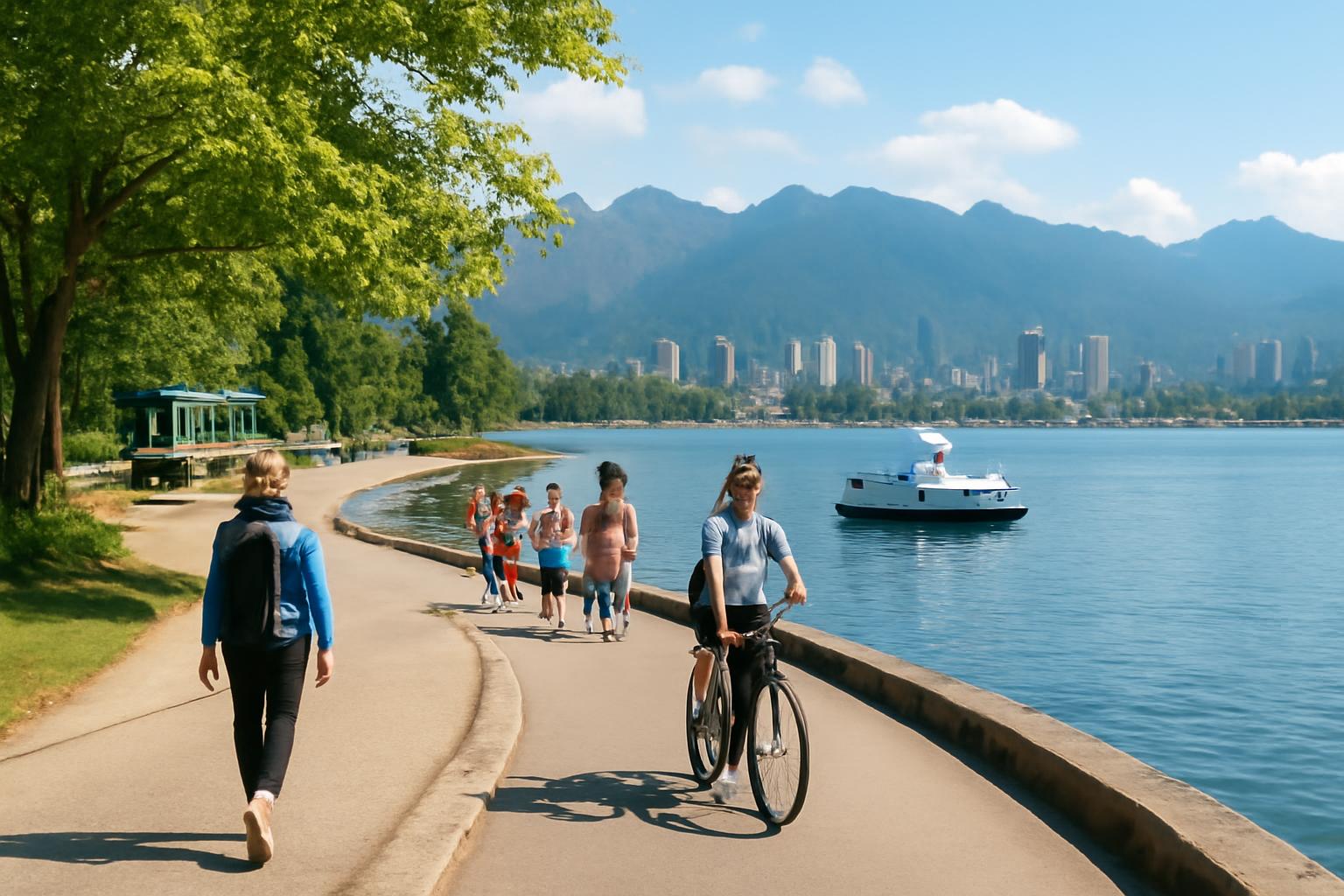
A good Vancouver seawall day is built around one question: do you want a loop or a one-way walk? Once you answer that, the rest of the day becomes easy to arrange. The seawall works best when it is the spine of the outing, not one piece in a scattered schedule.
The simplest version is a walk, a stop, and another walk.
That structure keeps the day from feeling overplanned. The seawall gives you the movement and the view; the stops give you the chance to reset before the next stretch. You do not need much more than that for a satisfying day.
If you want to make the day feel calmer, choose one place to linger instead of trying to break the walk into too many tiny pieces. The seawall rewards steady pacing more than constant stop-and-start energy.
That structure keeps the day from feeling overplanned. The seawall gives you the movement and the view; the stops give you the chance to reset before the next stretch. You do not need much more than that for a satisfying day.
Start with one section
Do not try to cover the whole waterfront just because it looks continuous. Pick one section that fits your energy level and the rest of the day will feel much better.
If you want a relaxed day, choose a shorter section and add a café or meal stop nearby.
If you want a more active day, choose a longer section and keep the rest of the plan light.
The main point is to let the waterfront set the pace. If you rush the route, you lose the reason to do it. If you overbuild the day around it, the walk starts to feel like an obligation instead of the highlight.
That pacing also helps if the weather changes. A route that is already simple is easier to shorten or extend without losing the shape of the day.
Keep the route directional
The seawall is easiest to enjoy when you know where it starts and where it ends. A one-way route is often better than a loop because it lets you finish somewhere useful instead of walking just to get back to where you began.
That matters if you are:
- tired from travel
- carrying a day bag
- planning dinner afterward
- trying to keep the day simple in mixed weather
The route should help you, not test you.
That is why the return plan matters as much as the walk itself. Knowing how you will finish lets you enjoy the middle of the day without thinking about the logistics every ten minutes.
It also makes it easier to pair the walk with lunch or dinner later, because you are not saving all of your energy for the last stretch.
What to pair with the walk
The seawall works best with one of three things:
- a neighborhood breakfast before the walk
- a lunch stop after the walk
- a short transit ride to a second district afterward
That keeps the day from becoming a pure exercise session.
What to bring
Bring a light layer, water, and shoes you can walk in comfortably. The waterfront can feel cooler than the inland parts of the city, especially if the weather changes during the day.
If you want the day to feel easy, keep your bag small. A seawall day is better when you are not dragging extra stuff around.
Common mistakes
The biggest mistake is trying to make the seawall day do too much. One good stretch is enough.
The second is ignoring the return plan. If the route ends somewhere awkward, the day loses its rhythm.
The third is assuming you need to walk farther just because the path exists. A shorter, well-paced seawall day is often better than a long one that leaves you tired before dinner.
If you remember only one thing, remember that the seawall is the main event. Everything else should support the walk, not compete with it.
That is the easiest way to keep the outing calm. Once the waterfront has a clear role, the rest of the day falls into place around it instead of fighting it.
If you want the day to feel complete, let the seawall be the reason you went out and let the rest of the stops support that decision.
That keeps the outing easy to understand and easy to enjoy.
That is the easiest way to keep the outing calm. Once the waterfront has a clear role, the rest of the day falls into place around it instead of fighting it.
The third is treating weather as an afterthought. On the water, weather is part of the routing decision.
If you want the city to stay easy after the walk, start with how to choose a Vancouver neighborhood base. If you want a car-free version of the same trip style, see how to experience Vancouver without a car.