
How to See Vancouver in One Day Without Racing Across the City
Treat Stanley Park, Granville Island, the central waterfront, and Gastown as a connected menu rather than a checklist for a rewarding day trip.
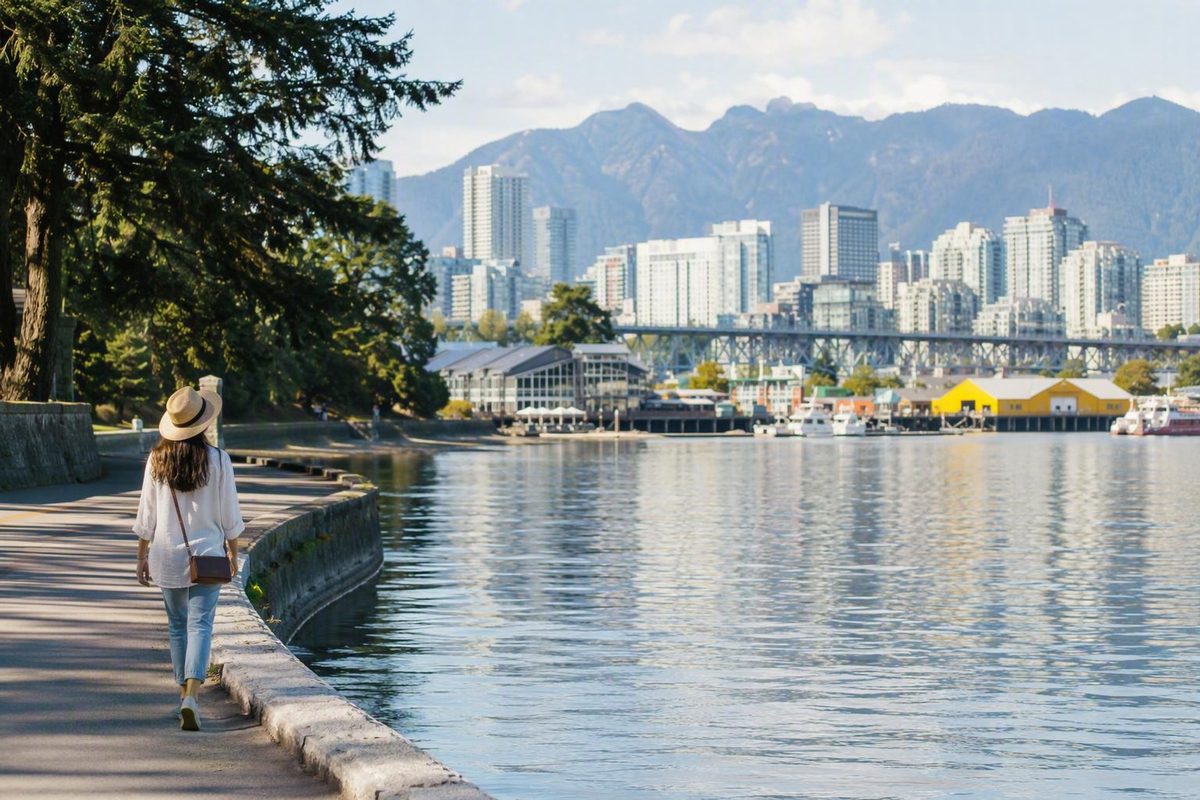
A rewarding day trip to Vancouver, Canada, is possible if you treat Stanley Park, Granville Island, the central waterfront, and Gastown as a connected menu rather than a checklist.
For most first-time visitors, the practical sequence is:
downtown waterfront or Canada Place → Stanley Park → Granville Island → Gastown if time remains
Reverse the order when Granville Island’s current business hours or the day’s weather make an early market visit more important. In either direction, a combination of walking, cycling, transit, and a False Creek passenger ferry is generally more practical than repeatedly moving a car.
The central planning rule is simple:
- With about six usable sightseeing hours, choose two core areas.
- With eight to ten usable hours, combine Stanley Park and Granville Island with one compact downtown segment.
- With twelve usable hours, add depth rather than leaving the city.
Here, “usable sightseeing hours” means the time after arrival and luggage or parking tasks, ending at the cutoff when you must leave the final attraction. Airport, cruise, rail, bus, ferry, border, and boarding contingencies sit outside that sightseeing window.
Related: Experience Vancouver Without a Car, but Plan by District.
Start With Usable Hours, Not the Length of Your Trip
This guide covers a day trip into and within Vancouver, not excursions departing from Vancouver. Victoria, Whistler, Squamish, Vancouver Island, and other regional destinations require different itineraries.
Calculate your sightseeing window in two steps:
- Determine when you can realistically begin sightseeing after arrival, local transportation, luggage storage, parking, ticket collection, or bicycle pickup.
- Determine the latest time you can leave your final attraction while still meeting your return connection or other fixed obligation.
The period between those two points is your usable sightseeing time. A nominal 12-hour visit might yield only eight hours in the city after airport or terminal transfers. Someone already downtown may be able to use nearly the entire day.
One day is enough for a selective introduction, not comprehensive coverage. Vancouver also has museums, beaches, gardens, distinct neighborhoods, and regional excursions. One broader itinerary recommends at least three full days for that wider scope, illustrating how quickly the options expand beyond a central one-day route. The Emerald Palate’s multi-day Vancouver guide provides that broader context.
Use the following framework as an editorial planning guide rather than a guarantee:
| Usable sightseeing time | Realistic scope |
|---|---|
| About 6 hours | Choose two core areas |
| About 8 hours | Make Stanley Park and Granville Island the anchors; add one brief downtown segment only if transfers run smoothly |
| About 10 hours | Combine Stanley Park, Granville Island, and a compact waterfront or Gastown stop |
| About 12 hours | Add a longer park visit, more Seawall time, or a neighborhood meal rather than a distant destination |
A “core area” is more than a photograph. Stanley Park can involve bicycle collection, route-finding, waterfront stops, and equipment return. Granville Island can include the Public Market, lunch, shops, studios, and ferry access. Each can absorb several hours once movement and pauses are included.
If you arrive late, remove optional stops. Do not try to recover lost time by eliminating every break, assuming an immediate ferry departure, rushing a meal, or leaving too little time to return a bicycle. The cutoff for leaving your final attraction should remain fixed even when the sightseeing plan changes.
International visitors must separately verify current passport, visa, eTA, customs, border, and return-entry requirements with the relevant government authorities.
The Balanced 8-to-10-Hour Vancouver Route
For a first visit with eight to ten genuinely usable sightseeing hours, this is a practical route:
- Downtown waterfront or Canada Place
- Stanley Park
- Granville Island
- Gastown, if time remains
This is not an objectively ideal day for every traveler. It is a planning recommendation based on the way these central areas can be grouped without repeated cross-city movement.
The detailed allocations below are flexible editorial blocks. They incorporate source-backed estimates of about one hour for a low-stop Stanley Park bicycle circuit and about two hours for an introductory Granville Island visit, while adding time for bicycle logistics, food, waiting, and transfers. A car-free one-day account emphasizes that the one-hour park estimate excludes exploration and photo stops. Wayfaring Kiwi’s Vancouver itinerary documents that distinction.
| Planning block | Suggested allocation | What it covers |
|---|---|---|
| Waterfront orientation | 30–45 minutes | Canada Place, harbour views, and movement toward Stanley Park |
| Stanley Park | 2–3 hours | Selective cycling or walking, stops, and bicycle pickup and return when applicable |
| Stanley Park–Granville Island connection | 45–75 minutes | Bike return, navigation, walking or transit to False Creek, and possible ferry waiting |
| Granville Island | About 2 hours | Public Market, lunch, shops, studios, and waterfront browsing |
| Gastown or waterfront finish | 45–75 minutes | A short neighborhood walk or waterfront return |
| Unscheduled flexibility | 45–90 minutes | Queues, meal overrun, rest, service disruption, or one minor delay |
These are suggested planning allowances, not published journey times. The correct allocation depends on your arrival point, mobility, route, weather, and departure cutoff.
Begin at the downtown waterfront
If you arrive near Canada Place, use the waterfront as a short orientation rather than a full attraction block. See the harbour setting, establish your bearings, and continue toward Stanley Park while the day is still on schedule.
Gastown lies on the eastern side of downtown, so it can be visited early if it is a priority. Saving it for the end is usually more flexible, however: if the day runs late, you can remove that stop without sacrificing either Stanley Park or Granville Island.
Give Stanley Park two to three hours
A source may estimate roughly one hour to cycle around Stanley Park with few stops, but that is a riding estimate rather than a complete visit. Your planning block may also need to include:
- reaching and locating the bicycle;
- account setup, fitting, payment, or equipment checks;
- understanding the permitted return arrangement;
- following current path directions and detours;
- stopping at one or two viewpoints;
- and returning the bicycle on time.
Do not approach the park as something that must be “completed.” Choose the waterfront experience, a viewpoint, or one interior feature that matters most.
If you are walking, keep the visit localized near the downtown side of the park. Starting the entire perimeter on foot can consume the time and energy needed for the rest of the day.
Connect Stanley Park to Granville Island deliberately
This is the transfer most likely to cause confusion.
A practical connection works like this:
- Finish the park segment on the downtown or West End side.
- Return a conventional rental bicycle before leaving the rental area, unless your agreement explicitly permits a different return location. If using station-based bike share, confirm station availability and return rules before continuing.
- Move south through or around the West End toward a served False Creek dock. Depending on your exact park exit, mobility, weather, and ferry plan, use walking, local transit, or a combination of both.
- Take a passenger ferry from an operating False Creek dock to Granville Island, if the current schedule and boarding arrangements suit your day.
- Use transit as the straightforward fallback. Enter your actual park exit or bicycle-return point and Granville Island into the current journey planner rather than relying on a memorized route number.
Hornby Street is one possible downtown-side ferry connection documented in a personal route linking Granville Island with the West End and Stanley Park area. Treat that as geographic orientation, not confirmation that a particular dock or sailing will operate on your date.
If you do not want to manage the intermediate ferry connection, return the bicycle and use transit directly to Granville Island. That is often simpler in rain, with luggage, with limited mobility, or when the next ferry would create an inconvenient wait.
Do not assume you can take a rented bicycle onto a ferry or leave it securely while browsing. Bicycle acceptance, equipment restrictions, return deadlines, and station capacity must be checked before the day begins.
Reserve about two hours for Granville Island
About two hours is a useful baseline for the Public Market, food, shops, artisan spaces, and a short waterfront look. A traveler discussion includes the same approximate allocation, although its user-reported business hours should not be treated as current. The Tripadvisor discussion about visiting Granville Island or Stanley Park first is more useful for differing timing preferences than for operational details.
Keep the block elastic. Lunch queues, shopping interests, and current business hours may shorten or lengthen the visit. If a particular restaurant, studio, or vendor is important, check that business directly before fixing the order of your day.
Granville Island can also absorb your main meal, avoiding a separate restaurant detour. Even so, allow time to order, find seating, and eat rather than treating lunch as instantaneous.
Treat Gastown as a compact finish
Use Gastown as a short final neighborhood segment rather than another major attraction block. Walk a portion of Water Street, see the older streetscape, and visit the steam clock at Water and Cambie. Its location and Gastown’s position on the east side of downtown are documented in a one-day downtown Vancouver walking account.
This makes Gastown the route’s pressure-release valve. If Stanley Park takes longer than planned or the Granville Island transfer is slow, shorten or remove it. If the day remains on schedule, it provides an urban finish after the park and market.
All three areas fit only when the Stanley Park visit is selective. The itinerary breaks down if the park becomes a half-day exploration, Granville Island becomes an extended shopping afternoon, and Gastown expands into dinner plus additional neighborhoods.
Stanley Park First or Granville Island First?
Both sequences can work. Put the less flexible priority first.
Choose Stanley Park first when:
- the forecast is better early;
- available daylight is limited;
- cycling is a principal goal;
- you want to complete the most exposed outdoor activity before possible rain or fatigue;
- or your chosen rental arrangement works better earlier in the day.
This order is also logical for arrivals near Canada Place, Coal Harbour, or the West End because Stanley Park is already nearby.
Choose Granville Island first when:
- the Public Market, artisan studios, and independent shops matter more than maximizing early outdoor time;
- the date-specific hours of businesses you want to visit favor the morning;
- you want food browsing or lunch to shape the first half of the day;
- or you prefer to postpone cycling until later conditions are clearer.
Traveler reports disagree about the better time to visit Granville Island. Some prefer the morning for crowd management and shop availability, while others report that an afternoon visit remains worthwhile. Those are personal observations rather than dependable operating guidance.
Use this morning-of decision rule:
- Check the forecast and available daylight.
- Verify the hours of the Granville Island businesses that matter to you.
- Confirm ferry service and bicycle availability or rental terms.
- Decide whether poor weather, limited shop time, or heavier crowds would affect you most.
- Put that priority first.
Reversing the route does not change its underlying logic. A Granville Island-first day can use a passenger ferry or transit toward downtown, followed by Stanley Park and a waterfront finish. Avoid unnecessary repetition such as traveling from downtown to Granville Island, back to Stanley Park, and then south again for dinner.
How to Connect the Day Without a Car
A mixed-mode plan is usually the most adaptable:
- Walk within compact downtown neighborhoods and individual attractions.
- Cycle Stanley Park if conditions and rental logistics are suitable.
- Use transit for longer, less interesting gaps.
- Take a False Creek passenger ferry when it creates a useful Granville Island connection.
TransLink operates regional buses, SkyTrain, and SeaBus, while the Canada Line connects YVR with downtown. Use the official TransLink website for current route planning, fares, payment rules, alerts, elevator status, and return service.
Aquabus and False Creek Ferries serve Granville Island and other False Creek points. Their schedules, fares, operating docks, boarding arrangements, bicycle policies, luggage rules, and accessibility details can change, so check the chosen operator directly before relying on a sailing.
Walking
Walking is useful around Canada Place, Coal Harbour, Gastown, the West End, and within Granville Island. It also allows waterfront segments to function as sightseeing rather than merely transportation.
But “walkable” does not mean the whole itinerary should be completed on foot. Consecutive waterfront sections accumulate, particularly after shopping, standing in queues, or carrying a day bag.
Use walking within each area. Bridge longer gaps by transit or ferry when walking would reduce the time or energy available for your two anchors.
Cycling Stanley Park
Cycling can make the park perimeter more time-efficient than walking. The Stanley Park Seawall loop is approximately nine kilometres and is distinct from Vancouver’s much longer regional Seawall. AAA’s car-free Vancouver guide gives the park loop at approximately nine kilometres and describes access from downtown by foot, bicycle, or bus.
Cycling may still be unsuitable because of:
- rain, wind, temperature, or limited daylight;
- discomfort riding near other path users;
- current detours or surface conditions;
- app or account requirements;
- unpredictable inventory;
- rental-shop return deadlines;
- bike-share station capacity;
- equipment arrangements;
- or uncertainty about securing the bicycle during stops.
Never build the itinerary around the assumption that a bicycle will be waiting. Confirm inventory or reserve where possible, understand how and where the bicycle must be returned, and have a non-cycling fallback.
If using a conventional rental, returning the bicycle before transferring to Granville Island is usually the simplest planning model. Continue with it only if the rental terms, route, storage, and return deadline clearly support that choice.
Transit
Transit is most useful when it replaces a long, low-value walk or helps recover from a delay. It may also be preferable in rain, with children, with luggage, or when conserving energy.
Before leaving, verify:
- your route from the actual arrival point;
- current fares and accepted payment;
- transfer rules;
- service alerts;
- station elevator outages;
- the route between your Stanley Park exit and Granville Island;
- and late-day service back to your departure point.
Do not select a fare product based on an old blog price. The right payment choice depends on the trips you will actually take and the rules in force on your date.
Passenger ferries
Aquabus and False Creek Ferries can connect Granville Island with other False Creek locations. These small passenger ferries can function as both transportation and a brief water-level sightseeing experience.
They are not the same as TransLink’s SeaBus. False Creek ferries serve local docks around False Creek; SeaBus connects Waterfront Station with the North Shore.
Check the relevant ferry operator for:
- operating docks;
- departure frequency;
- the last useful sailing for your route;
- fares and payment methods;
- wheelchair, stroller, bicycle, and luggage arrangements;
- and weather-related or other service changes.
A ferry can reduce an awkward walking connection only when the dock locations work for your actual route. It should not be treated as a direct Stanley Park service.
Driving
A car is generally unnecessary for this central itinerary. Repeatedly retrieving it, navigating short urban gaps, and finding another parking space can cancel out any time saved.
If you arrive by car, park once and complete the central route by walking, transit, cycling, or ferry. Independently verify the chosen facility’s rates, opening hours, height restrictions, payment system, and re-entry rules; current parking details are not established here.
Adapt the Plan to 6, 8, 10, or 12 Usable Hours
These schedules use the same definition throughout: sightseeing begins after arrival tasks and ends when you must leave the final attraction. Your return transfer and operator-required boarding allowance are not included within the stated hours.
Six usable hours: choose two anchors
Choose one of these combinations.
Option A: Stanley Park and the downtown waterfront
- Begin near Canada Place or Coal Harbour.
- Spend two to three hours on a selective park visit.
- Return along the waterfront.
- Eat near your departure area.
Option B: Granville Island and Gastown
- Go directly to Granville Island.
- Allow about two hours for the market, food, and shops.
- Return toward downtown by ferry or transit.
- Finish with a compact Gastown or waterfront walk.
Do not attempt all three core areas simply because they appear close on a map. Bicycle collection, lunch, ferry waiting, and terminal transfers can consume a substantial share of six hours.
Eight usable hours: keep two anchors and earn the third
Make Stanley Park and Granville Island the anchors. Add Canada Place, Coal Harbour, or Gastown only if transfers run smoothly.
A flexible editorial schedule might be:
- First 30 minutes: waterfront orientation;
- Next 2½ hours: Stanley Park;
- Next hour: bicycle return and transfer toward Granville Island;
- Next 2 hours: Granville Island and a meal;
- Next hour: return toward downtown or your departure area;
- Remaining hour: a short optional stop, rest, or recovery from a delay.
Because the departure cutoff sits outside these eight hours, any unused final sightseeing time is a bonus rather than your essential airport or terminal buffer.
Ten usable hours: use the balanced route
Ten sightseeing hours allow a slower version of the central itinerary:
- stop at one or two park viewpoints instead of riding continuously;
- eat at Granville Island without treating lunch as a race;
- absorb a reasonable ferry or transit wait;
- and finish in Gastown or along the central waterfront.
The extra time does not make every addition sensible. A museum, distant neighborhood, North Shore attraction, beach stop, and extended Seawall ride still require tradeoffs.
Twelve usable hours: add depth, not distance
Use a longer day to improve the experience rather than expand the regional map. Choose one substantial addition:
- spend longer in Stanley Park;
- extend the southern Seawall toward Olympic Village or Science World;
- linger at Granville Island;
- add a neighborhood meal;
- or include a museum after checking current admission and hours.
The southern Seawall can connect Granville Island with Olympic Village and Science World, but that distance must be intentional rather than treated as a free add-on. A first-timer guide describes these areas as part of the same broader waterfront corridor. Wheatless Wanderlust’s Vancouver guide outlines that connection.
Use a delay cut list
If the schedule slips, remove optional components in this order:
- Any North Shore idea
- Extended Seawall mileage or Olympic Village
- Gastown
- Extra shopping, viewpoints, or a separate meal detour
Preserve your two highest-priority areas, necessary food and rest, bicycle-return obligations, and the cutoff for leaving the final attraction.
Also account for physical effort. One traveler combining Granville Island and Stanley Park with walking and Aquabus reported covering about nine miles and finishing with substantial leg and foot fatigue. That personal Granville Island–Stanley Park account is not a universal forecast, but it shows how a compact-looking route can become demanding.
Adjust for Your Arrival Point
Your arrival point should determine your first anchor. Do not follow a Canada Place sequence literally if reaching that starting point creates unnecessary travel.
| Arrival point | Logical first anchor | Sensible second anchor | Cut first if time is tight | Planning resource |
|---|---|---|---|---|
| Canada Place or downtown | Waterfront and Stanley Park | Granville Island | Gastown or extra waterfront time | Current local journey planner and ferry operator |
| YVR | Downtown/Granville Island or downtown/Stanley Park, depending on priorities | The other selected anchor | Gastown | TransLink’s current Canada Line and journey-planning information |
| Pacific Central or another non-downtown terminal | Whichever core area has the simplest current connection | One second core area | Any third area | Current local journey planner |
| Private car | The core area nearest the chosen parking location | Continue without moving the car | Gastown or extended Seawall | Parking operator and current transit information |
| Cruise arrival | Waterfront and Stanley Park | Granville Island if the usable window supports it | Gastown | Cruise operator instructions and local journey planner |
Canada Place or another downtown arrival
Begin with the nearby waterfront and continue toward Stanley Park. This minimizes the first transfer because two major components are already close to your arrival area.
After the park, return any rented bicycle and move south toward Granville Island by transit or through a served False Creek dock. Save Gastown for the end unless it is a higher priority or your departure point makes an earlier visit more logical.
Cruise passengers should calculate usable time only after disembarkation and luggage tasks. The cruise operator’s boarding requirements take priority over how close the ship appears on a map.
YVR
The Canada Line connects Vancouver International Airport with downtown, supporting a car-free visit. Airport transfers in both directions still come out of the total time between flights.
Calculate sightseeing time only after accounting for:
- inbound airport procedures;
- reaching the Canada Line;
- the trip into the city;
- luggage arrangements;
- the return airport transfer;
- and airline check-in, security, and boarding requirements.
When time is tight, select two areas. Granville Island plus a compact downtown segment may work well if food and the market are priorities. Stanley Park plus the waterfront is the simpler alternative when outdoor scenery matters more. Attempt the full route only after confirming that both airport transfers and your required departure cutoff leave enough usable time.
Do not assume the outbound transfer will duplicate the inbound trip. Check current service and follow the airline and airport’s instructions for your flight.
Pacific Central Station or another non-downtown terminal
Use the current journey planner from the specific terminal, not from a generic “Vancouver” starting point. Add time for leaving the terminal, luggage handling, the local connection, and returning before deciding whether you have six, eight, or ten sightseeing hours.
If the local transfers reduce the usable window to six hours, choose two areas. Granville Island may be the first anchor when its current connection is simpler; otherwise, go downtown and group the waterfront with Stanley Park.
Rail and bus operator instructions for baggage, check-in, platform access, and boarding take priority over another neighborhood stop.
Arriving by private car
Choose parking based on your arrival direction and departure needs, then leave the car there. Repeatedly driving between Stanley Park, downtown, and Granville Island introduces new navigation and parking tasks.
Verify:
- opening and closing times;
- current rates;
- height and vehicle-size restrictions;
- payment method;
- overnight or re-entry rules;
- and walking or transit access to your first anchor.
Do not assume a garage will remain open until your departure or accept your vehicle type.
Arriving for an international or fixed departure
For a cruise, train, bus, flight, ferry, or international border crossing, work backward from the operator’s requirements. Your final sightseeing stop should be chosen partly for its return connection.
No universal buffer applies. The required margin depends on the ticket, citizenship, baggage, operator, route, and date.
Weather, Mobility, and Low-Walking Variations
A useful itinerary should remain recognizable when conditions change. Modify the scale and transportation rather than forcing the original schedule.
Rain
In rain, shorten exposed waterfront sections and increase time for:
- Granville Island Public Market;
- a seated meal or café stop;
- covered shops and studios;
- or a museum selected after checking current hours, admission, and ticket availability.
Use transit for longer exposed connections. Passenger ferries may still operate, but check conditions and service before depending on them.
If cycling no longer feels appropriate, replace the full Stanley Park loop with a shorter waterfront visit on the downtown side.
Short winter daylight
Place the outdoor priority first. Stanley Park is generally the portion most dependent on daylight, weather, and comfortable path conditions, while food and compact neighborhood stops are more adaptable later.
Before copying a warm-weather cycling plan, check:
- sunrise and sunset;
- forecast and surface conditions;
- bicycle-rental hours;
- ferry operations;
- and indoor alternatives.
Short daylight is a reason to reduce the route, not to walk or ride faster.
Low-walking plan
Keep movement localized within each destination:
- Use transit for the longer connections.
- Explore one compact Stanley Park waterfront segment instead of the entire perimeter.
- Use a passenger ferry to or from Granville Island when its boarding arrangements are suitable.
- Plan a seated meal.
- Finish near the departure connection instead of adding Gastown automatically.
A possible structure is:
- arrive downtown by SkyTrain or another local connection;
- use transit to approach a chosen Stanley Park area;
- explore one compact waterfront section;
- return toward downtown or a suitable False Creek connection;
- take transit or an operating passenger ferry to Granville Island;
- browse a limited portion of the island;
- and return directly toward the departure point.
Wheelchairs, strollers, and mobility devices
A 2025 transportation guide stated that TransLink bus, SkyTrain, and SeaBus services are wheelchair accessible. Lonely Planet’s Vancouver transportation overview includes that system-level statement, but it does not establish end-to-end accessibility for a particular itinerary.
Paths, station elevators, docks, ferry vessels, temporary detours, washrooms, and attraction entrances may create separate barriers. Before traveling, verify:
- whether the required station elevators are operating;
- whether the chosen ferry dock and vessel accommodate the device;
- path grades, surfaces, and closures;
- washroom access;
- attraction entrances;
- space requirements;
- and whether assistance must be arranged.
Do not label a route universally accessible, easy, safe, or family-friendly. Suitability depends on the traveler, equipment, stamina, weather, and current service conditions.
Non-cycling Stanley Park plan
You do not need to walk the approximately nine-kilometre park perimeter to experience Stanley Park. Choose a smaller waterfront section near the downtown side, include one viewpoint or garden if practical, and return by the most efficient current route.
This preserves the contrast at the heart of the itinerary: forest and waterfront at Stanley Park, food and creative spaces at Granville Island, and an urban finish downtown.
What to Skip—and What to Verify Before You Go
The easiest way to overload a Vancouver day trip is to confuse regional proximity with a short, dependable transfer.
Skip Victoria and Vancouver Island
Victoria may be technically reachable through ground and ferry connections, but that does not make it a sensible addition to a day centered on Vancouver. One regional guide estimates Victoria at approximately three to four hours away depending on traffic and ferry timing and suggests it is better suited to a longer stay. Ordinary Adventures’ regional day-trip guide illustrates how much of the day those transfers can consume.
If your goal is to experience Vancouver, do not add Victoria or another Vancouver Island destination to the same sightseeing window.
Skip Whistler, Squamish, and Sea-to-Sky attractions
Whistler, Squamish, the Sea-to-Sky Gondola, and associated outdoor activities require substantial travel and may also involve weather, road, shuttle, ticket, or equipment planning.
They compete with the city itinerary rather than complementing it. Plan them for another day instead of treating them as an extension after Stanley Park or Granville Island.
Treat the North Shore as an alternative
The North Shore is closer but still deserves a deliberate block. A car-free framework can use SeaBus from Waterfront Station followed by an onward bus, subject to current schedules and attraction requirements. Destination Vancouver’s car-free excursions guide describes that structure.
If the North Shore is your priority, make it a replacement:
- North Shore instead of Granville Island;
- North Shore instead of an extended Stanley Park visit;
- or a North Shore-focused day instead of the central itinerary.
Do not make it an automatic fourth major area. Verify current SeaBus and bus service, attraction hours, tickets, weather or trail conditions, and the return connection.
Pre-departure checklist
Check the following shortly before leaving:
- Forecast and daylight: rain, wind, heat, cold, smoke, snow, and sunset as relevant.
- Transit: route changes, service alerts, elevator outages, fares, payment, and transfer rules.
- Passenger ferries: operating docks, schedules, fares, payment, boarding rules, device accommodation, and last useful sailing.
- Bicycles: inventory or reservation, account requirements, equipment, return location, rental terms, and deadline.
- Granville Island and attractions: current hours, seasonal closures, admission, timed tickets, and reservations.
- Luggage: confirmed storage or a realistic carrying plan.
- Parking: current rates, closing time, vehicle restrictions, payment, and re-entry rules.
- Fixed departure: the latest time you may leave the final attraction, based on current operator instructions.
- International travel: passport, visa, eTA, customs, border, and return-entry requirements for your citizenship and route.
Do not rely on old blog prices or forum schedules. Do not assume a ticket, bicycle, ferry space, restaurant table, or attraction entry will remain available.
Frequently Asked Questions
Can I see Stanley Park, Granville Island, and Gastown in one day?
Yes, if you have approximately eight to ten usable sightseeing hours and keep Stanley Park selective. As a planning framework, allow two to three hours for the park, about two hours for Granville Island, and a short final period for Gastown.
Those allocations must also leave room for meals, bicycle pickup and return, the transfer from Stanley Park toward False Creek, ferry or transit waiting, and one minor delay. With only about six usable hours, choose two areas.
Is it better to walk or bike around Stanley Park on a day trip?
Cycling is generally more time-efficient if you are comfortable riding and the weather, path conditions, bicycle availability, and return arrangements cooperate. The commonly cited approximately one-hour circuit assumes limited stopping and excludes bicycle pickup, return, and wider exploration.
Walking is appropriate when you want a slower visit or do not want to manage a rental. Rather than attempting the entire perimeter, choose a smaller waterfront section and preserve time for the rest of the itinerary.
Do I need a car for a one-day visit to Vancouver?
Usually not for this central route. Walking, cycling, TransLink, and False Creek passenger ferries can connect the downtown waterfront, Stanley Park, Granville Island, and Gastown.
If you arrive by car, parking once is generally more practical than moving the vehicle between every stop. Verify all current parking terms independently.
How do I reach Granville Island without driving?
Use transit, walk from an appropriate nearby area, or take Aquabus or False Creek Ferries from a served False Creek dock.
From Stanley Park, first finish on the downtown side and return any bicycle that cannot be kept for the transfer. Then walk or take transit south toward a suitable False Creek dock, or use transit directly to Granville Island. The ferries do not depart from Stanley Park.
Check the relevant operator’s current schedule, fares, operating docks, payment methods, luggage and bicycle rules, and accessibility information before depending on the ferry.
Can I add North Vancouver, Victoria, or Whistler to the same day?
Not as casual additions to a central Vancouver itinerary.
North Vancouver can work if it replaces Stanley Park, Granville Island, or another substantial block. SeaBus followed by an onward bus provides one possible car-free framework, subject to current schedules.
Victoria and Whistler require much more travel and should be planned separately. If the purpose of the day is to experience Vancouver itself, remain within the city.
Protect the Return and Keep the Day Selective
Protect the return journey, choose two anchors based on your actual usable sightseeing hours, and add a third stop only while the day remains on schedule.
For most first-time visitors, a selective Stanley Park visit, Granville Island, and one compact waterfront or Gastown segment will reveal more of Vancouver than an ambitious itinerary diluted by long transfers.
Before leaving, verify current fares, operating hours, tickets, ferry docks, bicycle terms, accessibility details, weather alerts, and border or departure requirements with the relevant official operators and government authorities.