
Things to Do in Vancouver: A Flexible First-Visit Guide
For Vancouver, BC, build a flexible plan around Stanley Park, one complementary group of city stops and only excursions that fit your time and constraints.
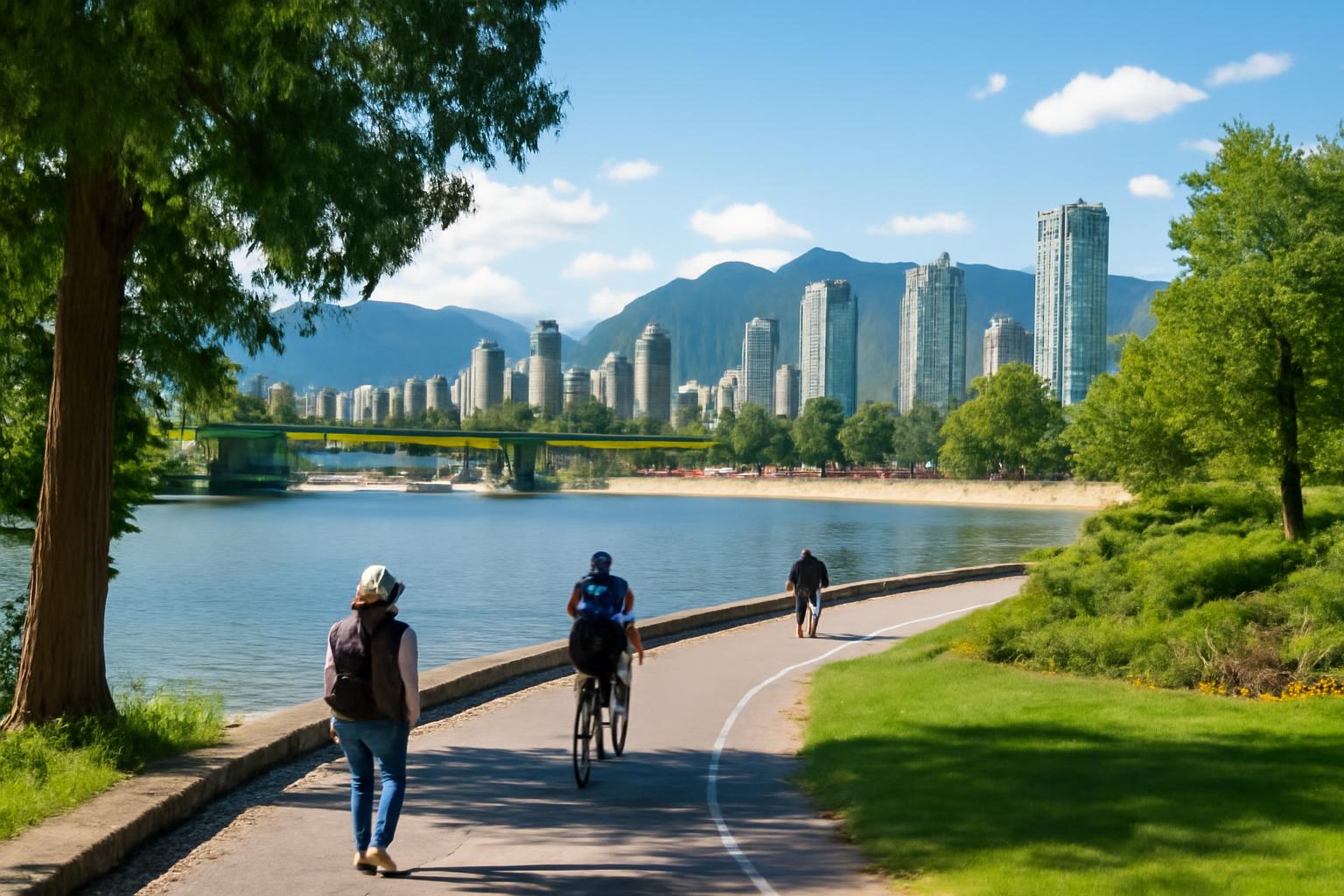
Overview
For a first visit to Vancouver, British Columbia, begin with Stanley Park and the Seawall. Then choose Granville Island and False Creek, a beach or garden, a cultural institution, and one neighborhood or North Shore outing according to your available time, budget, weather, mobility, and willingness to travel beyond the city.
This is Vancouver, BC, not Vancouver, Washington. The useful question is not how many attractions you can collect, but which combination gives you the waterfront, nature, food, and cultural experiences you value without wasting time moving between disconnected areas.
Stanley Park is the clearest shared priority across several Vancouver guides, while the City of Vancouver also identifies the park and Seawall among the city’s popular attractions. Granville Island adds a public market, food, and local art, while its False Creek ferry connections make the journey part of the outing. After those anchors, narrow the plan rather than extending the list indiscriminately.
The essential Vancouver experiences for a first visit
A manageable first-visit shortlist has two foundations: Stanley Park with the Seawall, and Granville Island with False Creek. Multiple independent guides place these experiences near the top of their recommendations, including Ordinary Adventures, Happy to Wander, and Wheatless Wanderlust.
From there, add experiences that contribute something different. A beach or garden gives you another side of outdoor Vancouver. Gastown, Kitsilano, or Mount Pleasant introduces neighborhood character. The Museum of Anthropology or Bill Reid Gallery adds cultural learning. A North Shore outing exchanges city time for forest, bridge, or mountain experiences.
Do not treat every recognizable name as equally urgent. If your stay is short, one coherent waterfront day and one contrasting urban, cultural, or nature experience will usually make more sense than repeatedly crossing the region to complete a long checklist.
Stanley Park and the Seawall
Stanley Park is the strongest first-timer consensus in the evidence. Ordinary Adventures says that if visitors do only one thing in Vancouver, it should be Stanley Park, while Happy to Wander makes the Stanley Park Seawall its essential recommendation. The City of Vancouver lists both Stanley Park and the Seawall among its popular attractions.
The park works well as a priority because it combines green space with a waterfront route rather than requiring you to choose between city and nature. Access to the park itself is free, according to Ordinary Adventures, so your cost depends mainly on how you reach it and whether you add rentals or paid activities.
Choose walking when you want a slower outing and are comfortable limiting the route to the distance that suits you. Walking makes it easier to pause, turn back, or connect only part of the Seawall with another nearby area. Choose cycling when covering more ground matters more than lingering. The supplied evidence supports both walking and cycling as ways to experience Vancouver, but it does not establish reliable comparative completion times, current rental conditions, or predictable crowd patterns.
The practical choice is therefore about pace and effort, not a supposedly optimal method. You do not need to complete a full circuit for the park to be worthwhile. A partial waterfront walk can be paired with the West End or English Bay, while a longer ride can make Stanley Park the main event of that part of the day.
Granville Island and False Creek
Granville Island is best approached as a combined market, food, art, and waterfront experience. Ordinary Adventures describes the public market as a place for food, produce, and local art, while Wheatless Wanderlust summarizes the experience as browsing and grazing rather than visiting a single conventional attraction.
Arrive ready to eat, but avoid turning the outing into a hunt for one supposedly essential vendor. The value is the ability to sample the market, browse local work, and spend time by the water in one area. That makes Granville Island particularly useful for mixed-interest groups: one person can focus on food, another on art or shops, and the group can still share the broader outing.
False Creek creates the natural connection. Wheatless Wanderlust recommends the small passenger ferries serving Granville Island, and Ordinary Adventures also suggests riding a ferry around False Creek. Used this way, the ferry is not just a transfer. It adds a short water-level view of the city while connecting waterfront stops.
Granville Island and False Creek are therefore one planning unit. Combining them avoids treating the market as an isolated stop and gives you a more varied experience without adding a distant neighborhood.
Parks, beaches, gardens, and mountain views
Vancouver’s outdoor options range from easy city stops to outings that require more travel or physical effort. Keep those categories separate. A waterfront walk, urban beach, or garden can fit around other activities; a forest hike or North Shore mountain experience may deserve a substantial part of the day.
For lower-complexity outdoor time, begin with the city’s established parks and gardens. The City of Vancouver names Stanley Park, the Seawall, Dr. Sun Yat-Sen Chinese Garden, VanDusen Botanical Garden, Queen Elizabeth Park, and Bloedel Conservatory among popular attractions and leisure choices. These are not interchangeable: the Seawall is route-based, the gardens reward slower observation, and the conservatory offers a more sheltered setting.
Beaches are another flexible category. Wheatless Wanderlust includes both the city’s beaches and the southern Seawall in its first-timer recommendations. A beach can be a destination, but it can also be the finish to a walk through Stanley Park, Kitsilano, or another waterfront area. That flexibility makes beaches easier to include than an excursion with a fixed admission or long approach.
North Shore nature requires a different decision. Lynn Canyon offers trails and a free bridge experience, according to Happy to Wander, while Capilano Suspension Bridge Park emphasizes a paid bridge and treetop attraction. Other possibilities extend toward places such as Grouse Mountain, Deep Cove, and West Vancouver, but the supplied evidence does not establish current operating conditions or comparable time requirements for each.
Match the outing to your capacity. If you want gentle outdoor time, favor a park, beach, garden, or a limited Seawall segment. If forest walking is a central goal, reserve enough space for a North Shore outing rather than squeezing it between unrelated city attractions.
Neighborhoods, food, markets, and culture
Vancouver’s urban experiences deserve space alongside parks and mountain views. Wheatless Wanderlust highlights Gastown, Kitsilano, and Mount Pleasant as neighborhood choices, while Happy to Wander describes Mount Pleasant through its shops, street art, and cafes.
Choose one neighborhood for a reason. Gastown may fit visitors interested in historic streets, shops, drinks, and its steam clock. Mount Pleasant may suit browsing, cafes, and street art. Kitsilano can be paired with western beaches or other destinations on that side of the city. This purpose-led approach is more useful than walking through several neighborhoods without knowing what you want from them.
Food should also be part of the itinerary, not an afterthought between attractions. Granville Island provides the clearest market-based experience in the evidence, while Vancouver’s neighborhood coverage supports making cafes, gastropubs, and Asian food part of how you explore the city. Build meals into the areas you already plan to visit instead of crossing Vancouver for disconnected recommendations.
Indigenous Northwest Coast art and cultural learning
The Museum of Anthropology and Bill Reid Gallery offer two evidence-supported ways to engage with Indigenous Northwest Coast art. They should be considered intentional cultural stops, not rainy-day substitutes chosen only when outdoor plans fail.
Ordinary Adventures describes the Bill Reid Gallery as the only public gallery in Canada dedicated to contemporary Indigenous Northwest Coast art. That focused mandate makes it a logical choice when your priority is the work and legacy associated with Bill Reid and the broader artistic context presented by the institution.
Happy to Wander recommends the Museum of Anthropology for examples of First Nations art, while Wheatless Wanderlust emphasizes the cultural breadth encountered there. The museum is in the UBC area, so it is geographically different from a downtown cultural stop. That location matters when you are building a short plan.
Choose between them by focus and geography rather than trying to rank them universally. The Bill Reid Gallery fits naturally into a downtown-oriented day. The Museum of Anthropology is better treated as an anchor for a UBC-area outing, potentially combined with nearby outdoor stops if conditions and mobility allow. Before visiting either institution, confirm current hours, ticket requirements, exhibitions, and accessibility through its official information.
Choose specific stops in Gastown and Chinatown
Gastown and Chinatown are more useful when you select identifiable stops rather than treating either neighborhood as a uniform attraction. In Gastown, Ordinary Adventures points to historic buildings, shops, gastropubs, beer and cocktails, and the steam clock. These details support a compact walk with a clear purpose, but not the assumption that every block offers the same visitor experience.
The steam clock is a recognizable focal point, yet it does not need to consume a large part of the plan. Use it as one stop within a walk, meal, or browsing period. If historic streets and food do not interest you, spending that time on a museum, garden, or waterfront route may provide more value.
For Chinatown, the clearest attraction-specific recommendation in the evidence is Dr. Sun Yat-Sen Chinese Garden, which the City of Vancouver lists among popular attractions. Planning around a named destination gives you a defined reason to visit and lets you check its current entry arrangements before setting out.
Gastown and Chinatown are adjacent parts of a changing urban environment, so use ordinary city awareness and follow the route that fits your comfort. The evidence does not support sweeping judgments about either neighborhood. Precision is more helpful: know which garden, gallery, restaurant, shop, or landmark you intend to visit, and check current local guidance if you are uncertain about the surrounding route.
Free experiences and paid attractions
A low-cost Vancouver plan can still cover several of the city’s defining experiences. Stanley Park, the Seawall, beaches, neighborhood walks, and many public outdoor spaces can form the structure of a visit without paid admission. Ordinary Adventures specifically identifies Stanley Park as free, while Forever Lost in Travel presents Lynn Canyon as a free alternative to Capilano Suspension Bridge Park.
Paid attractions are most defensible when they provide something distinct rather than merely filling an open hour. A museum can offer focused cultural interpretation. A botanical attraction may suit a visitor whose main interest is plants. Capilano may appeal to someone who specifically wants its suspension bridge and developed visitor experience. The decision should follow your priorities, not the visibility of the attraction’s marketing.
Avoid building a budget from old editorial prices. The evidence says Capilano pricing can vary with demand and day, but it does not provide a reliable current figure for publication. Check official admission pages before deciding whether a paid stop offers enough value for your group.
A balanced approach is to anchor each day with free outdoor or neighborhood time, then select at most the paid experiences that add a genuinely different purpose. That keeps the budget legible and leaves room to respond to weather.
Capilano or Lynn Canyon: a decision matrix
Capilano Suspension Bridge Park is the stronger fit when the bridge attraction itself is your goal. Lynn Canyon is the stronger fit when you primarily want a free forest outing with trails and a bridge. Happy to Wander states this distinction directly, while Forever Lost in Travel also identifies Lynn Canyon as the free alternative.
| Decision factor | Capilano Suspension Bridge Park | Lynn Canyon |
|---|---|---|
| Primary goal | A developed attraction centered on a prominent suspension bridge and treetop features | A nature outing with trails and a bridge |
| Cost posture | Paid admission; verify the current price and booking terms | Free alternative in the supplied evidence; verify any current site-specific conditions |
| Atmosphere | More structured and attraction-led | More focused on forest walking and an informal park outing |
| Convenience | Can be combined with another North Vancouver attraction, depending on current transport and schedules | Requires planning around park access, trail conditions, and the outing your group can manage |
| Crowd sensitivity | A major marketed attraction, so visitors sensitive to congestion should check current guidance | Described as a local alternative, but that does not guarantee low visitor levels |
| Best fit | Visitors who specifically want the Capilano bridge experience | Budget-conscious visitors who chiefly want North Shore nature |
Accessibility can change the choice. The supplied evidence does not establish Capilano’s current accessibility or admission policies; confirm them through the attraction’s official information. Confirm that policy and all current accessibility details directly with the attraction. Comparable accessibility information for Lynn Canyon is not established in the supplied evidence, so do not assume a forest trail is suitable simply because admission is free.
Getting around Vancouver without a car
You can build a strong first visit around walking, public transit, SeaBus, cycling, and False Creek ferries. Several guides describe central Vancouver as walkable and suitable for car-free travel, including Ordinary Adventures and Forever Lost in Travel. A car becomes more relevant when the trip expands to places that are poorly served by the routes you intend to use.
Use each mode for the job it handles best:
- Walk within compact clusters such as Stanley Park and the West End, or within a selected neighborhood.
- Use buses and SkyTrain to bridge areas that would make for an inefficient walk.
- Take SeaBus between downtown Vancouver and Lonsdale Quay on the North Shore.
- Use False Creek passenger ferries to connect Granville Island with other waterfront stops.
- Cycle when it improves coverage, after checking current route and transit restrictions.
SeaBus and the small False Creek ferries have sightseeing value as well as transport value. Happy to Wander describes the SeaBus crossing from downtown to Lonsdale Quay as an enjoyable visitor activity, and Wheatless Wanderlust confirms that SeaBus connects Lonsdale Quay with downtown. The False Creek ferries similarly turn the approach to Granville Island into part of the experience.
Fare rules require more care than a general city guide can provide. TransLink’s fare information says Compass Tickets permit transfers among bus, SeaBus, HandyDART, and SkyTrain within the purchased zones for up to 90 minutes. TransLink also distinguishes bus-only travel from zone-based SkyTrain and SeaBus travel at certain times, so check the current rules for the exact day and route rather than relying on a remembered fare.
TransLink’s published information says bicycles are permitted on SeaBus and SkyTrain, subject to stated limits or restrictions, and buses have exterior bike racks. Those rules can affect a combined cycling and transit day, so confirm them before bringing a bicycle.
TransLink’s supplied fare page lists a $5 YVR Airport AddFare, but verify the current fare before travel. Do not use either extracted amount to budget your arrival. Check TransLink’s current airport and fare pages directly when you finalize the trip.
How weather and season should change the plan
Plan Vancouver days in interchangeable blocks so you can move outdoor priorities to the better-weather window. Ordinary Adventures advises being ready for rain throughout the year and specifically recommends switching itinerary days according to the weather. Forever Lost in Travel likewise recommends keeping indoor activities available.
Your outdoor block might contain Stanley Park, the Seawall, a beach, a garden, or a North Shore forest outing. Your indoor or more sheltered block might include the Museum of Anthropology, Bill Reid Gallery, Granville Island’s market, Bloedel Conservatory, or a deliberate food and neighborhood plan. Some options combine both settings, which is useful when conditions are unsettled.
Rain does not automatically eliminate waterfront walking, but it can change surface conditions, visibility, comfort, and the amount of time your group wants to spend outside. Mountain and forest outings add trail and transport considerations. Check current conditions rather than assuming that a general forecast for downtown describes every destination equally.
Season also changes what deserves priority. Hike Bike Travel favors the period from May through October and notes spring flowers and reduced early-fall crowds as personal preferences, but those observations are not operating guarantees. Stanley Park and major neighborhoods are evergreen planning categories; festivals, special displays, seasonal gardens, and mountain operations may be limited by date.
Separate the attraction from the event. If a guide recommends an annual celebration or seasonal experience, confirm the current calendar before building a day around it. A flexible plan should still work if the limited-date element is unavailable.
Build a realistic plan by time and area
Geographic grouping is more reliable than an hour-by-hour itinerary because it reduces unnecessary movement without pretending that every visitor walks, eats, queues, or explores at the same pace. For a one-to-three-day trip, select one or two compatible areas per day and let your highest-priority experience determine the rest.
Useful combinations include:
- Stanley Park, the Seawall, the West End, and English Bay for a waterfront-focused city block.
- Granville Island and False Creek for markets, food, art, and a passenger-ferry ride.
- Downtown cultural stops with Gastown or a SeaBus crossing, depending on your interests.
- UBC’s Museum of Anthropology with nearby western-area activities, subject to current access and your available time.
- SeaBus and a North Shore destination when forest, bridge, or mountain experiences justify leaving Vancouver proper.
For one day, prioritize Stanley Park and one contrasting cluster. Granville Island and False Creek provide the clearest market-and-waterfront contrast, while a downtown cultural stop is easier to substitute if the weather turns poor. Do not attempt to include a North Shore excursion merely because it appears on a longer list.
With two days, keep one day centered on the city waterfront and use the other for culture, neighborhoods, gardens, or the North Shore. With three days, you gain room for a geographically separate outing without forcing it into the margins of an already full city day. These are planning frameworks, not claims about exact completion times.
Leave space between anchors. Meals, ferry waits, changing weather, and different mobility levels all affect the pace, even when precise durations are not established in the evidence. A plan with fewer transfers is easier to revise when conditions change.
Vancouver, the North Shore, and farther-afield trips
Vancouver proper, the North Shore, and destinations farther away should not be treated as one compact sightseeing zone. Stanley Park, Granville Island, False Creek, Gastown, Chinatown, and the city’s beaches and gardens belong to the Vancouver portion of the plan. Capilano, Lynn Canyon, Grouse Mountain, Deep Cove, Lonsdale Quay, and West Vancouver are North Shore choices.
SeaBus provides a direct public-transport connection between downtown and Lonsdale Quay, according to Wheatless Wanderlust. That does not mean every North Shore attraction is equally convenient from the terminal. Lighthouse Park, for example, is described by the same source as effectively car-dependent for most visitors. Check the onward route for the specific place you choose.
Bowen Island, Squamish, and Whistler are farther-afield destinations, not substitutes for a spare hour downtown. Hike Bike Travel recommends considering these outlying areas when time allows, while Forever Lost in Travel notes that a car may become useful for Whistler or trips into the Fraser Valley.
The supplied evidence does not establish dependable door-to-door times for these excursions. If you have only one or two days, protect the core Vancouver experience first. Add a farther destination only when it is a central trip goal and you have verified its current transportation and operating details.
Choose activities for your interests and constraints
Choose a shortlist by matching each activity to its purpose, setting, cost posture, and travel effort. Exact durations and reservation requirements are incomplete in the evidence, so use qualitative categories first and verify the operational details after narrowing your choices.
Families and mixed-interest groups may benefit from flexible areas such as Stanley Park, Granville Island, False Creek, or a garden because each can be shortened or combined with food and rest. That is a planning advantage, not a guarantee of suitability for every age or mobility level.
Culture seekers can prioritize the Museum of Anthropology, Bill Reid Gallery, Dr. Sun Yat-Sen Chinese Garden, or a neighborhood chosen for specific architecture, food, or art. Hikers should reserve a distinct North Shore block and check trail conditions rather than treating Lynn Canyon or another forest destination as a casual add-on.
Budget-conscious visitors can build around the Seawall, Stanley Park, beaches, neighborhood walks, and Lynn Canyon, then add a paid attraction only when it supplies a distinct experience. Evening visitors can focus on food, cafes, gastropubs, or a waterfront walk, subject to current hours and their preferred route. Sports fans should consult current venue schedules before reserving time, since the supplied evidence does not support a specific event recommendation.
Transit effort matters as much as admission cost. A nominally free activity can still consume substantial travel energy, while a paid downtown institution may fit smoothly between nearby stops. Choose the experience that works within the whole day.
Accessible and lower-mobility choices
Visitors with limited mobility should begin with experiences that can be adjusted without relying on steep trails, long cycling routes, or a complete Seawall circuit. A shortened waterfront visit, a ground-level park experience, a market, a museum, a garden, or scenic transit may be easier to shape around individual needs.
The City of Vancouver’s attraction list identifies several potentially relevant categories, including gardens, parks, the Seawall, and Bloedel Conservatory. Inclusion on that list does not establish step-free access, surface conditions, seating, accessible washrooms, or suitable transportation. Confirm those features separately.
Capilano illustrates why attraction-specific checking matters. Verify Capilano’s current route-level accessibility and admission policies directly with the attraction. Verify the current policy before relying on it.
Do not assume that Lynn Canyon is an accessible substitute simply because it is free, or that every section of a waterfront route has the same conditions. Compare the exact entrance, route, gradient, surface, transport connection, and available facilities using current official information. Where a group has mixed mobility, prioritize an experience with a worthwhile ground-level option so nobody’s visit depends on completing the most demanding feature.
What to verify before you go
Finalize the shape of your itinerary first, then verify the changing details through the relevant attraction, park, museum, or transit authority. This prevents you from researching dozens of places that will never make your shortlist.
Before committing, check:
- Current opening hours, seasonal dates, temporary closures, and last-entry rules.
- Admission prices, age categories, cancellation terms, and whether online booking or a timed reservation is required.
- Trail, bridge, garden, beach, and mountain conditions after poor weather.
- Official accessibility details for the exact route or feature you plan to use.
- Transit schedules, fare zones, transfer rules, bicycle restrictions, and the onward connection from SeaBus or SkyTrain.
- Current YVR airport fare rules directly with TransLink, because the supplied fare page lists a $5 YVR Airport AddFare; verify the current fare before travel.
- Current calendars for festivals, sports, exhibitions, seasonal displays, and evening activities.
Keep a substitute in the same geographic area. If an outdoor attraction closes or the weather deteriorates, a nearby museum, market, conservatory, gallery, or meal is usually easier to adopt than an attraction across the region. The final result should be a short, flexible Vancouver plan built around Stanley Park, one complementary city cluster, and only the excursions that genuinely fit your time and constraints.