
Best Gardens in Vancouver for Plants, Culture, Views, and Park Days
UBC wins for forested plant exploration. Nitobe or Dr. Sun Yat-Sen suit cultural design, Queen Elizabeth Park has the views, and Stanley Park is the free stop.
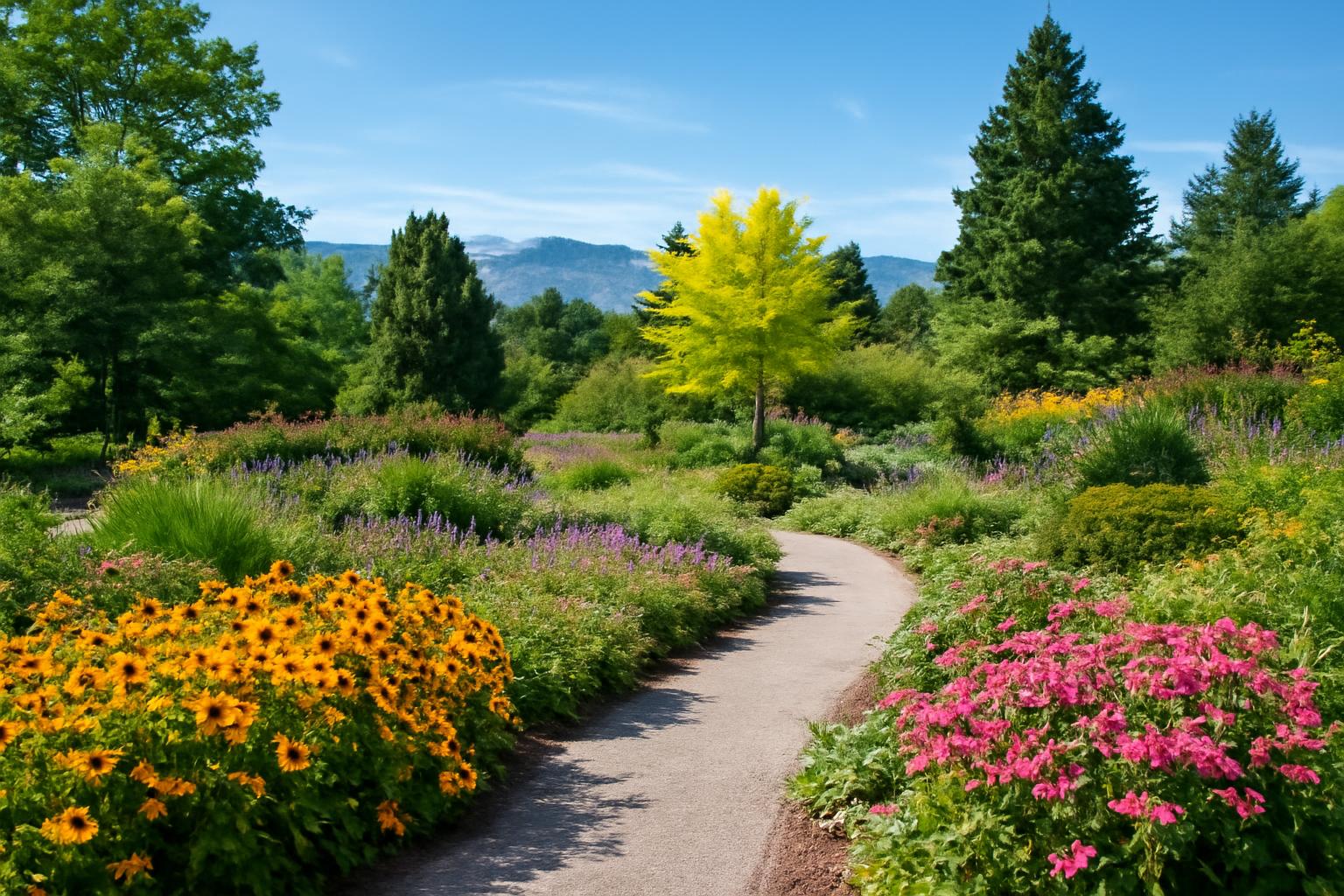
Overview
VanDusen Botanical Garden is the strongest all-around choice if you want a large, designed collection with labelled plants. The better choice changes with your goal: choose UBC for forested plant exploration, Nitobe or Dr. Sun Yat-Sen for cultural design, Queen Elizabeth Park for views, and Stanley Park for a free garden stop.
These are different experiences, not interchangeable entries in a universal ranking. VanDusen rewards deliberate plant viewing, while UBC Botanical Garden places global collections within a broader, more naturalistic landscape. Queen Elizabeth Park works well for a shorter scenic outing, and the indoor Bloedel Conservatory gives you an alternative when outdoor conditions are poor.
Nitobe Memorial Garden and Dr. Sun Yat-Sen Classical Chinese Garden are better approached as culturally designed spaces than as displays measured by acreage or flower quantity. Stanley Park’s garden areas make the most sense when gardens are one part of a larger park day. Your best fit therefore depends on what you want to see, how long you have, and whether you prefer free public space or a paid, focused experience.
Choose the best garden for the experience you want
Start with the experience, then check current admission and operating details. The distinctions below are supported, but exact prices and complete accessibility information are not consistently available across the shortlist.
| Your priority | Best-fit choice | Why it fits | Cost posture and caveat |
|---|---|---|---|
| A large, designed botanical collection | VanDusen Botanical Garden | Plants are commonly labelled, and winding paths pass through sections organized around ecosystems from different parts of the world, according to BC Robyn and Destination Vancouver. | Paid admission; verify the current ticket options before visiting. |
| Forested plant study and research context | UBC Botanical Garden | UBC describes global plant collections spread across 44 hectares, including Asian, alpine, food, physic, rainforest and woodland areas on its Attractions & Gardens page. | Paid admission supports research, education and conservation, according to UBC. |
| Free views and an easy outdoor stroll | Queen Elizabeth Park | The park sits on Little Mountain and provides city and North Shore Mountain views, according to Destination Vancouver. | The outdoor park is the free choice; check Bloedel separately. |
| Cultural design and quiet reflection | Nitobe Memorial Garden or Dr. Sun Yat-Sen Classical Chinese Garden | Nitobe is a traditional Japanese stroll garden, while Dr. Sun Yat-Sen interprets a Ming Dynasty-style garden tradition. | Both focused experiences require current admission checks; Dr. Sun Yat-Sen also has an adjacent free public area. |
| Indoor plants and birds | Bloedel Conservatory | Bloedel is an enclosed exotic-plant conservatory and bird sanctuary, according to Para Space. | Treat it as a separate indoor attraction and verify admission and hours. |
| A canopy adventure | GreenHeart TreeWalk at UBC | UBC describes a 310-metre canopy walkway through the treetops on its garden attractions page. | Seasonal and not suitable for every mobility need; restrictions apply. |
| Gardens within a broader free park day | Stanley Park gardens | Destination Vancouver identifies several free garden areas within the park, in addition to its better-known Seawall. | Free, but the gardens are only one component of a much larger park visit. |
The main plant-lover decision is VanDusen versus UBC. Pick VanDusen if labels, designed paths and an orderly global collection matter most. Pick UBC if you prefer a larger, forested setting where living collections, biodiversity and conservation are part of the experience.
The best gardens in Vancouver, one by one
Each garden below earns its place for a different reason. Rather than assigning numerical ranks, these profiles compare character, strongest use case, time commitment and important limitations. That approach gives you a more useful shortlist than treating every flower bed, conservatory and culturally designed garden as the same kind of attraction.
VanDusen Botanical Garden for a large, designed plant collection
VanDusen is the most balanced choice for visitors who want the recognizable structure of a major botanical garden. BC Robyn’s garden guide notes that most plants are labelled with common and scientific names, which makes the garden particularly useful when you want to identify what you are seeing rather than simply walk through attractive landscaping.
Scale is another reason to choose it. Destination Vancouver describes the garden as covering about 16 city blocks, with curving paths through areas grouped by ecosystems from around the world. That design gives you both variety and a clear sense of moving between distinct plant environments.
VanDusen also extends beyond static displays. The VanDusen Botanical Garden Association lists public art, lectures, family activities and educational workshops among its programming. These offerings can add value for a plant-focused visitor or family, but schedules are changeable and should be checked for your date.
Allow at least two hours, based on the estimate in BC Robyn’s guide. The City of Vancouver’s VanDusen page is the appropriate place to confirm current opening times, ticket options, directions and on-site dining before departure.
Queen Elizabeth Park and Bloedel Conservatory for views and indoor shelter
Choose Queen Elizabeth Park when you want a scenic, lower-commitment garden outing rather than an intensive botanical collection. Destination Vancouver places the park on Little Mountain, the city’s highest point, with views toward Vancouver and the North Shore Mountains. The free outdoor gardens suit casual walking, mixed-interest groups and visitors who want space for views as well as plants.
A one-hour visit is a reasonable starting point according to BC Robyn, although your pace and interest in the wider park can extend it. This makes Queen Elizabeth Park easier to fit into a partially planned day than VanDusen or UBC.
Bloedel Conservatory changes the character of the outing. Para Space identifies it as an exotic-plant conservatory and bird sanctuary established in 1969. Because it is indoors, it gives you a distinct tropical plant and bird experience when rain makes a longer outdoor walk less appealing.
Do not assume the conservatory follows the park’s free-access model or schedule. Treat Queen Elizabeth Park and Bloedel as connected but operationally separate stops, then confirm the conservatory’s current admission and hours.
UBC Botanical Garden and Nitobe Memorial Garden for nature and reflection
UBC Botanical Garden is the better choice when you want plant collections within a broad, forested and research-oriented setting. UBC’s Attractions & Gardens directory describes 44 hectares containing global plant collections, including the David C. Lam Asian Garden, BC Rainforest Garden, alpine beds organized geographically, a food garden and a physic garden.
The setting can feel less formal than VanDusen. UBC says accessible pathways are marked throughout the David C. Lam Asian Garden. That combination helps explain why visitors may experience UBC as a forest exploration as much as a conventional botanical display.
The GreenHeart TreeWalk adds an adventurous option. UBC identifies it as a 310-metre canopy walkway, while the official TreeWalk information advises allowing an hour or more. It is a separate physical experience with specific safety and mobility restrictions, not simply another level garden path.
Nitobe Memorial Garden offers a quieter contrast. Nitobe Memorial Garden is a separate garden at 1895 Lower Mall, about a 20-minute walk from the botanical garden, according to UBC’s visit information. It is a separate site at 1895 Lower Mall, about a 20-minute walk from the botanical garden, according to UBC’s visit information.
Destination Vancouver notes that combination admission may be available for Nitobe and UBC Botanical Garden. Verify that option for your date, then allow enough time for two admissions, the walk between sites and any seasonal programs.
Dr. Sun Yat-Sen Classical Chinese Garden for cultural design
Choose Dr. Sun Yat-Sen Classical Chinese Garden when architectural composition, cultural interpretation and the relationship between built and natural elements matter more than the size of the plant collection. Destination Vancouver reports that the garden opened in 1986 and was among the first Ming Dynasty-style gardens constructed outside China.
This is a focused, culturally designed experience rather than a large botanical campus. Its appeal lies in how the space uses architecture, water, stone, plants and changing views as a unified composition. That also means value is subjective. A visitor expecting extensive grounds may evaluate the paid area differently from someone who wants to study the design carefully.
There is an adjacent free public garden area. BC Robyn characterizes that section as small and argues that it does not provide most of the paid experience. The practical decision is to use the free area for a brief look, or pay for the fuller visit when cultural interpretation is one of your main interests.
Interpretive programming can help you understand details that are easy to miss on an unguided walk, but do not assume a tour, tea program or other event will operate on your date. Confirm current offerings, schedules and admission directly with the garden before building your day around them.
Stanley Park gardens for a free stop within a larger park day
Stanley Park is the practical choice when you want gardens to complement a broader day of walking, waterfront scenery or park exploration. Destination Vancouver’s garden guide notes that the park has several free gardens in addition to the Seawall, including its rose and rhododendron garden areas.
The advantage is flexibility. You can include a garden stop without committing your whole outing to a ticketed botanical attraction. That makes Stanley Park suitable for groups whose interests extend beyond plants, or for visitors who already plan to spend time in the park.
The tradeoff is focus. Stanley Park is not a substitute for VanDusen’s labelled global collection or UBC’s research-linked garden areas. Choose it when the park is the primary destination and its gardens are an added layer, not when detailed plant study is the central purpose of the day.
When to visit Vancouver’s gardens
Spring has the strongest support across the available garden guidance. Destination Vancouver recommends spring for colourful flowering displays, while BC Robyn identifies March and April as Vancouver’s cherry-blossom season.
That does not make every garden equally dependent on flowers. Nitobe’s designed landscape can reward attention to seasonal change, while UBC’s forests, plant collections and research context offer reasons to visit beyond peak bloom. Bloedel’s enclosed tropical environment is also a different proposition from outdoor spring displays.
For VanDusen, BC Robyn’s guide recommends April through October for a greater range of blooms, while also noting that the garden can be visited outside that period. Use that window as broad guidance, not as a promise that a particular species will flower on a particular day. Weather and plant cycles do not follow an exact visitor calendar.
The GreenHeart TreeWalk has a more definite operating season. UBC’s TreeWalk page states that the walkway operates from April 1 through October 31, with date-specific hours and exceptions published separately. Check the page even within that period because daily access and last-entry times can vary.
Reliable garden-by-garden fall and winter comparisons are not available in the supplied evidence. If you are visiting outside the main spring-to-early-fall window, choose based on the underlying experience and verify seasonal closures. VanDusen or UBC can still suit plant study, Dr. Sun Yat-Sen and Nitobe retain their design focus, and Bloedel offers an indoor alternative, but current conditions should decide your final choice.
How much time to allow and which gardens to combine
VanDusen needs at least two hours if you want to appreciate its scale, according to BC Robyn. Queen Elizabeth Park can fit into about an hour. These are starting estimates, not fixed limits.
At UBC, separate the time for the botanical garden from the TreeWalk and Nitobe. UBC’s 2026 visit information lists guided botanical garden and Nitobe tours at around one hour, while the TreeWalk page advises allowing one hour or more for the canopy route. Independent visits may take a different amount of time.
The strongest supported combination is UBC Botanical Garden with Nitobe Memorial Garden. They are separate venues about a 20-minute walk apart. A practical UBC day should include time for the main garden, the walk, Nitobe and any TreeWalk or tour you select. If you add the TreeWalk, treat the outing as a substantial visit rather than squeezing everything into a short stop.
Queen Elizabeth Park and Bloedel Conservatory form another logical pairing because the conservatory is located within the park, as noted by BC Robyn. An hour outdoors plus a separately timed indoor visit can make a compact central Vancouver outing. Verify Bloedel’s entry conditions before assuming the two stops will align.
For other combinations, use geography as a planning framework rather than an asserted schedule. Dr. Sun Yat-Sen can anchor a city-centre cultural outing, while Stanley Park works with a larger waterfront or park day. VanDusen is substantial enough to be the main garden in a half-day. Before combining any of these, check current transit routes and travel times from your actual starting point. The available evidence does not support a dependable, all-season schedule between every pair.
Check current logistics and accessibility before you go
Confirm operational details on official venue pages shortly before your visit. Prices, hours, reservations, seasonal closures, tours and special events can change, and the available evidence does not support a complete current logistics table for every shortlisted garden.
Use this sequence when finalizing your plan:
- Confirm the garden’s opening day, hours and last-entry time.
- Check current admission, online-purchase rules, combination tickets and reservation requirements.
- Look for closures, private events, maintenance notices and seasonal attraction dates.
- Verify transit routes and walking connections from your starting point.
- Check step-free entrances, path surfaces, grades, seating, washrooms and stroller rules for your specific needs.
- Confirm whether tours, tea programs or other scheduled experiences operate that day.
- Review food rules and on-site dining only if they materially affect your itinerary.
VanDusen illustrates why an official check matters. The City of Vancouver page lists the garden at 5251 Oak Street, describes daily opening, provides directions and parking information, and says tickets can be bought online or at the admission desk. It also lists the Garden Cafe and Shaughnessy Restaurant. Treat those as details to reconfirm, not permanent guarantees.
UBC provides more specific mobility information, but it is not a blanket accessibility statement for every route. Its visit page says accessible pathways are marked through the David C. Lam Asian Garden and that a limited number of benches are available. UBC asks visitors with accessibility needs to contact garden admissions for more information and advance notice.
The GreenHeart TreeWalk has firm restrictions. According to the official TreeWalk page, strollers, walkers and wheelchairs are not permitted. Visitors need both hands free for the guide ropes, children under 12 must be accompanied by an adult, and small children must walk independently or use an approved backpack or carrier. Closed-toe shoes are highly recommended.
Comparable route-level accessibility evidence is not supplied for the other gardens. If step-free access, resting points, washrooms, stroller use or surface conditions will determine whether the outing works, contact the venue rather than relying on a general label such as “accessible.” Choose the garden only after its current operational and mobility details match the needs of everyone in your group.