
Best Beaches in Vancouver for Activities, Families, Swimming, and Scenery
Kitsilano wins for activities and Third Beach for quiet. Wreck Beach is clothing-optional and demanding to access.
Overview
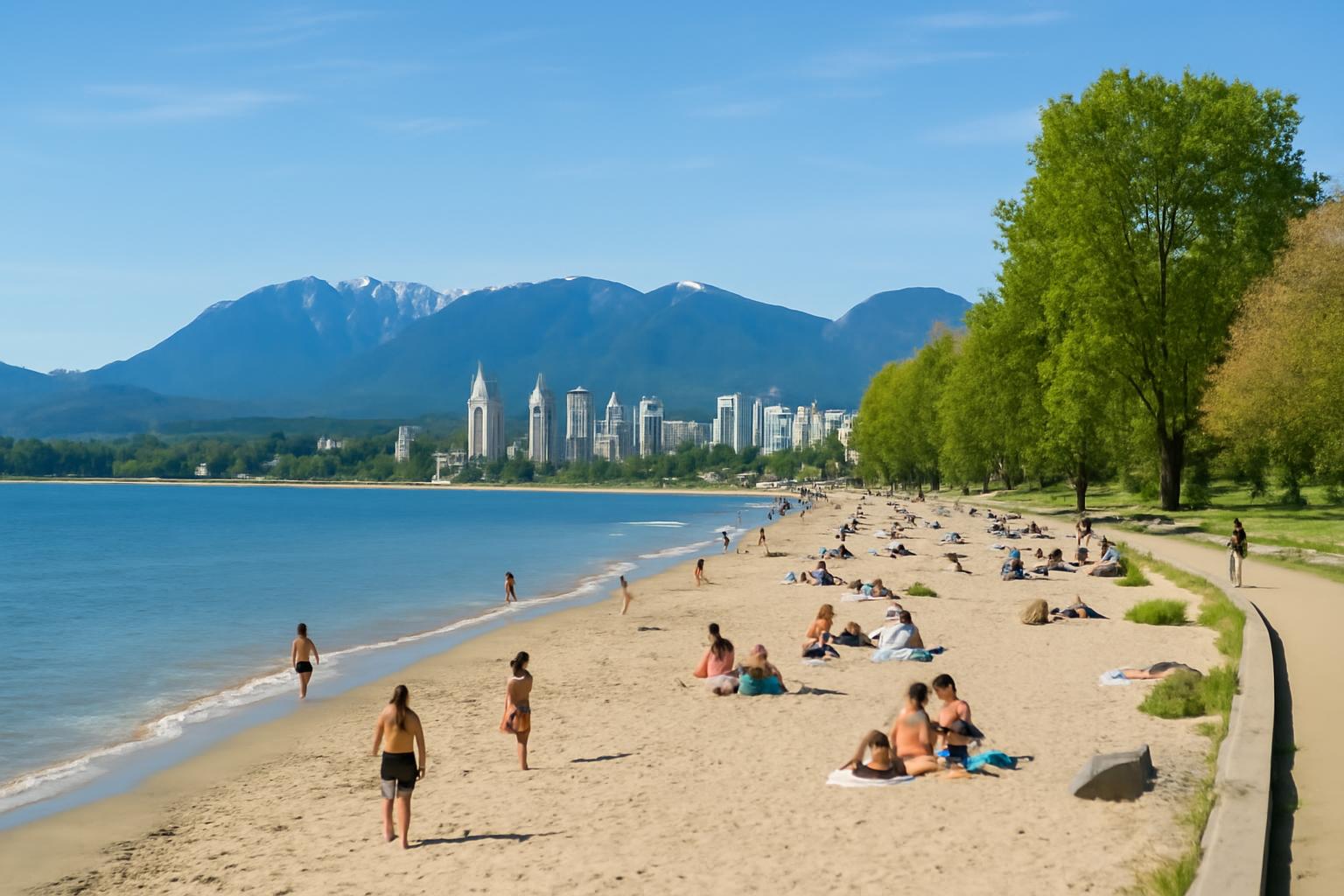
The best beaches in Vancouver depend on the outing you want. Choose Kitsilano for activities, Spanish Banks for space, Third Beach for quieter scenery, English Bay for downtown convenience, Second Beach for a family day, or Wreck Beach for a distinctive clothing-optional experience with demanding access.
This guide focuses on beaches within the City of Vancouver. Nearby shores in other municipalities may suit a regional trip, but including them would blur the practical question of which city beach to choose. Vancouver’s beaches are best understood as urban waterfront destinations where scenery, picnics, pools, sailing, and walking can matter as much as ocean swimming.
No beach leads on every criterion. Kitsilano and English Bay exchange quiet for energy or convenience. Spanish Banks has room for groups, but its tidal flats can put the water farther away at low tide. Third Beach is quieter, while Wreck Beach requires a steep return climb. The right choice follows from those tradeoffs.
Vancouver beaches at a glance
The comparison below separates swimming appeal from general beach appeal. A beach can be an excellent destination for a sunset, picnic, or waterfront walk without being the strongest choice for a quick swim.
| Beach | Best use | Atmosphere | Swimming appeal | Access considerations | Principal caveat |
|---|---|---|---|---|---|
| Kitsilano Beach | Activities and an energetic urban beach day | Lively in summer; The Unconventional Route calls it Vancouver’s most happening summer beach | Ocean access plus a heated saltwater pool alternative; Fan Vancouver describes Kitsilano Pool as a 137-metre pool | Exact routes and current parking conditions are not established by the evidence | Activity and popularity can mean a busier setting |
| Spanish Banks | Space, group outings, long walks, and tidal-flat exploration | More spacious and described as quieter than Kitsilano by Vancouver Tourism | Calm water is cited as suitable for cooling off, but low tide can make the shoreline recede substantially | Current transit, parking, and tide details require verification | A quick swim may be less convenient when the tide is out |
| Jericho Beach | Families and sailing-oriented recreation | Relaxed, recreation-led west-side setting | Tripbase describes shallow, protected water | Beach-specific accessible routes are not established | Current facility and activity availability needs checking |
| Locarno Beach | A quieter family or swimming candidate | Vancouver Tourism describes it as less crowded than Spanish Banks | Included among its suggested swimming beaches | Exact access difficulty is not established | The evidence does not establish detailed current facilities |
| English Bay Beach | Downtown convenience and sunsets | Busy and urban; the City of Vancouver identifies it as downtown Vancouver’s most populated beach area | Commonly presented as a swimming option, subject to current advisories | Located in the downtown West End, with waterfront connections toward Stanley Park | Convenience comes with a more populated setting |
| Second Beach | A family day with a pool alternative | Family-oriented | Outdoor pool access provides an alternative to ocean swimming, according to Vancouver Tourism | Can form part of a longer Stanley Park waterfront outing | Current pool operations and beach facilities require confirmation |
| Third Beach | Quiet scenery and sunsets | Tripbase calls it the quietest city beach; another guide describes its sheltered cove | To Vogue or Bust considers it one of the better swimming options | Connected with the other Stanley Park beaches by the waterfront route | Less suitable when downtown convenience or extensive amenities are the priority |
| Wreck Beach | A distinctive clothing-optional beach experience | Community-oriented and unconventional | Swimming conditions are not sufficiently established here for it to be recommended primarily as a swimming beach | Access involves a steep descent and strenuous climb | Demanding stairs and modest amenities |
| Sunset Beach | A central waterfront stop or sunset-oriented outing | Urban and scenery-led | Swimming appeal is not established strongly enough for a recommendation | It fits the central waterfront context, but exact routes are not established | The evidence provides fewer decision-useful details than for English Bay or the Stanley Park beaches |
The fastest shortlist is therefore Kitsilano for activity, Spanish Banks for space, English Bay for centrality, Second Beach for families, Third Beach for quiet, and Wreck Beach for experience. Jericho and Locarno become stronger candidates when you want a west-side outing without Kitsilano’s emphasis on energy.
Choose the best beach for your outing
Start with the activity that would make the day successful. If you want games and a lively atmosphere, choose differently than if you want room for a group, a calm family outing, a short trip from downtown, or quiet sunset scenery. Your tolerance for crowds, cold water, tides, and strenuous access should break any tie.
For activity and urban convenience: Kitsilano and English Bay
Choose Kitsilano when the beach itself is part of an active day. Hoteles.com identifies tennis, basketball, beach volleyball, and saltwater-pool swimming among its activities. The Unconventional Route characterizes it as Vancouver’s most happening summer beach. That combination makes Kitsilano a strong fit when your group wants options beyond sitting on the sand.
Choose English Bay when staying close to downtown matters more. The City of Vancouver places English Bay Beach on Beach Avenue between Gilford and Bidwell streets and describes it as downtown’s most populated beach area. Its West End setting also makes it a practical starting point for continuing along the waterfront toward Stanley Park.
The tradeoff is atmosphere. Kitsilano’s activity and English Bay’s central location can attract more people, while Third Beach offers a directly supported quieter alternative. If you want convenient urban energy, either leading option works. If your ideal beach day depends on solitude, neither should be your automatic choice.
Between the two, select Kitsilano for recreation and its pool alternative. Select English Bay when downtown proximity and an easy transition into a waterfront walk matter most. Confirm the day’s transit, parking, swimming advisory, and operating information before treating either choice as effortless.
For space and a west-side outing: Spanish Banks, Jericho, and Locarno
Spanish Banks is the clearest choice when space is the priority. The Unconventional Route recommends it for personal space, group gatherings, and games, while Vancouver Tourism highlights its long shoreline and tidal flats. It suits a group that wants to spread out, walk, or make the beach the setting for a longer outdoor day.
The tide changes how that space works. At low tide, the exposed flats create more room for exploration, but the water can be farther from your place on the sand. That is useful for walking and playing but less convenient when the goal is to arrive and swim immediately. Check the tide rather than assuming the shoreline will look the same throughout the day.
Jericho is the stronger candidate for a family or sailing-oriented outing. Tripbase describes it as a large, gentle beach with shallow protected water, a sailing club, and a picnic park. Vancouver Tourism also associates Jericho with sailing. Those features support an outing built around waterside recreation even when prolonged ocean swimming is not the main event.
Locarno is a reasonable alternative when you want a quieter west-side beach. Vancouver Tourism describes it as family-friendly, less crowded than Spanish Banks, and suitable for swimming. The available evidence does not establish its current washrooms, changing areas, accessible paths, or other detailed facilities, so confirm those if they determine whether the beach will work for your group.
For families or quieter scenery: Second Beach and Third Beach
Choose Second Beach when family amenities matter more than quiet. Hoteles.com describes it as family-oriented and amenity-rich, while Vancouver Tourism identifies an outdoor pool and playground. The pool is particularly useful when the Pacific feels too cold for comfortable ocean swimming.
Choose Third Beach for a quieter, scenery-led stop. Tripbase describes it as a secluded Stanley Park beach and the quietest of the city beaches. To Vogue or Bust notes that it sits in a slight cove, with views toward West Vancouver and the Pacific. Vancouver Tourism also identifies it as a sunset location.
The choice is not simply family versus non-family. A family seeking a pool, playground, and more structured activity has a stronger reason to choose Second Beach. A group comfortable with a simpler beach stop may prefer Third Beach’s sheltered setting and quieter character.
Current pool operations, lifeguard coverage, washrooms, and accessible arrival details are not established in the supplied evidence. Treat the family labels as a way to narrow the shortlist, then verify the facilities your outing specifically requires.
Wreck Beach: a distinctive experience with demanding access
Wreck Beach is the choice for atmosphere and cultural character, not convenience. It is clothing optional, which means visitors may keep their swimsuits on. Both To Vogue or Bust and a Tripadvisor beach listing explicitly distinguish clothing optional from compulsory nudity.
That distinction is important for a first visit. You do not need to participate in nudity, but you should choose the beach knowing that clothing optional use is part of its established identity. Tripbase describes a strong community ethos and modest amenities, making Wreck more suitable for someone who values the experience itself than for a visitor seeking a conventional, facility-led beach day.
Physical access is the larger practical constraint. The sources disagree on the exact stair count: Hoteles.com cites 500 steps, a Tripadvisor reviewer cites 490, and another source gives a higher estimate. The defensible conclusion is that access requires a steep descent followed by a demanding climb. Tripbase specifically warns that the return can be unforgiving in summer heat and recommends carrying water.
Do not choose Wreck Beach casually if anyone in your group has difficulty with prolonged stairs, heat, or a strenuous ascent. Beach-by-beach accessible alternatives and the exact current condition of the access trail are not established here. Verify those details before departure rather than relying on a stair count from a visitor guide.
Swimming at Vancouver beaches
Vancouver’s city beaches can support ocean swimming, but swimming is not their only or always their strongest appeal. Tripbase places the main swimming season from late June through August and notes that even then many locals wade rather than swim. Cold-water comfort varies, so treat summer as the most plausible window, not a guarantee of warm water.
The evidence supports several candidates without establishing one universal swimming winner. Hoteles.com describes calm water at Spanish Banks and refers to calm swimming or cooling-off conditions at Locarno. To Vogue or Bust calls Third Beach one of the better swimming locations. Vancouver Tourism includes Spanish Banks, English Bay, and Locarno among its activity-based swimming suggestions.
Kitsilano is particularly useful when your group wants a fallback. Fan Vancouver describes Kitsilano Pool as a 137-metre heated outdoor saltwater pool beside the beach. Second Beach also has an outdoor pool, according to Vancouver Tourism. Operating seasons, admission prices, and daily availability can change, so confirm them through current official information.
The supplied sources conflict on peak summer ocean temperatures. Fan Vancouver gives broad July and August estimates of 16°C to 21°C for Georgia Strait beaches and approximately 18°C to 20°C for English Bay and Kitsilano. The research brief says other evidence does not support resolving those figures into one definitive Vancouver beach temperature range. Water depth, location, weather, and tides can also make a single regional number less useful for a specific swim.
There is one clear geographic boundary. The City of Vancouver says False Creek is suitable for paddling and boating, not swimming. Do not infer that every attractive stretch of urban waterfront is a designated swimming location.
If ocean swimming is the deciding activity, shortlist Third Beach, Spanish Banks, Locarno, or English Bay based on the supported recommendations, then check the current official water-quality advisory and lifeguard status. If merely being on the water is enough, Jericho’s sailing-oriented recreation, Kitsilano or Second Beach pools, and a seawall outing provide alternatives that do not depend on a comfortable ocean temperature.
Family suitability and accessibility
Second Beach, Spanish Banks, Jericho, and Locarno have the strongest supported family case, but for different reasons. Second Beach is the facility-led option. Spanish Banks offers space. Jericho combines a gentle setting with picnic and sailing-oriented recreation. Locarno is described as family-friendly and quieter than Spanish Banks.
For a family that needs room for a group, Spanish Banks is the simplest match. The Unconventional Route specifically associates it with families and larger gatherings, and its tidal flats add space for walking or exploration. The drawback is that low tide may put the water farther away, which can complicate a plan centred on quick water access.
Jericho makes more sense when shallow protected water and nearby recreation shape the day. Tripbase supports its family appeal with a sailing club and picnic park. Locarno is a candidate for families seeking a less crowded atmosphere, but the supplied evidence does not verify its current beach-specific facilities.
Second Beach is the strongest supported choice when a pool and playground would help keep the outing flexible. Those amenities can provide a clear alternative if ocean conditions or cold water reduce swimming appeal. Their current hours, availability, admission arrangements, and seasonal status still require confirmation.
Accessibility should be part of the initial beach choice. The City of Vancouver states that the Park Board has Mobi-Mats and water wheelchairs for people with mobility challenges to enjoy beaches and pools. The supplied evidence does not establish which equipment is available at each beach, when it is deployed, or whether the complete route from transit or parking to the water is accessible.
If mobility access determines the outing, do not rely on a general citywide equipment statement. Confirm the specific beach, arrival route, surface, washroom access, equipment location, and availability for the intended date. Wreck Beach’s steep stair access makes it an especially poor assumption without direct verification.
Location and access tradeoffs
English Bay has the clearest supported convenience advantage for a visitor already downtown. The City places it in the West End along Beach Avenue, and The Unconventional Route describes access at the busy Davie and Denman area. Its downtown location makes it a logical choice when minimizing the journey matters more than finding the quietest beach.
Wreck Beach sits at the opposite end of the access spectrum. The challenge is not just reaching the UBC area. The steep descent and return climb are part of the beach experience, according to Tripbase, Hoteles.com, and Tripadvisor. That can rule it out for visitors with mobility limitations or anyone who does not want a strenuous finish to the day.
The west-side beaches require a different planning mindset. Kitsilano is the activity-led urban option, while Jericho, Locarno, and Spanish Banks support progressively more spacious or quieter outings. The evidence does not establish exact current transit routes, journey times, parking pressure, or continuous accessible paths for each beach. It would therefore be misleading to rank them by travel time.
The same caution applies in Stanley Park. English Bay, Second Beach, and Third Beach can be connected through the waterfront network, but route conditions, detours, cycling rules, and the most accessible approach can change. The City of Vancouver confirms that the Seawall and Seaside Greenway support walking, running, cycling, and picnicking, without establishing every beach-specific arrival detail.
Choose the general area first, then verify the journey. English Bay is the supported downtown option. Wreck requires serious physical effort. For all other beaches, use current official transit, park, and accessibility information rather than treating an undated travel-time estimate as a reliable plan.
Beach pairings for a longer outing
Two combinations let you compare beach characters without building a complicated itinerary. They work best as flexible waterfront outings rather than rigid turn-by-turn routes.
-
Jericho Beach and Spanish Banks: To Vogue or Bust recommends stopping at both when visiting either. Start with Jericho if sailing-oriented recreation, shallow protected water, or its picnic setting is the priority. Continue toward Spanish Banks when you want more space, longer shoreline exploration, or tidal flats.
-
English Bay, Third Beach, and Second Beach: Tripbase describes a roughly 4-kilometre seawall connection among the three, while the City confirms that the broader Seawall and Seaside Greenway are intended for waterfront walking and cycling. English Bay supplies the urban starting point, Third Beach adds quieter scenery, and Second Beach adds a family and pool-oriented option.
The Stanley Park sequence does not need to be completed in a fixed order. If quiet and sunset scenery matter most, make Third Beach the main stop. If family amenities matter more, give Second Beach more time. If your priority is downtown convenience, English Bay can be the destination rather than merely the starting point.
Distances, detours, shared-path conditions, and accessible routing should be confirmed close to the outing. Likewise, tide conditions can materially change the Jericho and Spanish Banks experience. The pairings are supported as geographic combinations, but the supplied evidence does not justify a detailed current itinerary.
What to verify before you go
Beach conditions and operations can change even when the general character of each destination remains stable. Once you have chosen a beach, check the current official information that could affect safety, access, or the activity you intend to do.
- Water quality and swimming advisories: Confirm that your selected beach has no active advisory. The supplied evidence does not establish present conditions.
- Lifeguard coverage: Check whether lifeguards are scheduled for that beach, date, and time. No current coverage dates are supported here.
- Weather and tides: Review the forecast and, for Spanish Banks in particular, the tide. Low tide can expose extensive flats and move the water farther away.
- Transit, parking, and route conditions: Verify current transit service, path closures, parking constraints, and the most practical arrival point. Do not assume an older route or travel time remains accurate.
- Accessible arrival and equipment: Confirm the complete accessible route and whether Mobi-Mats or water wheelchairs will be available at the chosen beach.
- Beach-specific rules: Check current official rules for dogs, alcohol, barbecues, amplified sound, and launching watercraft rather than applying one beach’s permissions to another.
This final check preserves the value of the comparison. Choose the beach by its supported character, then verify the details that can change: Kitsilano for activity, Spanish Banks for space, English Bay for downtown convenience, Second Beach for family amenities, Third Beach for quiet scenery, or Wreck Beach for a clothing-optional experience that includes a demanding climb.