
How to Build a Whistler Summer Trip Around Mountains, Lakes and the Village
On a two-day non-biking trip, spend one day on mountain sightseeing and a suitable walk, then use the other for a lake, the Valley Trail, culture or wellness.
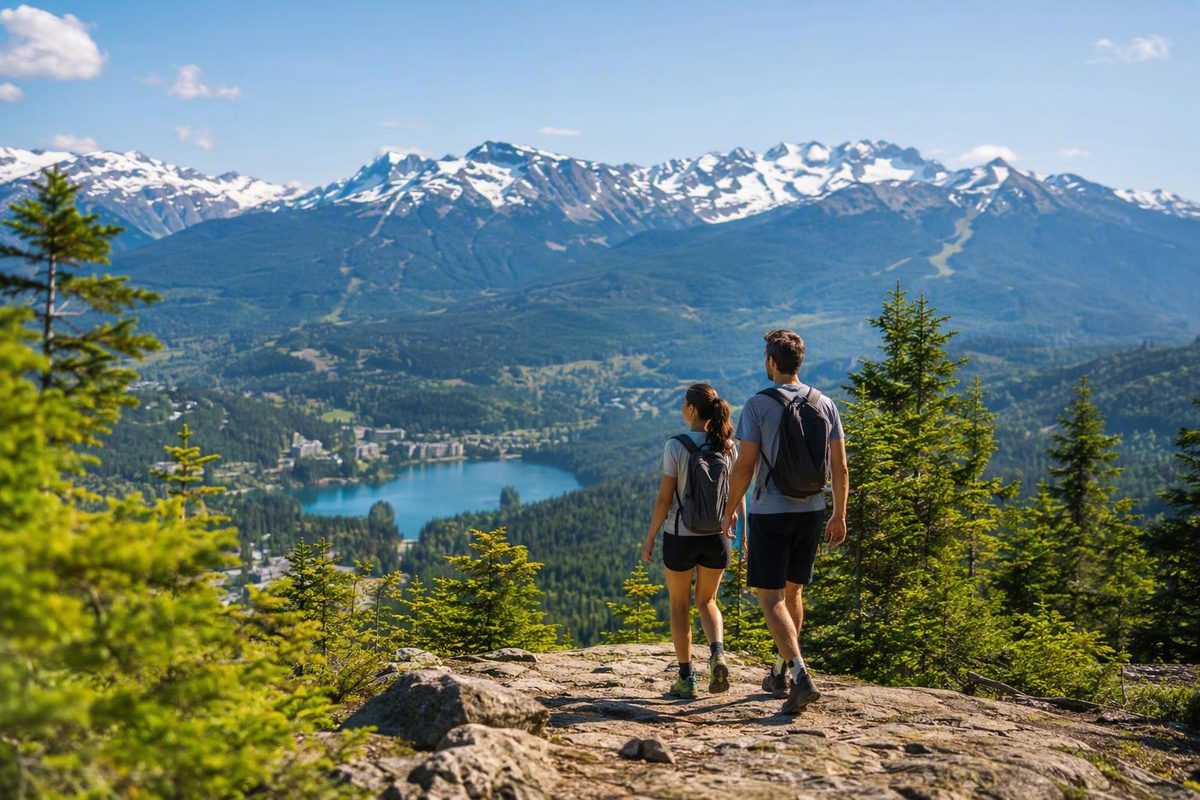
Start Here: Choose the Right Whistler Summer Experience
Whistler works best for travelers who want an organized mountain base where alpine sightseeing, hiking, biking, lakes, guided adventures, dining, culture and wellness can fit into one trip. The destination is not limited to high-adrenaline sports: paddling, museums, golf, spas, shopping and time in the pedestrian village can easily fill several days.
Tourism Whistler’s summer activity directory reflects that range, listing mountain sightseeing, hiking, biking, paddling, fishing, rafting, golf, cultural attractions and wellness experiences. Because it is also a promotional and booking directory, use it to identify possibilities, then confirm schedules, restrictions and availability with the relevant operator.
The most useful planning rule is simple: choose one anchor experience for each day, add one nearby activity that can expand or contract, and keep a backup for changing mountain conditions.
The duration and demand labels below are rough itinerary-planning categories, not sourced operating times or guarantees of suitability. Actual requirements depend on the route, operator, weather and participants.
| Experience | Main location | Suggested schedule block | Physical demand | Cost tier | Weather sensitivity | Booking need | Best-fit traveler |
|---|---|---|---|---|---|---|---|
| PEAK 2 PEAK sightseeing | Whistler and Blackcomb mountains | Half day or longer | Low to moderate; walking and access vary | Premium | High | Plan ahead | First-time visitors and scenery seekers |
| Alpine hiking | Whistler or Blackcomb mountain | Half or full day | Route dependent | Premium when lift access is required | High | Lift access may need advance purchase | Hikers seeking high-elevation scenery |
| Mountain-bike park | Whistler Mountain | Half or full day | Moderate to very high | Premium | High | Recommended for lessons and rentals | Experienced riders and prepared beginners |
| Valley Trail outing | Valley neighborhoods, parks and lakes | Short outing to full day | Route dependent | Free or low-cost | Moderate | Usually flexible; rentals may need booking | Walkers and recreational cyclists |
| Lake picnic or paddling | Lost Lake, Alta Lake or Green Lake area | Part of a day | Low to moderate; activity dependent | Free or low-cost to moderate paid activity | High | Rentals may need booking | Couples, families and relaxed travelers |
| Zipline, rafting or off-road tour | Operator-specific locations | Half-day block | Operator and activity dependent | Premium guided experience | Moderate to high | Yes | Thrill seekers |
| Audain Art Museum | Village area | Short indoor block | Access needs vary | Moderate paid activity | Low | Often flexible; confirm admission | Art lovers and mixed-weather travelers |
| Squamish Lil’wat Cultural Centre | Upper Village | Short indoor block | Access needs vary | Moderate paid activity | Low | Check admission and programs | Visitors seeking cultural learning |
| Golf or spa | Valley, Upper Village or resort properties | Half-day block | Activity dependent | Premium | Low to moderate | Usually advisable | Leisure and special-occasion travelers |
| Play areas, mini golf or park time | Village, Upper Village or valley parks | Short flexible block | Activity dependent | Free or low-cost to moderate paid activity | Low to moderate | Attraction dependent | Families wanting shorter activities |
| Seaplane or helicopter sightseeing | Departure point varies | Partial-day block including check-in | Low for passengers; provider rules apply | Premium | Very high | Yes | Special-occasion travelers |
The gondola connects Whistler and Blackcomb mountains when operating and can provide access to alpine views and selected trails. Its prominence does not make it objectively better than a lake day, cultural visit or guided adventure, but it explains why it often anchors a short itinerary.
Match the trip to your priorities:
- First visit with limited time: Alpine sightseeing, a suitable short walk and village time.
- Thrill-oriented trip: Mountain biking or one guided adventure on each activity day.
- Relaxed trip: Valley Trail sections, a lake, patios, museums and a spa.
- Mixed-weather trip: Culture, galleries, shopping and dining, with outdoor plans moved to clearer periods.
- Family trip: Short activity blocks, parks, play areas and one mountain or lake anchor.
- Budget-focused trip: Walking, cycling, picnics, parks and village time, plus one paid highlight.
Treat labels such as “beginner-friendly,” “family-friendly” and “for every level” as prompts for further checking, not guarantees. Confirm current operator restrictions, trail classifications, terrain, access requirements and the demands of the activity against each participant’s abilities. Lifts, trails, lake services and tours are seasonal, so check availability for your exact dates.
Plan One Mountain Day: Gondolas, Alpine Views, Hiking and Biking
Whistler and Blackcomb deserve a dedicated day rather than being squeezed between unrelated reservations. When operating, PEAK 2 PEAK connects the two mountains and can support a day combining sightseeing, viewpoints, food and selected alpine walks.
Whistler Blackcomb says its summer network includes more than 50 kilometres of high-alpine hiking trails. That figure describes the broader network; it does not mean every trail, gondola or chairlift will be available simultaneously.
Choose one of three mountain-day formats.
Sightseeing with short walks: Ride into the alpine, cross between the mountains if the relevant route and ticket are operating, visit viewpoints and choose a walk suited to the conditions. Leave ample time for queues, food, photographs, changing visibility and the return journey. Avoid placing a fixed-time valley tour immediately afterward because a delayed return could destabilize the rest of the day.
Hiking-focused day: Use lift access to reduce some of the initial climbing, then devote the main part of the day to one suitable alpine route. Before committing, check:
- Current opening status
- Route distance and expected completion time
- Elevation gain and loss
- Trail classification and surface
- Lingering snow or wet sections
- Forecast and visibility
- Personal turnaround time
- Final lift or download time
Paid lift access can reduce the climb required to reach alpine scenery, but it does not make every route suitable for every visitor. Choose footwear, clothing and supplies for the route and current operator guidance rather than for conditions outside your accommodation.
Lift-served mountain-bike day: The Whistler Mountain Bike Park offers lift-served descending terrain and promotes options for different rider levels. It is fundamentally different from recreational cycling on the Valley Trail: trail features, braking technique, equipment and bike setup play a much greater role. New riders should investigate a lesson, an appropriate rental bike and protective equipment, then select terrain using current classifications rather than an old article or video.
Cloudraker Skybridge can be considered as another mountain stop, but access depends on the applicable gondola and chairlift operations. Do not assume that a general sightseeing product includes the bridge, every chairlift, PEAK 2 PEAK or all alpine attractions. Ticket inclusions can differ by product and date.
Village sunshine does not establish summit conditions. Whistler Blackcomb advises visitors that mountain conditions can differ from those in the village and that summit areas can be colder. If visibility would determine the value of your sightseeing day, check conditions before committing and keep a valley or cultural alternative available.
Before finalizing the mountain day, verify:
- [ ] Operating dates for every required gondola and chairlift
- [ ] Ticket inclusions and exclusions
- [ ] PEAK 2 PEAK operating status
- [ ] Current hiking or biking trail closures
- [ ] Cloudraker access requirements
- [ ] Rental, lesson and equipment arrangements
- [ ] Upload and final-download times
- [ ] Operator notices concerning weather, maintenance or access
- [ ] Cancellation and date-change terms
These are date-specific operational details. The broad activity pages establish what Whistler offers, but they should not be treated as confirmation that a particular route or attraction will operate during your visit.
Choose a Valley Day: Lakes, Paddling, Cycling and Easygoing Stops
A valley day is more than a poor-weather substitute. It provides a relaxed contrast to a mountain or guided-adventure day, with paved-trail walking, recreational cycling, lake time, picnics and village stops at lower elevation.
Lost Lake, Alta Lake and Green Lake are repeatedly presented as recreation areas in Whistler travel material. They do not necessarily offer the same facilities or access arrangements. Before choosing one, confirm the current status of beaches, washrooms, food, rentals, water access, parking and any seasonal transport. A lake shown as a recreation destination should not automatically be treated as a fully serviced beach.
Water activities promoted around Whistler include canoeing, kayaking, stand-up paddleboarding and fishing. Keep self-directed lake recreation separate from guided rafting, jet boating and river excursions.
The Valley Trail is a paved, multi-use network connecting Whistler neighborhoods, parks and lakes. Supplied descriptions give conflicting total lengths, so the network’s definitive size is less useful than the segment you intend to travel. Check that segment’s distance, surface, grade, detours and mobility requirements. Do not assume that every section is equally suitable for every walker, cyclist or mobility device.
Cycling the Valley Trail is also not a softer version of riding the mountain-bike park. Valley cycling primarily supports transportation and recreation on a paved network. Bike-park riding uses specialized lift-served descending terrain. Choose the bicycle, clothing and equipment for the activity rather than treating all “biking in Whistler” as one category.
A low-cost valley day can follow this structure:
- Walk or rent a bicycle for a manageable Valley Trail segment.
- Stop at one lake or park.
- Bring a picnic or buy food before leaving the village.
- Keep the return time flexible.
- Finish with a village stroll, casual meal or drink.
For a paid but lower-intensity alternative, consider golf, yoga, tennis, pickleball, an e-bike tour or a spa. Hotel activity guides also promote paddling, yoga and sports experiences, but these may be private, fee-based, reservation-only or restricted to guests. Confirm eligibility before relying on a hotel-promoted activity.
Before swimming or paddling, consult current local information about water conditions, supervision, facilities and equipment requirements. Conditions and services can vary by lake and date, so the presence of other visitors should not substitute for checking the available guidance.
The strongest valley day usually centers on one destination rather than all three major lakes. Lost Lake, Alta Lake and Green Lake may appear close on a regional map, but moving among them can turn a relaxed outing into a transport exercise. Choose the lake that best fits your accommodation, rental needs and next activity.
Add Adventure, Family, Culture or a Rainy-Day Backup
Whistler’s promoted guided adventures include ziplining, rafting, ATV and UTV tours, 4x4 excursions, climbing, via ferrata, bungee jumping, bear-viewing tours, horseback riding and aerial sightseeing. Treat these as itinerary anchors because they can involve transport to a meeting point, advance check-in, equipment fitting and fixed departure times.
Do not use restrictions copied from an old blog or trip report. Depending on the activity, participants may encounter waivers, minimum ages, height or weight rules, driving-licence requirements, supervision rules or fitness expectations. Verify the current operator requirements before paying, particularly for children or multigenerational groups.
Guided wildlife-viewing tours are offered, but sightings cannot be guaranteed. Do not convert a past visitor’s experience or an operator’s estimate into a promised probability. Plan the tour around the guided experience itself rather than an assumed sighting, and do not use anecdotal wildlife locations to organize an independent search.
For families, use a five-part filter rather than relying on a generic age label:
- Attention span: Can the child manage check-in, transport and waiting?
- Physical ability: Can every participant manage the stated terrain and duration?
- Weather exposure: Is there shelter or a practical way to finish early?
- Meals and rest: Does the departure interfere with meals, naps or necessary breaks?
- Verified restrictions: Does the current operator accept every participant?
Potential family activities include lakes and parks, mini golf, play areas, ropes or tree adventures, summer bobsleigh, horseback riding and selected mountain attractions. These options solve different planning problems: a flexible park visit is not equivalent to a reserved ropes course or fixed mountain activity.
For cultural time, prioritize the Audain Art Museum and Squamish Lil’wat Cultural Centre.
Other mixed-weather options promoted in Whistler include the Whistler Museum, galleries, shopping, restaurants, spas, an escape room and indoor entertainment. Some may accept spontaneous visitors, while treatments, programs and popular dining times can require reservations.
Where these experiences are operating, confirm the departure point, check-in requirements and cancellation policy. Prepare an alternative—such as culture, wellness or valley time—before booking, and avoid scheduling another fixed event immediately afterward.
A reliable rule is one fixed-time premium activity per half-day. That creates room for transport, check-in, equipment and delays without allowing one late activity to disrupt an expensive chain of reservations.
When to Visit and What Summer Conditions Change
There is no universally best month for a Whistler summer visit. Timing is a trade-off among alpine access, lingering snow, daylight, demand, weather and schedule flexibility.
June is a transition period. Snow may remain at higher elevations, while some alpine trails or lift connections may not yet be available. Do not plan around a particular snow-wall location, height or date unless the operator confirms access for your visit.
July and August are the months Whistler Blackcomb recommends for hiking and biking in its vacation-planning guidance. That is an operator recommendation, not a guarantee that every lift, trail or attraction will be available.
September and other shoulder periods may bring different accommodation demand or rates, but potential savings involve trade-offs. Check the operating calendar before selecting a shoulder-period trip built around mountain access.
Do not plan from a village forecast alone. Conditions can differ with elevation, so pack for the activity and location rather than relying on one general weather icon.
A practical packing framework includes:
- Breathable walking clothes
- An insulating layer
- A waterproof shell
- Footwear suited to the planned surface
- Sun protection
- A refillable water bottle
- A small daypack
- Activity-specific equipment required by the operator
- A dry change of clothing for wet-weather or paddling days
- Medication and personal essentials that may be difficult to replace
Close to departure, consult current official forecasts, air-quality information, wildfire information, trail reports and lift status. This guide does not establish safety thresholds or confirm live conditions. If visibility, wind, rain, smoke or a closure would undermine your main plan, keep an indoor or valley-level alternative available.
Get to Whistler from Vancouver and Decide Whether You Need a Car
Whistler is reached from Vancouver by the Sea to Sky Highway. Tourism Whistler describes Whistler as approximately two hours by road from Vancouver, while travel from Vancouver International Airport can take longer. Actual journey time depends on the starting point, traffic, construction, weather and stops.
There are four main arrival strategies:
- Scheduled shuttle or coach: Practical for solo travelers, couples and visitors staying centrally. It works particularly well for itineraries focused on the village, mountains and transit-accessible valley.
- Rental car: Useful for independent Sea to Sky stops, groceries, remote trailheads or an onward road trip. Rental, fuel and parking costs are the trade-offs, and parking may be limited at some destinations.
- Private transfer: A premium option that may suit groups, substantial luggage, children or a tailored pickup.
- Seasonal air transfer: A premium possibility by floatplane or helicopter where currently offered. Confirm the route, operating period and backup arrangements directly with the provider.
Whistler Village includes pedestrian areas connecting accommodation, shops, restaurants and mountain access. Once there, visitors may be able to combine walking, cycling, the Valley Trail, local buses, village shuttles, taxis, rideshares and operator transport. Every service should be checked for the intended date rather than assumed from an old fare or schedule.
| Location | Practical transport approach | Is a car useful? | Planning note |
|---|---|---|---|
| Whistler Village | Walk, shuttle, taxi or rideshare where available | Usually not | Central lodging reduces transfers |
| Upper Village | Walk, local transport or taxi | Usually not | Confirm the route with luggage or mobility needs |
| Creekside | Bus, taxi, bicycle or car | Sometimes | Check evening and activity-specific connections |
| Valley lakes | Walk, cycle, local bus, seasonal shuttle or taxi where available | Sometimes | Facilities and transport vary by lake and date |
| Mountain attractions | Travel to the correct base, then use the applicable lift | Not for lift access itself | Verify the base, ticket and operating lifts |
| Guided adventures | Operator transport, taxi or car | Sometimes | Confirm the meeting or pickup point |
| Remote trailheads and waterfalls | Car or confirmed organized excursion | Often | Check access, permits, closures and parking |
| Sea to Sky stops | Car, private tour or organized transport | Usually | Allow time for road conditions and stops |
A car-free trip is practical for many central experiences, but it is not automatically convenient for every trailhead, waterfall or provincial park. A rental car makes more sense when multiple days depend on remote sites. It makes less sense when it will remain parked while you walk to lifts, restaurants and cultural venues.
Compare the complete cost of each approach: rental, fuel and parking versus transfer tickets, local rides and the value of independent stops. Do not base the decision on an old fare or a previously offered free-transit period.
Travelers with mobility needs, bicycles or other sporting equipment should confirm vehicle accessibility, storage capacity, bicycle policies and lift access directly with providers. A general statement that accessible service exists does not establish that every departure, vehicle or trail will meet the same requirements.
Build a One-Day, Weekend or Four-Day Itinerary
Trip length should follow the activity mix rather than a universal minimum. A day trip can provide a limited introduction to the village and mountains, while several nights create space for a valley day, culture and changing conditions.
One-day first visit
Morning: Leave Vancouver early and travel directly to Whistler Village. Walk through the pedestrian areas, identify the correct mountain base and allow time for ticket collection or check-in.
Midday and afternoon: Take the alpine sightseeing route if operating. Add only a short, currently open walk that matches your time, footwear and ability. Preserve time for food, viewpoints, weather changes and the return lift.
Evening: Return to the village for dinner before traveling onward or staying overnight.
Do not add a remote waterfall or fixed-time guided excursion. The extra transfers and deadlines remove the flexibility that a mountain day requires.
Two-night weekend
Arrival or day one: Explore the village and use the clearest forecast period for mountain sightseeing. Add a nearby short walk or cultural stop.
Day two: Choose either mountain biking or one guided adventure. Follow it with one flexible option—a lake, the Audain Art Museum, the Squamish Lil’wat Cultural Centre or a spa—based on location and energy.
Departure morning: Have breakfast, browse the village or take a short Valley Trail outing before returning to Vancouver.
Four-day balanced plan
Day one: Mountain sightseeing and hiking Move this day to the clearest forecast. Choose either short viewpoint walks or one longer route rather than assuming both will fit comfortably.
Day two: Biking or guided adventure Book a bike lesson and rental, zipline, rafting trip or off-road tour. Keep the other half of the day local and flexible.
Day three: Valley Trail and lake Walk or cycle one route segment, spend time at one lake, have a picnic and return through the village.
Day four: Culture, wellness, golf or weather backup Visit the Audain Art Museum or Squamish Lil’wat Cultural Centre, book a spa or golf session, or use the day for the mountain if earlier conditions were poor.
Whistler Blackcomb says that many visitors stay five nights, allowing four full days to explore. Treat that as an operator’s planning reference, not the correct duration for everyone. A longer stay is most valuable when it adds weather flexibility or supports several activity types.
Adapt the framework to your travel style:
- Adventure traveler: Replace lake lounging with a second anchor on a separate day, such as rafting or ziplining. Keep it apart from the bike-park day.
- Family: Shorten activity blocks, preserve meals and rest, and use a park, mini golf or play area as the flexible addition.
- Low-impact traveler: Emphasize lift sightseeing, suitable short walks, culture, village dining and wellness. Confirm gradients, seating and access arrangements.
- Budget-conscious visitor: Choose one premium activity, then use the Valley Trail, parks, a picnic and village exploration for the remaining time.
Use one geographic zone per half-day. Pair mountain access with the village, Upper Village culture with nearby dining, or a Valley Trail ride with one lake. Avoid repeated transfers among mountain bases, distant lakes and out-of-town sites.
In particular, do not try to combine PEAK 2 PEAK, a remote waterfall, a long hike and a fixed-time tour in one day. Each introduces uncertainty; together they create an itinerary that depends on perfect timing.
For each day, select one anchor activity, one flexible nearby addition and one backup.
Budget, Reservations and Out-of-Town Excursions
Use broad cost categories rather than old promotional prices:
- Free or low-cost: Village walking, self-guided Valley Trail time, parks, lake visits and picnics.
- Moderate paid activity: Bicycle or paddle rental, cultural admission and selected indoor entertainment.
- Premium: Mountain lift access, guided adventures, spa treatments, golf and aerial sightseeing.
Price six categories for your actual dates: accommodation, transport, mountain tickets, guided activities, meals and parking.
A balanced spending pattern combines one premium anchor with lower-cost time nearby. Pair mountain sightseeing with village exploration, for example, or a guided adventure with a picnic and lake stop. Multiple premium reservations every day increase both cost and the consequences of delays.
Accommodation with a kitchen may support breakfasts, packed lunches and simple dinners. It is not automatically cheaper than a hotel, so compare the complete rate, location, parking requirements and grocery access.
Reserve in this order:
- Transport and lodging, particularly when dates are fixed.
- Scarce fixed-time tours, lessons or spa appointments.
- Mountain tickets, after reviewing inclusions, cancellation terms and weather-related policies.
- Restaurants, where reservations are required during busy periods.
- Flexible walks, parks, village time and lake visits, which generally need less advance scheduling.
Check restaurant operating days and reservation policies for your dates. Do not rely on historic weekly closure patterns.
Keep central Whistler separate from regional excursions. Brandywine Falls, Shannon Falls, Alexander Falls, Nairn Falls, Joffre Lakes and Garibaldi-area hikes are outside the village core. Depending on the destination, they may involve additional driving, permits, reservations, parking constraints, closures or trail-specific preparation.
Do not treat Brandywine Falls as a confirmed car-free outing. The supplied travel accounts do not establish a current official pedestrian or transit route, and informal suggestions involving Highway 99 or railway access should not be used as directions. Include the falls only after confirming a current legal access and transport plan through the responsible authority or choose another activity.
Before departure, verify:
- [ ] Lift, gondola and chairlift operating dates
- [ ] Ticket inclusions and mountain-attraction access
- [ ] Final upload and download times
- [ ] Tour check-in points and participant restrictions
- [ ] Shuttle, coach and local transit schedules
- [ ] Trail openings, closures and current conditions
- [ ] Required permits or reservations
- [ ] Parking availability and rules
- [ ] Valley and alpine forecasts
- [ ] Official wildfire, smoke and air-quality information
- [ ] Cancellation and date-change terms
- [ ] Mobility, vehicle and equipment-storage requirements
- [ ] Lake facilities, rentals and water-access information
Frequently Asked Questions
Is Whistler worth visiting in summer if I do not mountain bike?
Yes, if the other activity clusters match your interests. A non-biking visit can combine PEAK 2 PEAK sightseeing, suitable alpine walks, lake recreation, paddling, museums, Indigenous cultural learning, golf, spas, dining and pedestrian-village time. Mountain biking is prominent, but it is only one part of Whistler’s summer offering.
For a two-day non-biking trip, use one day for mountain sightseeing and a suitable walk, then devote the other to a lake, the Valley Trail, culture or wellness.
Can I visit Whistler in summer without a car?
Yes. A scheduled coach or shuttle from Vancouver, central accommodation, walking, cycling, local transit, taxis and operator transport can cover many village, mountain and valley experiences.
A car becomes more useful for remote trailheads, independent Sea to Sky stops and excursions outside central Whistler. Make the decision from the locations in your itinerary rather than assuming that every visitor either needs—or does not need—a vehicle.
How many days should I spend in Whistler during summer?
A single day can provide a limited first look at the village and mountains. Two nights allow a mountain day plus biking, a guided adventure or valley recreation. Four days create a more balanced trip with useful weather flexibility.
Stay longer if you want several major activities or a slower pace. Choose the duration from the number of anchor experiences and geographic zones rather than from a universal minimum.
What can I do in Whistler when it rains or the mountains have poor visibility?
Consider the Audain Art Museum, Squamish Lil’wat Cultural Centre, Whistler Museum, galleries, shopping, dining, a spa, an escape room or other indoor entertainment. Lower-elevation activities may remain possible when conditions are suitable, but poor alpine visibility can reduce the value of a sightseeing ticket.
Keep at least one alternative available instead of reserving every hour. On a longer trip, move the mountain day to the clearer forecast period rather than forcing it into poor visibility.
Are Brandywine Falls and Joffre Lakes in Whistler or reachable without a car?
Neither should be treated as a central Whistler attraction. Both are out-of-town excursions, and Joffre Lakes is north of Whistler. Current access requirements, permits, parking, closures and trail conditions must be checked separately with the responsible land manager.
A car or confirmed organized transport may be required. Do not assume that Brandywine Falls has a current practical car-free route, and do not follow informal highway or railway access suggestions.
The final decisions are straightforward. Choose a central, car-free base if your priorities are the village, lifts and transit-accessible valley; choose a vehicle if remote excursions shape the trip. Reserve one anchor experience for each day, and keep the mountain day flexible for the clearest available conditions.
Whistler’s summer appeal comes from combining alpine scenery with valley lakes, a walkable village and cultural or indoor alternatives—not from trying to complete every advertised activity.