
Build Skiing Confidence Through Control, Not Forced Bravery
Confidence is developing when you can stop on demand, link turns, regulate speed and make calm decisions on suitable terrain more consistently than before.
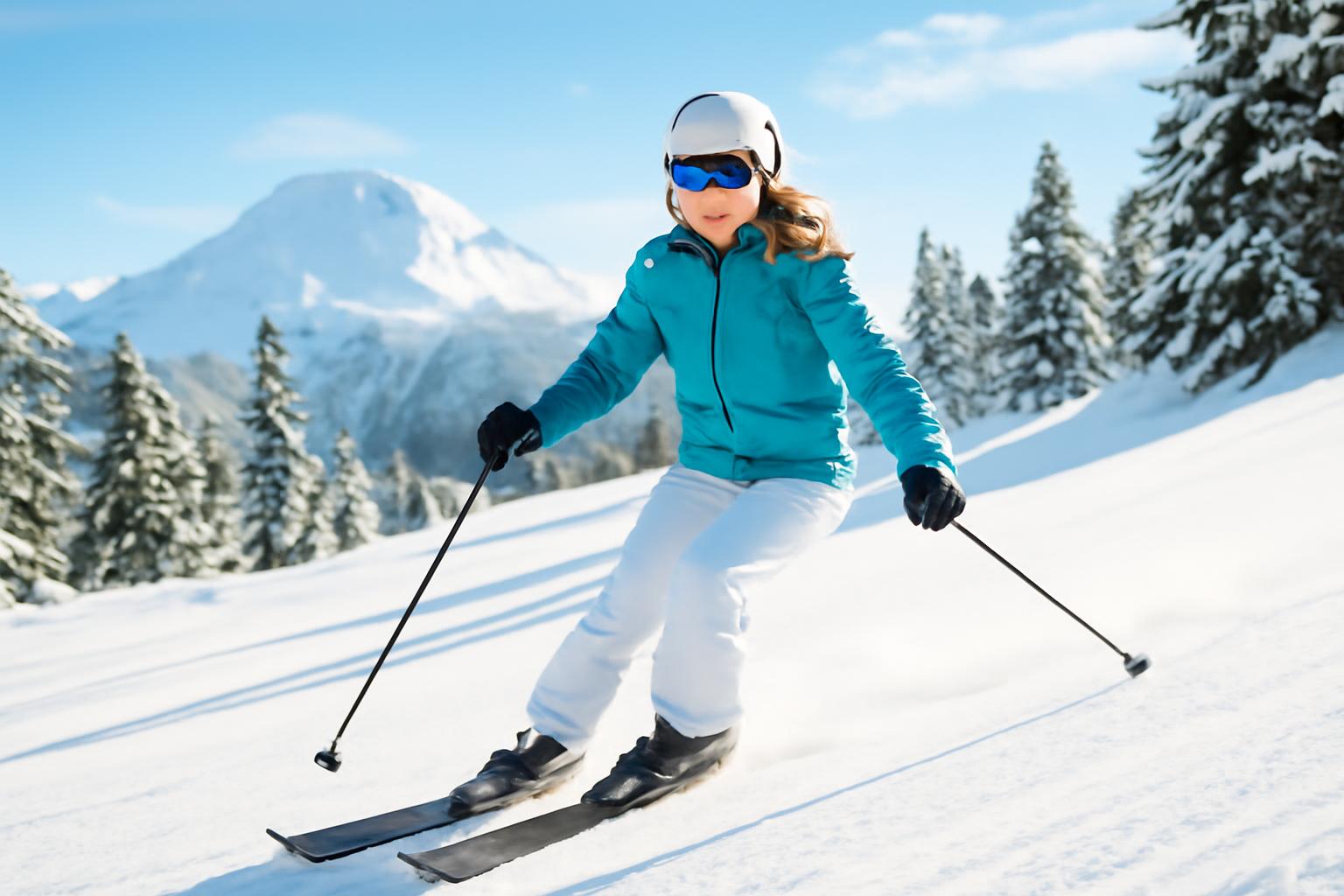
Build skiing confidence through control, not forced bravery.
Skiing confidence is not the absence of fear. It is the ability to make controlled turns, manage speed, read the situation, and choose terrain that matches what you can do today.
That distinction matters. If confidence is treated as courage, every easier run can feel like avoidance and every pause like failure. If confidence is treated as the result of reliable skills and sound decisions, repeating a familiar run, taking a lesson, or stepping down when conditions change becomes purposeful.
The practical goal is not to make yourself feel fearless before you move. It is to create enough control, familiarity, and support for the next step to feel manageable. Start by identifying what is making skiing difficult, then build through repeatable skill gates rather than trail labels or pressure from other people.
This is general guidance, not an individualized technical, medical, or emergency assessment. Follow posted resort rules and directions from ski patrol, instructors, and on-mountain staff.
First, identify what is undermining your confidence
Confidence can change without a total loss of skiing ability. The right response depends on whether the main problem is technical, psychological, physical, equipment-related, environmental, or social.
Before deciding that you are simply “not confident,” check these six areas:
- Technique and speed control: Can you stop where you intend to? Can you link turns at a chosen speed? Do you become unbalanced when the slope steepens, or rely on abrupt braking once speed builds?
- Fear and self-talk: Are you anticipating a fall, worrying about looking foolish, or replaying a previous incident? Does one difficult section make you assume the entire run is beyond you?
- Physical capacity: Are you tired, hungry, thirsty, cold, in pain, or less fit than when you last skied regularly? These factors may reduce the attention and movement quality available to you.
- Boots and equipment: Are your boots painful, numb, loose at the heel, or slow to transmit your movements? Are unfamiliar skis or uncomfortable clothing distracting you?
- Mountain conditions: Has visibility deteriorated? Is the snow icy, heavy, chopped up, or difficult to read? Is the gradient greater than expected, or is the run crowded?
- Social pressure: Are you trying to keep up with faster companions, avoid delaying the group, or ski a run because someone else insists that it is easy?
More than one factor may be involved. A skier with adequate technique might struggle when tired, rushed, and unable to see the snow surface clearly. Conversely, anxiety may point toward a genuine technical weakness, such as unreliable speed control. Treat fear as information to investigate—not proof that you are incapable, but not proof that the situation is safe either.
Replace the broad statement “I have lost my confidence” with a specific description:
- “I become tense when my skis point into the fall line.”
- “I worry about unloading this chairlift.”
- “I lose my line when the run is crowded.”
- “I can turn on soft snow but panic on icy patches.”
- “I am comfortable following an instructor but anxious alone.”
- “I sit back and rush my turns when friends move faster.”
- “I cannot decide where to stop when I do not have a leader.”
A specific trigger gives you something practical to change. Depending on the trigger, the answer might be instruction, easier terrain, a boot assessment, independent route practice, a rest break, or different companions.
It is also possible to ski well behind an instructor and feel uncertain alone. An instructor may be supplying route choice, pace, stopping points, feedback, reassurance, and an external focus. An anonymous skier described this contrast in a community discussion about lost skiing confidence, although that anecdote should not be treated as proof that every skier has the same problem. Following successfully still demonstrates useful ability, but independent confidence also requires practice choosing a line and regulating your own pace.
At the beginning of each day, conduct a brief check:
- How is my energy?
- Is anything painful or unusually uncomfortable?
- Are my boots and clothing comfortable?
- What are the visibility and snow like?
- Which suitable runs and easier alternatives are open?
- What does the group expect to ski?
- Where and when might I take a break?
Day-to-day variation does not necessarily mean that you have forgotten how to ski. Your usable control may change with fatigue, discomfort, stress, weather, traffic, or group dynamics. Focus on what is present now rather than trying to prove that you are still the skier you were on a previous trip.
Use a confidence ladder instead of chasing harder runs
Confidence usually grows from repeated control and achievable challenges. It is not established by surviving one intimidating run.
For a new skier, a sensible confidence ladder might look like this:
- Become familiar with the boots, skis, poles, and binding area.
- Learn basic movement on flat snow, including stepping and turning around.
- Practise getting up after an ordinary fall when no injury is involved.
- Make short, straight glides on shallow terrain.
- Learn controlled braking and stopping.
- Practise isolated turns and traverses.
- Link turns without repeated loss of balance.
- Manage speed through line and turn shape.
- Repeat suitable easy runs until those skills remain dependable.
- Increase the difficulty modestly while preserving the same control.
This is not a rigid timetable. Some learners need intermediate steps or more repetition, while others acquire a particular movement quickly. The point is that one skill should support the next. A step-by-step beginner progression similarly moves from equipment familiarity and basic mobility through gliding, braking, turning, and speed management.
Returning and technically experienced skiers need a modified ladder:
- Begin on familiar, forgiving terrain.
- Rehearse balanced stance and smooth turn shape at low speed.
- Repeat the same run so route uncertainty is reduced.
- Add one variable: slightly more speed, a modestly steeper pitch, a different turn size, or greater independence.
- Check whether stopping, balance, and speed control remain repeatable.
- Return to easier terrain if movements become rushed or defensive.
Moving from a quiet, groomed run in clear weather directly onto a steeper, crowded run in flat light changes several demands at once.
Use observable readiness markers rather than waiting for complete emotional certainty. Before progressing, ask whether you can:
- stop on demand in an appropriate place;
- link turns without repeatedly losing balance;
- select and maintain a manageable speed;
- vary your turn size when space permits;
- finish turns farther across the slope when you need more speed control;
- look ahead toward your intended line;
- recover from a small imbalance without panicking or abandoning the turn.
Completing those actions once is not enough. Look for repeated control under the current snow, visibility, traffic, and fatigue level. A run that felt like an escape is less informative than several calm repetitions, but no numerical test can guarantee readiness.
Trail colors are only part of the decision. Ratings vary between resorts, while grooming, ice, visibility, traffic, snow quality, and weather can change the practical difficulty of the same marked run. A run that felt comfortable yesterday may require a different choice today.
Repeating an easy run is not failure. It reduces uncertainty, helps you notice landmarks, and lets you refine movement without adding unnecessary demands. Moving down a level can serve the same purpose.
Use these decision rules during a session:
- Continue when control is repeatable and you still have attention available for the terrain around you.
- Repeat when the run is manageable but one or more skills remain inconsistent.
- Step down when fear increases or movements become rushed and defensive.
- Pause when tension or fatigue is rising and a break may restore useful practice.
- Stop when pain, worsening conditions, alcohol, or repeated loss of control makes continued skiing a poor choice. General confidence guidance also consistently emphasizes skiing rested, fed, hydrated, and sober rather than forcing progress under depleted conditions (AliKats).
A decision to stop is not a statement about your long-term ability. It is a judgment about the present combination of skill, energy, terrain, and conditions.
Build confidence around reliable control of balance, turns, and speed
General confidence advice cannot replace an instructor watching you ski. An instructor can distinguish between a technical problem, a terrain mismatch, and a habit that appears only under pressure. Even so, several widely repeated fundamentals can give easy-terrain practice a useful focus.
Begin with a centered, adaptable stance. Do not deliberately sit back or lock your body into a fixed position. Aim to remain able to move with the skis and respond to changes in the slope. If your stance consistently collapses as terrain steepens, seek instructor feedback rather than trying to diagnose the cause yourself.
Balance over the outside ski is another common instructional priority. During a turn, stable support over that ski may make the movement feel more deliberate. Abrupt twisting, sudden braking, and throwing the body away from the slope may feel protective in the moment, but can make balance and direction harder to maintain.
Turn shape is central to speed management. Skis generally accelerate as they point more toward the fall line—the direction the slope descends—and slow as the turn continues across the hill. This is why a smooth, completed turn can feel more manageable than pointing downhill for too long and then making an abrupt defensive stop. A technique guide by a CSIA Level 4 instructor discusses this relationship between fall line, turn shape, stance, and outside-ski balance.
Look ahead toward your intended path and next turn rather than staring continuously at the ski tips. This may help you notice changes in surface, traffic, gradient, and available space earlier. Your skis still matter, but they should not consume your entire field of attention.
Practise one technical cue at a time. For example:
- On one run, stay centered and able to move.
- On another, finish each turn enough to maintain a selected speed.
- On the next, look toward the upcoming turn and stopping point.
Choose gentle terrain where you can explore the cue without using all your attention merely to descend.
A practical warm-up might include two familiar runs. On the first, focus on relaxed posture, smooth linked turns, and stopping on demand. On the second, finish each turn enough to preserve a chosen speed while looking ahead. This is an example, not a readiness test; adjust the amount of warm-up to your ability, conditions, and instructor’s advice.
It is useful to distinguish two kinds of commitment:
- Committing to a suitable turn means allowing a movement already within your ability to develop smoothly rather than interrupting it with a sudden defensive action.
- Committing to excessive terrain or speed means entering a situation where you cannot reliably manage the outcome.
The first may improve control. The second is not a confidence exercise.
Beginners should not use advanced drills or practise near the limit of control without suitable supervision. If stance, balance, stopping, or linked turns remain unreliable, a qualified instructor can choose appropriate terrain and offer corrections based on what is actually happening.
Follow a simple plan when fear rises halfway down a run
Fear halfway down a run calls for a decision process, not a demand to become brave instantly.
If conditions and resort rules allow, use this sequence:
- Move out of the main flow only if you can do so without an abrupt or unsafe maneuver.
- Stop in a place where you are visible and not obstructing the run.
- Take a few slow breaths if that helps reduce tension.
- Identify the immediate trigger.
- Assess the marked route, snow, traffic, visibility, and your remaining energy.
- Choose the least demanding reasonable option.
Always follow posted signs, local responsibility rules, and instructions from resort personnel. If you are unsure where it is appropriate to stop or how to proceed, seek direction from an instructor, patroller, or on-mountain employee rather than relying on a generic online sequence.
Breathing and supportive self-talk are optional coping tools, not guaranteed treatments. Slow breathing may help you release some tension and create a moment in which to assess the situation. It does not change unsuitable terrain or replace the ability to stop and turn.
Use a narrow task cue instead of an emotional command. “Do not be scared” gives you no physical action. A cue such as “complete this turn and stop beside that visible marker” defines a limited, observable task—provided the stopping place is permitted and appropriate.
Depending on the marked route, conditions, and your ability, practical options may include:
- using a wider line where space and traffic permit;
- making smoother, more completed turns;
- following an instructor or trusted skier at a suitable pace;
- taking an easier open and marked route when one is available;
- pausing in an appropriate place;
- ending the session once you reach a safe exit point.
Do not invent an unmarked escape route or enter a closed area. Follow posted resort instructions and ask staff what to do if the available descent exceeds your control. Checking the trail map and locating patrol or guest-service points before setting out can make that easier; this preparation is also recommended in a beginner mountain-confidence guide.
Fear can provide useful caution. It might be drawing your attention to difficult snow, depleted energy, social pressure, or unreliable speed control. But it should not automatically decide that you must force your way down—or that you should abandon skiing permanently.
The useful response lies between those extremes: pause where permitted, gather information, reduce the task, and ask for help when the situation exceeds what you can manage.
Choose instruction that fits the actual confidence problem
Professional instruction is especially useful when you cannot identify what is going wrong, repeatedly lose control, have a specific fear, or have stopped progressing despite practice.
An instructor can observe whether you are sitting back, rushing the start of a turn, choosing an unsuitable line, or reacting to terrain that is too demanding. Just as importantly, an instructor can select terrain, set the pace, provide stopping points, and help separate a technical limitation from anxiety about independent decisions.
A private lesson may suit you if you want:
- an individualized pace;
- frequent, specific feedback;
- targeted work on one fear or movement;
- flexible terrain selection;
- room to ask questions without group pressure;
- help rebuilding after a long break or confidence setback.
A group lesson may suit you if you prefer:
- a format that is often less expensive, although pricing varies;
- learning by observing peers;
- social encouragement;
- seeing other people work through similar difficulties;
- shared practice with skiers at a comparable level;
- less continuous attention from the instructor.
Neither format is universally better. Private instruction can be focused but may cost more, and some skiers find continuous attention tiring. Group instruction can be encouraging and economical, but a poorly matched group may move too quickly or provide too little individual feedback. Commercial lesson comparisons likewise emphasize goals, flexibility, budget, learning preference, and group fit rather than establishing one format as superior for every nervous skier (Oxford Ski Company).
Instructor quality and patience may matter more than the lesson label. So may group size, ability matching, actual teaching time, and whether the instructor understands your goal. If practical, combine formats: use a well-matched group for repetition and peer support, then book a targeted private session for a specific technical or confidence barrier.
Before booking, ask:
- Does the instructor regularly work with nervous or returning skiers?
- How will my current ability be assessed?
- Can we remain on easier terrain while addressing the problem?
- How large is the group, and how are ability levels matched?
- Can I discuss a previous fall or a specific fear trigger?
- Can the pace be adjusted if I become tense?
- Which runs would be suitable for independent practice afterward?
At the start of the lesson, avoid saying only that you lack confidence. Give the instructor a useful observation:
“I can make controlled turns here, but I become tense and sit back when the slope steepens or when I ski without someone choosing the line.”
That statement identifies the context, visible response, and independence issue. It gives the instructor something concrete to watch.
Indoor or dry-slope practice may offer a lower-commitment setting for rehearsing technique and receiving feedback. It can be useful preparation before a return to snow, but it cannot reproduce outdoor snow, weather, flat light, crowds, route finding, or mountain navigation.
Be cautious about promises of faster progress or confidence within a fixed number of lessons. Instruction can provide feedback and structure, but the available evidence does not establish a universal timeline.
Protect your pace when skiing with faster friends
Trying to keep up with faster companions may contribute to rushed decisions and defensive movements. You might point the skis downhill for longer than intended, hurry turns, lean back, or brake abruptly. A fall or frightening descent may then reinforce the belief that your technique has disappeared, even when the original problem was an unsuitable pace.
Choose companions who respect pauses, terrain choices, and individual speed. Pressure is not automatically useful motivation. A supportive companion can wait at agreed points, help interpret a map, and remain calm without pulling you onto terrain beyond your control.
Set the boundary before reaching the top of a run:
“I am staying on this run and skiing at my pace. Meet me at the lift instead of waiting for me to keep up.”
Agreeing on meeting points is often better than requiring the least confident skier to follow continuously. Suitable locations depend on the resort and route, but could include an agreed lift area or a marked, visible junction where stopping is allowed. Everyone can then move at an appropriate pace without turning the descent into a chase.
Being an advanced skier does not automatically make someone a suitable teacher. A friend may demonstrate movements that are inappropriate for your stage, choose terrain based on personal comfort, or give several conflicting instructions at once. When possible, technical diagnosis and terrain progression should come from a qualified instructor.
You can still use a trusted companion to develop independent confidence in stages:
- Follow an instructor or calm, trusted skier down a suitable run.
- Notice the marked route, landmarks, junctions, wider sections, and agreed stopping points.
- Discuss where speed tends to increase and where the run becomes easier.
- Repeat the same route independently only if the conditions and your control remain appropriate.
- Rejoin at agreed locations rather than trying to match the other skier’s speed.
This exercise separates route-finding confidence from technical ability. First you learn the path with support; then you practise making your own decisions without simultaneously adding unfamiliar terrain.
Measure progress against your previous controlled skiing, not someone else’s speed. Useful comparisons include smoother linked turns, an earlier decision to slow down, a calmer lift unload, or repeating a familiar route independently. Your companion’s preferred gradient is not a measure of your worth or readiness.
Compatible partners can support confidence and good decisions. No companion should pressure you onto terrain where your stopping, turning, or speed management is not dependable.
Remove physical, equipment, and mountain-day obstacles
Confidence is harder to build when basic needs are competing for attention. Rest, food, hydration, warmth, sobriety, and planned breaks create better conditions for productive practice.
Start the day rested and eat before low energy becomes an urgent problem. Carry water or plan where you can obtain it. Take a break before fatigue becomes obvious in your movements. If alcohol has affected your judgment or control, do not continue skiing.
Downgrade or end the session when fatigue, pain, worsening visibility, difficult snow, congestion, or repeated loss of control changes what you can manage. Do not use the cost of a lift ticket, the expectations of friends, or yesterday’s performance as a reason to force today’s session.
Clothing also affects attention. Properly fitted layers and suitable weather protection can reduce distracting cold, dampness, and discomfort. No clothing or equipment choice can guarantee that you will avoid a fall or injury.
Reasons to consult a qualified boot fitter or rental technician may include:
- significant heel movement inside the boot;
- persistent pressure points;
- numbness;
- excessive movement of the foot or lower leg;
- a delayed feeling between moving the leg and the skis responding.
These observations do not diagnose a boot problem, and the solution is not automatically tighter buckles or thicker socks. A fitter or technician can assess the actual fit and equipment instead of leaving you to compensate through posture.
Before setting out, check:
- the resort trail map;
- marked run difficulty;
- current open and closed routes;
- lift access and return options;
- available condition information;
- ski-patrol and guest-service locations.
Confidence does not transfer unchanged between conditions. Control on a groomed, uncrowded run in clear weather may not transfer directly to ice, variable snow, flat light, or heavy traffic. That does not make the earlier confidence false. It means the task has changed.
Warm up on easy terrain even if you handled harder runs on a previous day. Early familiar runs allow you to assess your body, equipment, snow, visibility, and speed control before making a larger terrain decision.
Rebuild after a fall, injury, or long break—and know when self-help is not enough
Ordinary mistakes and falls can occur while learning. They do not automatically mean that you are incapable or should never ski again. At the same time, falling should not be treated as a goal or used to justify unnecessary risk.
After a frightening fall in which injury has been ruled out, resist the urge to prove yourself immediately on the same challenge. Return to familiar terrain and check whether your basic skiing remains controlled:
- Can you stop on demand?
- Can you link turns at a manageable speed?
- Can you look ahead and choose a line?
- Can you repeat those movements without rapidly escalating fear?
Keep the first sessions short if necessary. Add only one challenge at a time: a little more independence, a different turn size, or a modest increase in gradient. If the setback reveals a recurring technical problem, use an instructor rather than repeatedly recreating the frightening situation.
After a long break, let current performance—not former trail history—set the starting point. Fitness, risk perception, equipment, and conditions may have changed. Being cautious on terrain once skied comfortably does not erase past experience; it means that experience must be reconnected with present-day control.
Unresolved pain, an injury still under care, or uncertainty about medical readiness requires advice from an appropriate clinician rather than an online progression plan. Fear tied to significant trauma, repeated panic on easy terrain, or persistent avoidance may also warrant help from a qualified mental-health professional. An instructor-coach writing about persistent skiing fear similarly advises consulting a doctor or qualified therapist for significant trauma, a diagnosed anxiety condition, or an injury still under medical care (FlourishWell).
After each session, record:
- terrain skied;
- snow, visibility, and traffic;
- energy and physical comfort;
- specific fear triggers;
- successful repetitions;
- skills that stayed controlled;
- the point at which control began to deteriorate;
- one practical next step.
Do not turn the log into a readiness score or guarantee. Use it to notice relationships. You might find that confidence drops late in the day, that a particular pair of boots causes discomfort, or that independent skiing improves when you first follow a familiar route with an instructor.
A straightforward next-session plan could be:
- Arrive rested, fed, hydrated, and sober.
- Check equipment comfort, weather, open terrain, and group expectations.
- Warm up on familiar terrain.
- Practise one skill, such as completed turns or looking ahead.
- Continue, repeat, or step down according to repeatable control.
- Take a break before fatigue noticeably changes your movements.
- Record what worked and what should change next time.
How long does it take to become confident at skiing?
There is no reliable fixed timeline. Confidence depends on previous experience, movement skills, fitness, fear triggers, lesson quality, practice frequency, terrain, snow, visibility, and whether the skier feels pressured.
A new skier may gain confidence in basic gliding and stopping before feeling comfortable with lifts or linked turns. A returning skier may recover technique quickly but need longer to rebuild independent route choice after a fall or long break. Claims that confidence should appear within a set number of days overlook these differences.
Measure progress through repeatable control rather than elapsed time. If you can stop on demand, link turns, regulate speed, and make calm decisions on suitable terrain more consistently than before, confidence is developing even if harder runs remain inappropriate.
How do I know when I am ready for a steeper or unfamiliar run?
Look for repeatable control on your current terrain. You should be able to stop on demand, link turns without repeated balance loss, maintain a manageable speed, vary turn shape, look ahead, and recover from small disturbances without panic.
Then assess the proposed run. Consider snow, visibility, traffic, gradient, width, marked route options, and your energy. Trail color alone is not enough because resort ratings and conditions vary.
Increase one challenge modestly. If the terrain is unfamiliar, avoid simultaneously adding poor visibility, high speed, fatigue, and social pressure. Repeat your current level if control is inconsistent; step down if defensive movements or fear are increasing.
Why can I ski confidently behind an instructor but feel afraid alone?
An instructor may be choosing the route, speed, line, stopping points, and moment to begin each turn. They may also provide reassurance, immediate feedback, and a clear external focus. When you ski independently, all those decisions return to you at once.
Build independence gradually. Follow an instructor on a suitable run, identify landmarks and agreed stopping points, and discuss how the line helps manage speed. Repeat the same route independently only when conditions and your control remain appropriate. This practises decision-making without adding unfamiliar terrain at the same time.
Are private or group ski lessons better for a nervous skier?
Neither is best for everyone.
Private lessons generally offer individualized pacing, frequent feedback, flexible terrain choice, and focused work on a particular fear or technical issue. Group lessons are often less expensive and may provide peer observation, encouragement, shared struggles, and social practice, although actual prices and lesson structures vary.
A private lesson may fit a skier who becomes quiet in groups, needs a different pace, or has one specific barrier. A well-matched group may fit someone who relaxes around peers and learns by watching. Instructor patience, group compatibility, actual teaching time, goals, budget, and personality may matter more than the format itself.
When does skiing fear require help beyond lessons and practice?
Consider support beyond ordinary lessons when fear follows significant trauma, repeatedly becomes panic on easy terrain, causes persistent avoidance, or remains severe even when technical control and terrain are appropriate. Unresolved injury symptoms, ongoing pain, or uncertainty about medical readiness should be discussed with an appropriate clinician.
A ski instructor can assess movement and terrain choice, but should not replace medical or mental-health care. Likewise, breathing and self-talk may help with ordinary tension but are not substitutes for qualified support when symptoms are persistent or severe.
Confidence is the ability to make controlled, appropriate choices—not the absence of fear. Begin where stopping, turning, and speed management are dependable. Repeat successful runs, increase only one challenge at a time, and protect your pace regardless of what companions choose to ski.
Stepping down, resting, booking suitable instruction, consulting a boot fitter, contacting ski patrol, or seeking clinical help after injury, trauma, or persistent panic are not failures of confidence. They are examples of it.