
Choose Your Vancouver Dates by Weather, Value, and What You Want to Do
July and August offer the strongest odds of warm, relatively dry outdoor days. More balanced options are late May, June, and later September.
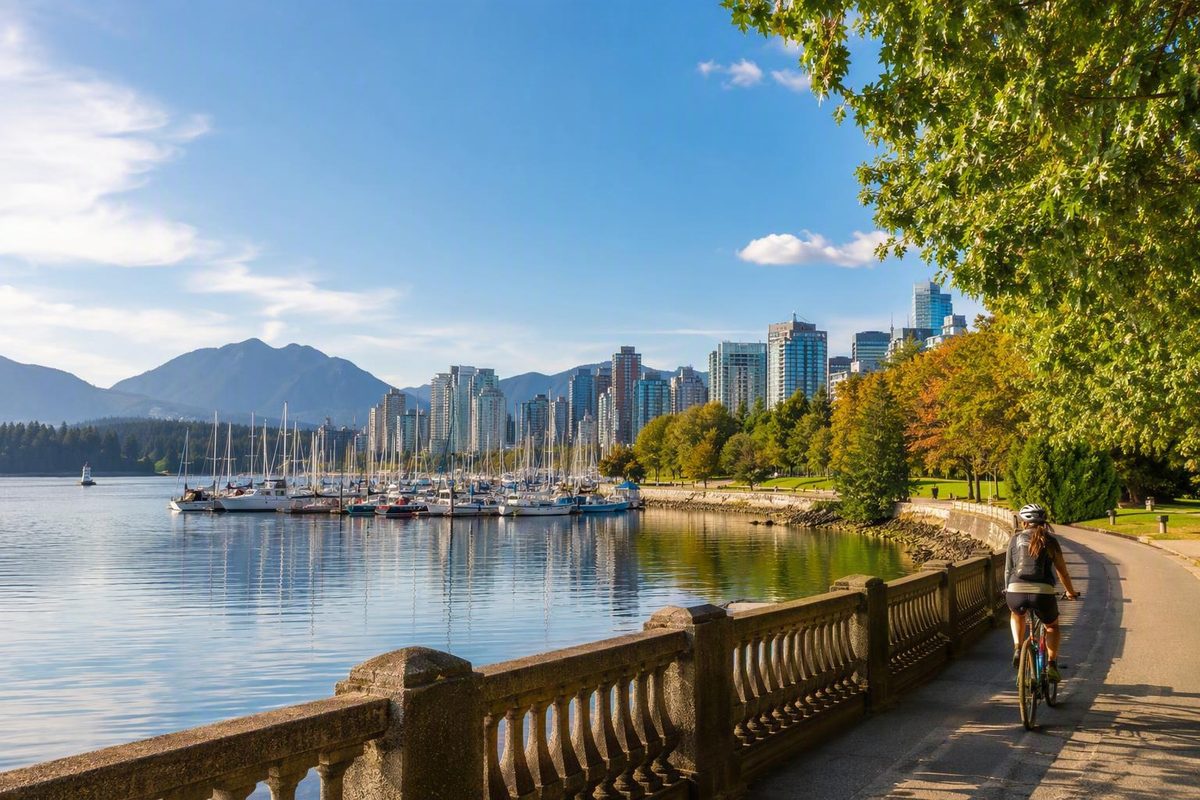
The short answer: Vancouver’s best travel windows
There is no universally best time to visit Vancouver. Your ideal dates depend on how you weigh reliable outdoor weather, accommodation demand, crowds, seasonal scenery, festivals, wildlife opportunities, and nearby snow sports.
For most visitors, the clearest choices are:
- Best overall balance: May through June and September through early October
- Best odds of warm, relatively dry outdoor weather: July and August
- Best practical compromises: late May, June, or later September
- Best for generally lower lodging demand: late fall and winter
- Best for skiing and snowboarding near the city: winter
July and August form the core peak season, combining the broadest outdoor choice with larger crowds, stronger accommodation demand, and generally higher prices. May, June, September, and early October offer different versions of a shoulder-season compromise. Lonely Planet’s seasonal overview similarly distinguishes peak summer for sunshine and outdoor activities from quieter, potentially better-value periods in spring and fall.
If you want one practical starting point, compare accommodation for late May, June, and the latter part of September. These windows can offer pleasant sightseeing conditions without committing fully to peak summer. None guarantees sunshine, low rates, open mountain trails, or small crowds, so check whether your dates overlap holidays, cruise traffic, conferences, or major events.
| Period | Typical conditions | Crowd and price pressure | Best uses | Main drawback |
|---|---|---|---|---|
| Late March–April | Cool to mild, changeable, with blossom possibilities | Usually below summer pressure | Blossoms, gardens, city walks, cultural attractions | Rain; higher routes may still be snowy |
| May–June | Increasingly mild, with long days and improving outdoor access | Moderate and rising toward summer | First visits, parks, sightseeing, lower-elevation recreation | Less settled than July and August |
| July–August | Warmest and relatively driest part of the year | Highest pressure | Beaches, paddling, festivals, cycling, broad hiking access | Crowds, cost, possible smoke disruption |
| September–early October | Mild spells possible, then progressively cooler and wetter | Early September can remain busy; later demand may ease | Hiking, sightseeing, foliage, cultural events | Weather becomes less dependable |
| Late October–November | Cooler and wetter | Generally below summer pressure | Food, museums, galleries, neighborhoods, fall atmosphere | Rain can constrain long outdoor days |
| December–February | Mild by Canadian winter standards at sea level, but frequently wet with short days | Generally lower outside holidays and events | Urban breaks, dining, nearby skiing | Limited daylight and frequent rain |
The table is a decision guide rather than a forecast. Vancouver’s coastal weather varies from year to year, while conditions in the nearby mountains can differ sharply from those downtown. AAA’s season guide also characterizes summer as the busiest and most expensive period and winter as a lower-price season with substantial rain in the city and snow recreation in the surrounding mountains. See AAA’s seasonal comparison.
How Vancouver’s four seasons change the trip
Spring: blossoms and a city opening outdoors
Spring is transitional. Conditions become milder, gardens and street trees begin blooming, and waterfront walks and park visits become more appealing. It is a useful season for combining neighborhoods, food, cultural attractions, and shorter outdoor excursions without depending on beach weather.
The trade-off is uncertainty. Rain remains possible, and higher-elevation routes can stay snowy after sea-level paths have become practical. A May trip therefore suits flexible sightseeing better than an itinerary built around one specific alpine hike.
Cherry blossoms commonly appear from late March into April, but varieties bloom at different times and the peak shifts with the weather. By May, visitors may find late-flowering trees rather than the main display. If blossoms are central to the trip, confirm current bloom conditions instead of relying on a fixed annual date.
Summer: the easiest season for outdoor planning
Summer brings Vancouver’s warmest and relatively driest weather, along with long evenings and the broadest choice of outdoor activities. Beaches, cycling, paddling, seawall walks, festivals, patios, and mountain outings are easier to combine when persistent rain is less likely.
The Vancouver climate display published by U.S. News, using data attributed to the National Climatic Data Center, shows July and August as the two driest months in its monthly series and August as the warmest by a narrow margin. Because the page does not identify the reference period for those averages, the figures are most useful as a broad seasonal pattern rather than a forecast for a specific visit. View the displayed Vancouver climate data.
Summer’s disadvantage is demand. Accommodation choices narrow, major attractions become busier, and popular timed activities may sell out. July and August are most suitable for travelers who value outdoor reliability enough to accept more competition for rooms, reservations, and space.
Fall: a split season rather than one uniform window
September can feel like an extension of summer, particularly early in the month. Waterfront sightseeing, cycling, hiking, and day trips may remain attractive, while cultural programming and the first signs of fall color add variety.
Early September is not necessarily quiet or inexpensive. Labour Day and continuing cruise traffic can sustain demand. Later September is worth investigating as a compromise, but any reduction in prices or crowds depends on the actual dates, property, and event calendar.
October is more transitional. Cooler temperatures and increasing rain make all-day outdoor plans less dependable, but foliage, food, film, galleries, and neighborhood exploration can reward visitors who are comfortable changing course. By November, the balance generally shifts further toward restaurants, museums, markets, and covered attractions.
Winter: wet city days and snowy mountains
At sea level, Vancouver winters are relatively mild compared with much of Canada, but frequent rain, limited sunshine, and short days shape the urban experience. Winter can still work well for compact city breaks centered on dining, museums, galleries, neighborhoods, and seasonal events.
Elevation changes the picture. Nearby Grouse, Cypress, and Seymour, as well as Whistler farther from the city, are associated with winter skiing and snowboarding even when precipitation is falling as rain downtown. Each area has its own snow, lift, terrain, transport, and operating conditions, which must be checked directly before a mountain day.
Whatever the season, pack layers and a waterproof outer shell. Add sun protection in summer and appropriate warmer clothing for mountain outings. Seasonal patterns can guide packing, but they cannot predict whether a particular day will be sunny, windy, cool, or wet.
May, June, September, or October: choosing a shoulder-season month
“Shoulder season” is not one consistent block. May, June, September, and October create meaningfully different trips, and the right choice depends on whether you favor spring scenery, daylight, summer-like recreation, or fall culture.
May: best for spring atmosphere
May suits visitors who want fresh greenery, flowers, comfortable city walking, and less peak-season pressure. Lower-elevation parks, gardens, and waterfront routes are generally more useful than they were earlier in spring.
Rain remains possible, and higher mountain routes may retain snow. May works best when outdoor goals are flexible: urban cycling, gardens, sea-level walks, and scenic excursions rather than one must-do alpine trail.
Choose May if spring atmosphere matters more than maximizing beach weather. It may also offer more moderate accommodation demand, but it is not safe to assume that every May stay will cost less than every June or September stay.
June: best for daylight and improving access
June combines long days with expanding outdoor possibilities. It becomes easier to fit a park, neighborhood, waterfront segment, and evening meal into one day without rushing. Access to outdoor recreation also tends to improve as the month progresses, although the exact route and preceding winter still matter.
Weather can be less settled than in July or August, and demand is already rising. June should not be treated as a hidden low season. It is instead a strong compromise for travelers who want much of summer’s usefulness without choosing its busiest core.
Choose June for daylight, outdoor variety, and a city-and-nature itinerary. Keep rain protection available and avoid making every day dependent on clear weather.
September: best chance of a summer-like compromise
September can combine summer-like sightseeing with less pressure than July or August, especially later in the month. Hiking, cycling, waterfront time, and day trips may remain viable when the weather cooperates.
Early September can still be busy. A commercial Vancouver guide identifies May through September as the cruise season and cautions that Labour Day and cruise traffic can keep accommodation demand elevated during the first part of the month. Its price observations are property- and timing-dependent, not market-wide guarantees. Review the guide’s September caveats.
The latter part of September is therefore a sensible period to compare, not a secret formula. Check real availability for your dates and retain an indoor alternative in case the weather changes.
October: best for foliage and a rain-tolerant cultural trip
October rewards travelers interested in changing leaves, food, film, galleries, and neighborhood exploration. Early October can still produce enjoyable walking weather, while parks and residential streets take on a different character.
As the month progresses, cooler and wetter conditions become more likely. Long exposed outings may be less dependable, so October works better when city attractions and outdoor segments can be exchanged without disrupting the trip.
Choose October when fall atmosphere and cultural activities matter more than dependable outdoor weather.
The simplest shoulder-season rule is:
- Choose May for spring atmosphere and flowers.
- Choose June for long days and improving outdoor access.
- Choose September for the strongest chance of a summer-like compromise.
- Choose October for foliage and a cultural trip that can absorb rain.
The best time for beaches, hiking, blossoms, whales, festivals, and skiing
Beaches and paddling
June through August is the main period for beach time, kayaking, paddleboarding, and itineraries centered on the water. July and August provide the strongest general odds of warm, relatively dry conditions.
June is attractive if long evenings matter and you can accept a greater possibility of unsettled weather. September can also produce good waterfront days, but those conditions become less dependable as fall advances. Follow local forecasts and operator instructions for any water-based activity.
Hiking
May through September broadly suits outdoor recreation, but hiking cannot be timed by the city calendar alone. Elevation and seasonal conditions mean a route near sea level can be practical while a higher mountain trail remains wintry.
Summer normally offers the broadest choice. June and September can be good compromises, while spring snow or changing fall weather may constrain higher routes. Before committing to a hike, verify the exact route’s current status and make sure its distance, terrain, and required equipment fit your plans.
For excursions beyond Vancouver, remember that conditions vary substantially across British Columbia. Province-wide guidance notes that higher-elevation trails may remain snow-covered in spring and that some tourism services can operate reduced schedules later in fall, but the specific route or operator should always be checked. See the regional seasonal guidance.
Cherry blossoms
For cherry blossoms, target late March into April. The peak shifts from year to year, and different varieties flower on different schedules, so no single week is dependable.
The Vancouver Cherry Blossom Festival is associated with spring, but current dates and programming should be confirmed with the organizer. A blossom-focused visit is more resilient when gardens, neighborhoods, restaurants, and indoor attractions are also part of the plan.
Whale watching
Spring through fall is the broad opportunity window for whale-watching trips in the Vancouver area. Published travel guides differ on whether March or May should be treated as the beginning of the main season, reflecting differences in species, routes, and operator schedules rather than a guaranteed wildlife calendar.
Confirm that your chosen operator is running on your dates, read its cancellation and rescheduling terms, and treat recent sightings only as context. Wildlife sightings cannot be promised.
Festivals and events
Recurring seasonal examples include the Cherry Blossom Festival in spring, Pride and outdoor festivals in summer, the Vancouver International Film Festival in fall, and Dine Out Vancouver in winter. These associations can help identify the kind of trip available in each season, but current-year dates must be verified. Royal Caribbean’s seasonal guide provides an overview of activities and recurring events across the four seasons.
Events can also overturn normal shoulder-season expectations. A week that is usually quieter may have limited accommodation because of a festival, conference, holiday, or cruise schedule. Compare your exact dates rather than relying only on the month.
Skiing and snowboarding
Winter is the natural choice for combining Vancouver with Grouse, Cypress, Seymour, or Whistler. The city can serve as a coastal base for travelers who also want restaurants, museums, and urban sightseeing.
Do not infer mountain conditions from downtown rain. Conditions change with elevation, and every ski area has its own operating schedule, terrain availability, transport arrangements, and reservation policies. Review the chosen area’s live report before departure.
Vancouver city is also not Vancouver Island. The similar names can cause planning errors, but Vancouver Island climate figures and wildlife seasons should not be treated as direct evidence for conditions in the city.
Best dates by traveler type
First-time sightseers
Choose late spring, June, or September for a balance of neighborhood walking, waterfront time, parks, and day trips. If your schedule is inflexible and outdoor reliability is the priority, move toward July or August.
For a short first visit, where you stay may matter almost as much as the month. A walkable base makes it easier to use a brief spell of good weather without losing time crossing the city.
Families and fair-weather visitors
Choose July or August when reliable outdoor conditions matter more than cost or crowds. Beaches, parks, cycling, and evening activities are generally easier to arrange, with less need to rebuild every day around rain.
Reserve high-priority accommodation and timed activities early, but leave breathing room in the schedule. Peak-season crowds and ordinary travel delays can make a reservation-heavy itinerary tiring.
Budget-conscious visitors
Consider late fall through winter if you accept rain, short days, and the need for indoor alternatives. Lodging demand is generally lower than in peak summer, although holidays, conferences, concerts, and other events can produce exceptions.
A lower room price is not automatically better value if your plans depend on beaches or long mountain hikes. Winter value is strongest for travelers who genuinely enjoy restaurants, museums, galleries, markets, and flexible urban exploration.
Hikers and active travelers
Choose July or August for the broadest likely access. June and September are useful alternatives, subject to the particular route and current conditions.
Build the trip around more than one potential route rather than assuming a sunny downtown forecast makes every mountain outing suitable. If one trail is not practical, a lower-elevation walk or city cycling day may preserve the outdoor focus of the trip.
Cruise travelers
May through September broadly overlaps the reported cruise season, so accommodation near the waterfront and central transport routes can face pressure throughout that period. Early September may remain busy even though it is often called shoulder season.
If your cruise dates are fixed, compare pre- and post-cruise accommodation rather than assuming one side will be cheaper. Avoid placing a distant, weather-sensitive excursion immediately before embarkation.
Skiers
Stay in Vancouver during winter if you want a city base with access to nearby mountains. This works especially well for a mixed trip in which some days are devoted to snow sports and others to food, neighborhoods, or indoor attractions.
Check the chosen mountain’s live conditions, lift operations, transport, and reservation requirements. Conditions at elevation cannot be established by looking at the weather outside a downtown hotel.
Car-free urban travelers
Any season can work without a car when the trip is organized around a walkable base, transit, and compact neighborhood clusters. This approach is particularly useful in changeable weather: use a clear interval for the waterfront, then move to a nearby meal or indoor stop when conditions turn.
Vancouver Know’s listing-page summary recommends pairing transit, short walks, and neighborhood clusters instead of crossing the city by car all day Vancouver Know. That planning approach can make your chosen season easier to use, but it does not establish weather, pricing, or seasonal conditions.
Rain, wildfire smoke, and other reasons to keep plans flexible
Rain becomes a larger planning concern in late fall and winter, but it can occur in spring and during shoulder-season visits as well. Rather than treating a wet day as a failed day, keep one indoor or covered alternative available: a museum, market, gallery, long lunch, or compact neighborhood route with convenient transit.
A waterproof shell and footwear suitable for wet pavement are useful in changeable conditions. Plan exposed outdoor activities for the most promising forecast window instead of permanently assigning them to a particular day weeks in advance.
Wildfire smoke is a possible but unpredictable summer disruption. Travel guidance notes that wildfires can cause closures, detours, evacuations, or changes to outdoor plans, but it does not establish how often Vancouver itself will be affected in a given season. Monitor current weather and air-quality information close to departure and avoid making every day dependent on a long outdoor activity. Lonely Planet notes wildfire disruption among summer’s possible drawbacks.
Other seasonal highlights carry similar uncertainty:
- Blossoms may peak earlier or later than expected.
- Whales and other wildlife cannot be scheduled.
- Fall color varies by weather and location.
- Spring trail access depends partly on elevation and remaining snow.
- Ski conditions depend on current mountain weather and operations.
- Tours and transport services should be checked for the specific date and operator.
Keep city rain and mountain snow separate in your planning. Rain downtown does not establish snow conditions at a ski area, just as a snowy mountain webcam does not describe the seawall. A mild harbor day also does not establish that a high-elevation route is clear.
Flexibility does not mean leaving the itinerary blank. Choose one priority and one alternative for each half-day. A North Shore outing might have a city museum as its fallback, while a seawall plan can be divided into sections that end near transit, food, or covered attractions.
Booking, packing, and live checks before you go
For July and August, reserve accommodation and high-priority timed activities early because summer is the peak season. There is no universal booking deadline: availability varies by property, event calendar, room type, group size, and cancellation terms.
Use the same caution for early September. Labour Day, cruises, and major events can keep demand elevated, so a shoulder-season label does not guarantee plentiful rooms or lower prices. Compare your exact dates and consider whether refundable options justify their premium.
Pack for variation:
- Every season: layers, a waterproof outer shell, comfortable walking shoes, and a small day bag
- Summer: sun protection, water, and a light warm layer for evenings
- Spring and fall: rain protection, an insulating mid-layer, and footwear suitable for wet pavement
- Winter: warmer layers and gloves, plus appropriate clothing for mountain outings
- Activity days: equipment suited to the specific route or operator requirements rather than ordinary city clothing
Before building a trip around a seasonal highlight, verify:
- Current weather and air quality
- Blossom reports
- Festival dates and ticket requirements
- Whale-tour operating schedules and policies
- Trail access and current route conditions
- Ferry, shuttle, and attraction schedules
- Ski-area operations, transport, lifts, and available terrain
- Accommodation availability around holidays and major events
Keep each day geographically simple. Group stops within one neighborhood or along one transit corridor, and treat the seawall as a series of flexible segments rather than an all-or-nothing expedition. This reduces unnecessary travel and makes it easier to expand or shorten an outdoor plan as conditions change.
Frequently asked questions
What is the single best month to visit Vancouver?
There is no objective winner. June and September are both strong one-month compromises for many visitors.
Choose June for long days and improving outdoor access. Choose September for the possibility of lingering summer-like conditions, while remembering that early-month demand can remain high. Choose July or August instead if the strongest general odds of warm, relatively dry weather matter more than crowds and cost.
Is May or September better for visiting Vancouver?
Choose May for spring greenery, flowers, potentially lighter demand, and a cooler city trip. Accept intermittent rain and the possibility that higher-elevation routes will still have snow.
Choose September for a better chance of summer-like hiking, cycling, and waterfront weather. Accept that Labour Day and cruise traffic can sustain early-month demand. Neither month guarantees favorable weather or lower prices.
When is Vancouver least rainy?
July and August are generally Vancouver’s driest period. The monthly series displayed by U.S. News places August narrowly below July for precipitation, but the page does not state the climate averages’ reference period. Treat that difference as a broad seasonal indication rather than a precise prediction. See the source’s Vancouver weather display.
Rain is still possible in summer, so carry a light waterproof layer and check the current forecast before exposed waterfront or mountain plans.
When are Vancouver hotels generally cheaper?
Late fall and winter generally have lower lodging demand than July and August. Spring and later fall may also offer better value, but no month is always the cheapest. AAA identifies September through May as the lower-price period and December through February as the least expensive portion, while also cautioning that seasonal conditions vary. Read AAA’s price and season guidance.
Actual rates depend on holidays, events, cruise traffic, property type, booking timing, room availability, and cancellation terms. Compare exact dates rather than relying on a seasonal label.
Can I stay in Vancouver and ski nearby in winter?
Yes. Vancouver can serve as a base for winter trips to Grouse, Cypress, Seymour, and Whistler, allowing you to combine a relatively mild coastal city stay with mountain snow sports.
Check the chosen ski area’s snow report, lift and terrain status, operating hours, transport, and reservation requirements. Rain in central Vancouver does not by itself indicate poor snow at higher elevations.
Choose July or August for the strongest odds of warm, relatively dry outdoor days; late May, June, or later September for a more balanced trip; and late fall or winter for lower-demand urban travel or nearby skiing if rain is acceptable. Whatever your dates, verify live conditions and organize each day around a compact base, transit, and outdoor segments that can expand or contract.