
Plan a Simple Car-Free Beaty Museum Visit
Plan a Beaty Biodiversity Museum visit at UBC with current hours, ticket totals, transit routes, accessibility notes and a clear Beaty-vs-MOA choice.
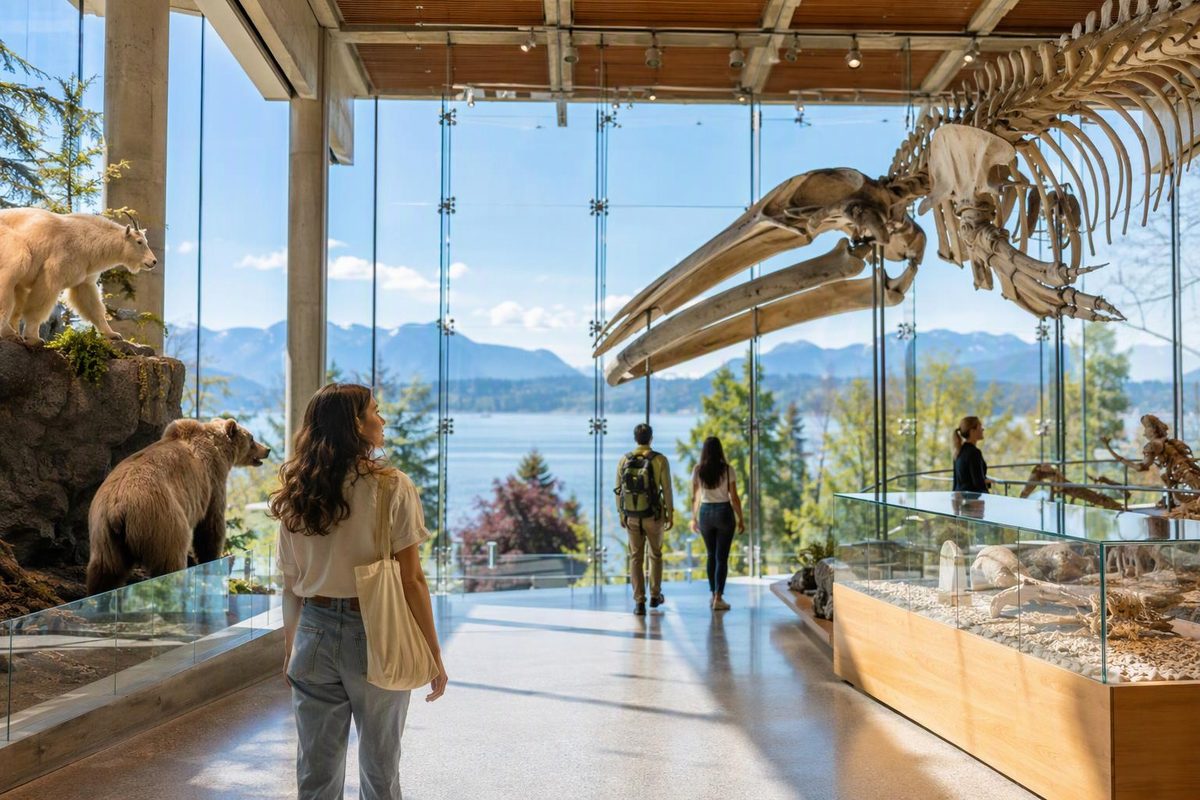
The Beaty Biodiversity Museum is the right UBC museum if you want natural history, biological specimens or the 26-metre blue whale skeleton. Choose the Museum of Anthropology (MOA) instead if cultural belongings, monumental works and global cultural collections—particularly Northwest Coast First Nations collections—are the stronger draw. You can visit both, but that creates a museum-heavy day with a cross-campus walk.
Choose your main interest and whether you want one museum or both; the result gives you a workable UBC plan.
Choose Your UBC Museum Plan
Make the blue whale and biological collections your main stop. Add lunch and one garden or campus walk instead of MOA.
Sources: UBC’s Beaty overview, Beaty hours and MOA visitor information. No visit-duration estimate is supplied.
What You Will Find Inside Beaty
Beaty is UBC’s natural-history museum, with more than two million specimens and more than 500 exhibits drawn from collections of birds, insects, fish, fossils, plants and other organisms, according to Destination Vancouver’s museum listing. It is a collection-led museum rather than a sequence of large immersive galleries.
The blue whale skeleton occupies the glass atrium and gives the museum an immediate focal point. The public collection continues below the entrance level, where rows of densely arranged cases make parts of the museum feel like visible research storage. That layout rewards visitors who arrive with one or two subjects in mind. Trying to inspect every case can turn a focused visit into a long survey of labels and specimens.
For a first visit, use the whale as the starting point and then concentrate on:
- the 26-metre blue whale skeleton;
- British Columbia dinosaur trackways;
- one or two collections that match your interests, such as mammals, birds, fish, insects, plants or fossils;
- the Discovery Lab or a documentary screening, when available.
The museum’s format suits people who enjoy comparing real specimens, reading classifications and seeing the breadth of a scientific collection. A visitor expecting a highly theatrical attraction may find the cases more methodical than dramatic. The whale provides the large-scale visual moment; much of the remaining value lies in looking closely.
UBC describes Beaty as particularly family-friendly, with a Discovery Lab, screenings and special exhibitions alongside specimens dating from the early 1900s. Check UBC’s campus attraction overview when deciding whether that collection style fits your group. Screening, lab and exhibition availability can vary, so treat those as additions rather than the sole reason for travelling to campus.
Beaty And MOA Serve Different Interests
Beaty and MOA are separate museums, even though both are on UBC’s Vancouver campus. Beaty focuses on biodiversity and natural-history specimens. MOA centres on cultural collections and art, with a particular emphasis on Northwest Coast First Nations.
Choose Beaty when the whale, fossils, insects, plants, fish, birds or scientific collections are the reason for your outing. It also makes sense for a group whose members want to move independently among cases and spend more time in whichever biological collection catches their attention.
Choose MOA when your priority is cultural belongings, monumental works or cultural collections from around the world. Do not treat Beaty as a substitute for MOA or assume the two museums cover similar material because they share a campus.
Seeing both is possible, but it changes the character of the day. You will need to move across campus and absorb two substantial indoor collections. That can work when both museums are genuine priorities, particularly in poor weather, but it leaves less room for a garden, lunch or an unhurried campus walk.
If only one person in the group wants both, selecting the museum with the broadest shared interest will usually produce a cleaner outing. If both collections matter equally, start with the one you most want to see while attention is fresh and treat the second as an optional continuation rather than an obligation.
Regular Hours And Online Ticket Totals
As checked September 24, 2026, Beaty’s published regular hours are Tuesday through Sunday, 10 a.m. to 5 p.m. The museum is closed Mondays and public holidays. Holiday schedules, special events and temporary changes can override the regular pattern, so confirm the official hours page before leaving for UBC.
The closure pattern matters when building a campus day. A Monday trip should not be planned around Beaty, and a public holiday requires a fresh check rather than reliance on the usual weekday schedule. Confirming hours is also sensible before committing to a long cross-city bus journey.
Advance booking is not normally required. The museum’s attraction partner says its online tickets may be used within one year and do not require a reserved entry time. The displayed totals include a 6% service fee and are non-refundable:
| Online Category | Displayed Total |
|---|---|
| Adult, 18–64 | $18.12 |
| Senior, 65+ | $15.10 |
| Non-UBC student with ID | $15.10 |
| Youth, 13–17 | $10.07 |
| Child, 5–12 | $10.07 |
Check the current online-ticket conditions before buying. A ticket valid for later use offers scheduling flexibility, but the non-refundable condition makes a speculative purchase less useful if your UBC day depends on weather or changing plans.
These figures are the displayed online totals from that ticket channel. They do not establish current walk-up admission, family pricing or admission rules for the UBC community. The supplied sources do not give those figures, so verify them directly with the museum rather than applying the online categories to every visitor.
UBC-Bound Buses Make A Car Unnecessary
Beaty’s address is 2212 Main Mall on UBC’s Vancouver campus. It is well west of downtown, so plan it as a UBC outing rather than a quick addition to a central-Vancouver itinerary.
From downtown, the 44 UBC Exchange/Downtown Express is the simplest direct option when it operates at the time you need. From other parts of Vancouver, the 4, 14, 25, 33, 49, 84, 99 B-Line and R4 are among the routes serving UBC. Route availability and service patterns can change, so use TransLink’s Trip Planner for your actual departure point, date and time.
The route number is only the first part of the plan. Check which UBC stop the suggested trip uses, note the return stop and allow for the campus walk at the end. This is especially useful in rain, when searching for the right building after getting off the bus adds avoidable exposure.
From UBC Exchange, follow campus wayfinding toward Main Mall and Beaty. The museum’s glass atrium and whale help confirm that you have reached the correct building. Do not follow MOA signs toward NW Marine Drive. MOA is at the northwest edge of campus, and its official visitor directions estimate a 15-minute walk from UBC Exchange.
That distinction prevents a common planning error: arriving at UBC and treating every museum as if it were beside the bus exchange. Beaty and MOA require different walks. If you intend to visit both, keep the cross-campus movement in the plan rather than regarding the museums as adjacent stops.
For the return journey, check live trip information before leaving the museum rather than assuming the inbound route is the best outbound choice. UBC has several bus destinations and boarding areas, and the most useful service depends on where you are going next.
A Half-Day Plan Keeps The Visit Focused
A low-friction Beaty half-day has four parts:
- Take a UBC-bound bus to campus.
- Visit Beaty while your attention is fresh for the specimen cases.
- Have lunch around University Boulevard.
- Add one contrasting campus stop rather than another long checklist.
This sequence puts the fixed indoor attraction first and leaves the more flexible part of the outing afterward. It also avoids arriving near closing time after lunch or a campus walk. If a screening or Discovery Lab activity is available and matters to your group, adjust the order inside the museum without trying to cover every collection beforehand.
A garden offers more contrast than a second set of indoor galleries. Compare UBC Botanical Garden and Nitobe Memorial Garden in this guide to the best Vancouver gardens. Garden conditions are weather-dependent, so a wet-day alternative is lunch followed by a shorter campus walk or an earlier return bus.
If MOA is the actual priority, use the separate downtown-to-MOA visit plan. Starting with the correct museum plan matters because the campus approach, walking direction and collection emphasis are different.
Visitors committed to both museums should resist adding several other UBC attractions. Start with the collection that matters most, break for food or an outdoor walk, and then decide whether the second museum still appeals. That structure preserves the option to stop without making the day feel incomplete.
Accessibility Requires Both Museum And Route Planning
Destination Vancouver lists Beaty as wheelchair accessible, with accessible parking and an accessible washroom. The public collections are below the entrance level, so visitors who need detailed step-free routing, elevator information or other accommodations should consult the museum’s accessibility page or contact the museum before travelling.
The listed facilities do not describe every approach across the UBC campus or every sensory condition inside the museum. A workable accessible visit therefore has two parts: confirming the building arrangements and checking the path from the selected bus stop or parking location. The specimen-rich lower level may also require more sustained close viewing than the whale atrium, which is relevant when deciding how much of the collection to attempt.
Beaty is a practical rainy-day anchor because most of the visit is indoors, but the journey still includes movement between transit, campus paths and the entrance. Bring a weather-aware plan for that outdoor portion. Pairing the museum with lunch and one nearby campus stop usually creates a more balanced outing than rushing between several ticketed attractions.