
What Is Vancouver Known For? Start With Water, Mountains and Food
Vancouver is known for Stanley Park, mountain views, sushi, Granville Island and film production. Here’s what to prioritize on a first visit.
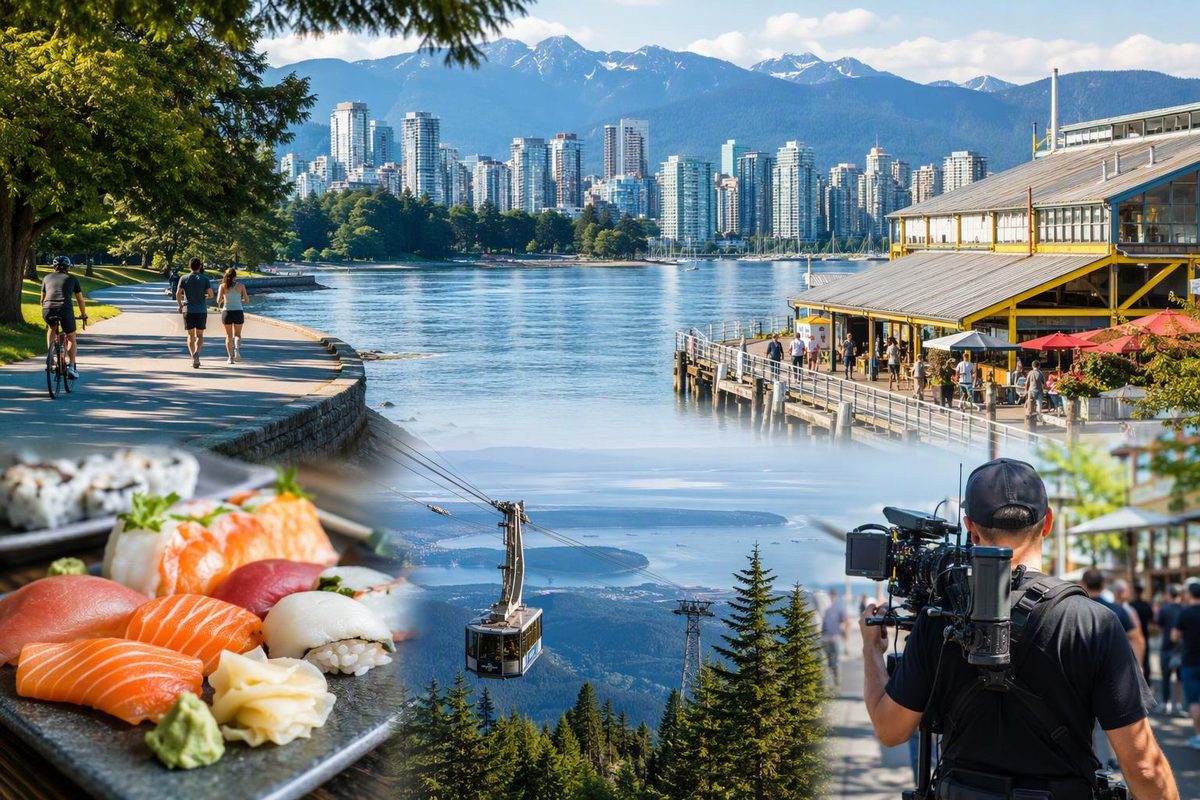
Vancouver, British Columbia, is known for its waterfront setting, Stanley Park and the seawall, nearby mountains, and a food scene particularly associated with sushi, seafood and Chinese cuisine. Granville Island and Gastown are familiar visitor landmarks; film and television production has also earned the city the nickname “Hollywood North.”
For a first visit, the most useful way to experience that reputation is to choose a waterfront outing, make room for a good meal, and treat the mountains as a separate excursion—not another stop on a downtown walk.
Stanley Park, the seawall and city beaches
Stanley Park is the clearest introduction to Vancouver’s mix of city and nature: a 400-hectare park with West Coast rainforest, trails, beaches and waterfront views, right beside downtown. You can explore the forest interior as well as the shoreline. The City’s Stanley Park guide includes maps for both.
The seawall is not just a path around the park. Vancouver’s wider seaside greenway extends 28 km from the Vancouver Convention Centre to Spanish Banks. The Stanley Park portion alone is about 9 km, which the City estimates takes two to three hours to walk. Allow extra time for substantial stops: a full park circuit is a meaningful part of the day, not a quick stroll. See the City’s seawall distances and guidance.
For a simpler waterfront outing, choose English Bay Beach, along Beach Avenue between Gilford and Bidwell streets, where the seawall meets the downtown beach setting. See the City’s English Bay Beach details.
Planning choice: pick a section rather than trying to cover the entire waterfront. Our seawall day guide helps you choose a route and a useful endpoint. Check notices and posted detours before committing to a full circuit.
Mountains close to the city
The mountains are part of Vancouver’s identity, but the main North Shore outings are across Burrard Inlet—not in downtown Vancouver.
Grouse Mountain offers sightseeing, hiking and seasonal winter activities. You do not need to undertake a strenuous hike to visit: its Blue Grouse Gondola provides an alternative to climbing.
A car-free approach is SeaBus to Lonsdale Quay, followed by bus 236 to Grouse Mountain, as described by the mountain’s own directions. The SeaBus crossing takes about 12 minutes, but that is only the ferry ride—not the total journey, which also includes waiting, walking and the bus. See TransLink’s SeaBus information.
Planning choice: give a mountain outing its own block of time. If scenery is the main reason you are going, check visibility and operating conditions before buying admission.
Sushi, seafood and Chinese cuisine
Vancouver’s food reputation is more useful as a guide to what to eat than as a claim about one “must-try” restaurant. Destination Vancouver’s sushi guide spans casual neighbourhood meals, omakase and aburi—flame-seared sushi.
For a concrete waterfront example, Miku serves aburi-style cuisine combining Japanese techniques with West Coast ingredients. Its harbour setting makes it a possible meal stop during a central waterfront day. See Miku’s restaurant information and compare it with other formats in our Vancouver sushi guide.
Chinese cuisine is another important part of the region’s dining identity. Chinatown offers one starting point, while Richmond is a separate destination worth considering for a food-focused excursion; do not assume all the region’s Chinese dining is concentrated in downtown Vancouver. Destination Vancouver’s Chinese cuisine guide covers both cities.
Granville Island and Gastown
These two famous stops serve different purposes.
- Granville Island: choose it for food browsing and craft shopping. Its indoor Public Market brings together food shops, produce stalls and locally made handcrafted goods. See the official Public Market guide.
- Gastown: choose it for brick streetscapes, boutiques and the Steam Clock. Despite its old-fashioned appearance, the clock was built in 1977. See Destination Vancouver’s Gastown guide.
Neither needs to become an all-day checklist. Browse the market and eat, or take a Gastown neighbourhood walk with one café or restaurant stop.
Indigenous art and living cultures
Vancouver stands on the unceded traditional territories of the Musqueam, Squamish and Tsleil-Waututh Nations. Their relationships with this land are ongoing, not simply a chapter of the city’s past. The City’s territorial acknowledgement explains this context.
For visitors interested in art and cultural context, the Museum of Anthropology at UBC is a substantial destination. It is known for its Northwest Coast collections, including works by Bill Reid, and works by Musqueam artists welcome visitors to the site. Its collections also extend well beyond this region. Read about the Museum of Anthropology.
Plan it as a UBC outing rather than a quick detour from downtown.
“Hollywood North”
Vancouver’s film and television work explains its “Hollywood North” nickname, noted by Destination Canada. This is part of the city’s reputation, but not a reason to expect a film set or celebrity encounter during your trip.
If screen locations are a particular interest, build an outing around a favourite production. Otherwise, prioritize the waterfront, food and one cultural or mountain excursion—and use transit between districts, then explore on foot.