
Vancouver–Portland High-Speed Rail Is Still a Study, Not a Booking Option
What Cascadia high-speed rail planners are studying, why 2028 is not an opening date, and how to give input before November 13, 2026.
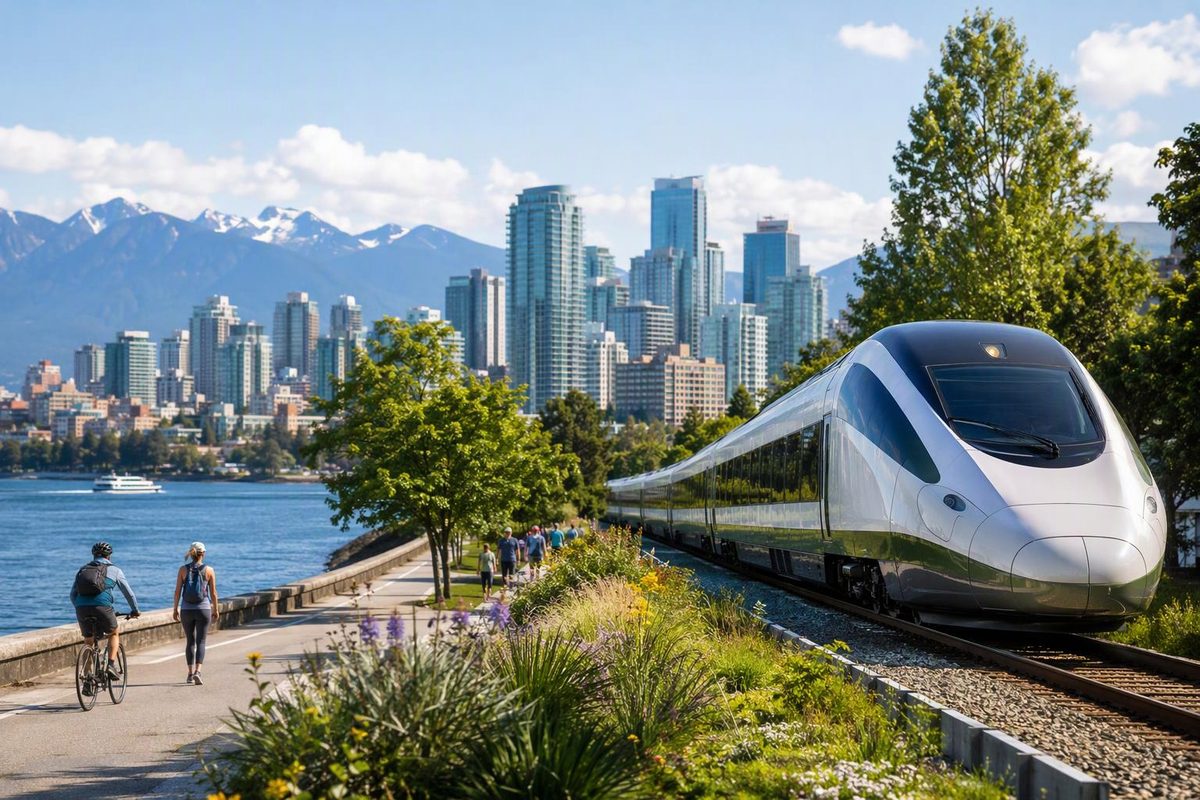
Vancouver–Portland high-speed rail is a proposed future service, not a train you can book. As of November 1, 2026, planners are studying connections between the metropolitan areas of Vancouver, British Columbia; Seattle, Washington; and Portland, Oregon. The current Service Development Plan is expected to finish in 2028—not to open a railway that year. WSDOT’s project overview sets out that distinction.
For an upcoming trip, use existing transport schedules. The practical opportunity in this announcement is to give input on the future network, rather than change your travel bookings.
What planners are working out now
Washington’s Department of Transportation is working with partners in Oregon and British Columbia to assess whether high-speed rail is economically and technically viable. The study considers travel demand, population and employment growth, environmental constraints and geographic conditions.
The current work covers:
- Potential routes: broad areas where the railway could run.
- Conceptual service: options for the number of stops, train speeds and how often trains would operate, as described on the official engagement site.
- Governance: possible arrangements for future project development, delivery and operations.
- Financing: a financial plan and economic evaluation, alongside potential funding approaches.
Crucially, this plan will not select a preferred route or identify station locations, according to WSDOT’s study description. Naming Vancouver as a metropolitan area in scope therefore does not establish where you would board or how you would connect from SkyTrain.
Why 2028 is not an opening date
WSDOT reports a US$49.7 million federal award, plus US$5.5 million in Washington state matching funds, for this planning stage. Those amounts fund the Service Development Plan, not construction of the railway. Funding and planning timeline
Formal environmental review, design and construction remain later steps. Canadian project elements would follow the relevant federal and provincial environmental assessment processes. The official engagement site places the project at service-development planning, before those stages and before the start of service.
Route options and conceptual service proposals should not be read as confirmed stops or journey times for a Vancouver–Seattle–Portland itinerary.
How to give input before November 13
In its October 6, 2026 announcement, WSDOT invited residents, business owners and people who travel through the region to participate. The survey is scheduled to run October 5–November 13, 2026.
Visit the Cascadia Program engagement site to learn about the proposals and access the survey, which WSDOT estimates takes around 8–10 minutes. It covers the broader Cascadia Program: both high-speed rail and Washington’s I-5 Master Plan. Feedback informs transportation priorities and future planning; it is not a vote on a final rail route.
Keep current Amtrak travel separate
Amtrak Cascades is the existing passenger service, with Vancouver, Seattle and Portland among its stations and current ticket and schedule information available from the operator.
The proposed Cascadia High-Speed Rail would complement—not replace—Amtrak Cascades, likely using new, dedicated tracks and making fewer stops. WSDOT’s explanation
If your immediate question is whether to book the existing Seattle–Vancouver train, use our Amtrak Airo booking guide. That is a separate decision from whether the future high-speed network proceeds.