
Amtrak Airo Improves the Seattle–Vancouver Ride, Not the Travel Time
Airo starts Seattle–Vancouver service Sept. 30. Compare its schedule, border process and Vancouver arrival with buses and driving.
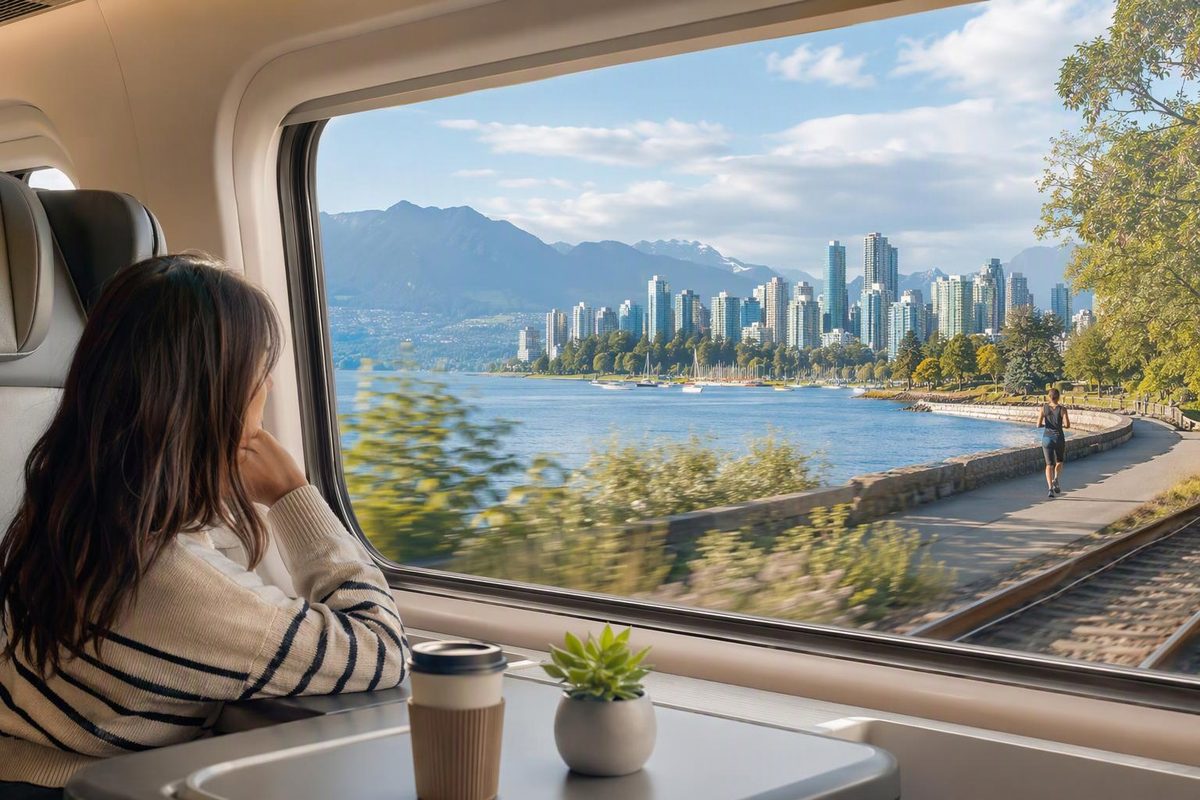
Book Amtrak Airo if its morning timetable fits your trip and you plan to explore Vancouver without a car. The new trainset brings modern seats, amenities and accessibility features, but it does not make the Seattle–Vancouver journey faster or add another departure.
Starting September 30, 2026, Airo is scheduled on northbound Train 516, leaving Seattle at 8:30 a.m. and arriving in Vancouver at 12:30 p.m. The same trainset is scheduled to return as Train 519, leaving Vancouver at 4:45 p.m. and reaching Seattle at 9:10 p.m. Equipment can change for operational reasons, so those train numbers identify the intended Airo trips—not a guarantee of receiving the new trainset. Amtrak lists the launch assignments and times.
What changes on September 30
Airo changes the train, not the basic journey.
Each new trainset has more than 300 seats, panoramic windows, adjustable headrests, individual power and USB outlets, complimentary Wi-Fi, digital information displays and a redesigned café. Accessibility upgrades include automated steps, improved wayfinding, accessible seating and six larger restrooms with touchless controls. Amtrak says additional trainsets will enter service through early 2027.
What does not change on launch day:
- Train 516 remains a scheduled four-hour trip.
- There are still two daily train round trips between Seattle and Vancouver, not additional service. The other northbound train, Train 518, is currently scheduled from 6 to 10 p.m.; check the timetable again before booking. Amtrak Cascades publishes the current schedule here.
- Airo does not raise the corridor’s speed or remove delays caused by congestion on the freight-dominated tracks. OPB reports that the current schedule is expected to continue for the foreseeable future.
- Border-document and inspection requirements remain in place.
The practical improvement is more capacity and a newer onboard experience—not a shorter travel day. OPB reports that the 300-passenger trainsets replace coaches that include some dating to the 1970s and that existing trains regularly sell out, particularly on Fridays and Sundays.
Airo versus bus versus driving
| Choose | Best when | Main trade-off |
|---|---|---|
| Airo Train 516 | You want a morning departure, room to move and a car-free arrival | Only one Seattle–Vancouver Airo trip per day at launch; scheduled for four hours |
| Bus | Price, departure time or an airport pickup matters more than the rail experience | Subject to I-5 and road-border conditions; less freedom to move around |
| Drive | The car will be useful beyond central, transit-friendly Vancouver | You take on traffic, border waits, parking and city driving |
The bus is the strongest alternative when Airo’s schedule does not fit. As checked September 24, FlixBus advertised at least seven Seattle–Vancouver trips daily, a minimum journey of 3 hours 40 minutes and fares from US$36.98; the actual fare, duration and stop depend on the departure. Check FlixBus for your date and exact Seattle stop. Quick Shuttle also serves Sea-Tac Airport and downtown Seattle on selected days, but its frequency changes seasonally. Check its dated schedule rather than assuming daily service.
Driving is most useful when the vehicle solves another problem after arrival—for example, a regional itinerary with dispersed stops. It is a weak default for a stay focused on downtown, Stanley Park, Granville Island and the North Shore. Border waits vary, and WSDOT publishes current crossing information. Add accommodation and destination parking to any price comparison.
For a central Vancouver visit, it is usually simpler to arrive without the vehicle and follow a district-by-district car-free plan.
Border timing still belongs in the plan
Bring the correct identification and entry documents for everyone in your party. Amtrak Cascades advises international passengers to arrive one hour before departure and says passengers must be seated 15 minutes before departure because the train is sealed before leaving. Travelers remain subject to Canadian and US inspection. Review the operator’s border guidance before travel.
Treat Train 516’s 8:30 a.m. departure as a 7:30 a.m. commitment at Seattle’s King Street Station—not as the time to arrive at the door.
Arriving in Vancouver without a car
The train terminates at Pacific Central Station, 1150 Station Street. Once you have completed the arrival formalities, walk across Main Street to Main Street–Science World Station and take an Expo Line train toward Waterfront for Stadium–Chinatown, Granville or Waterfront. TransLink confirms that Pacific Central and the SkyTrain station sit on opposite sides of Main Street.
This is a clear advantage over driving: you enter Vancouver’s rapid-transit network instead of starting by finding parking. It is not unique to the train, however; some intercity buses also use Pacific Central or stop downtown. Pacific Central is wheelchair accessible and provides checked-baggage service during station hours, according to the Amtrak Cascades station guide.
The decision: choose Airo for the newer onboard experience and convenient city arrival. Choose a bus if its live fare, airport pickup or departure time works better. Drive only when having a car in British Columbia is genuinely part of the itinerary. Do not distort your schedule or pay a large premium solely for Airo: on September 30, the equipment gets newer, but the route, border process and timetable remain substantially the same.