
Unlock Stunning Fall Photos: Top Autumn Photoshoot Concepts and Pro Techniques
For portraits, start with layered clothing in earthy or muted tones rather than bright athletic colors or shades that exactly match the trees.
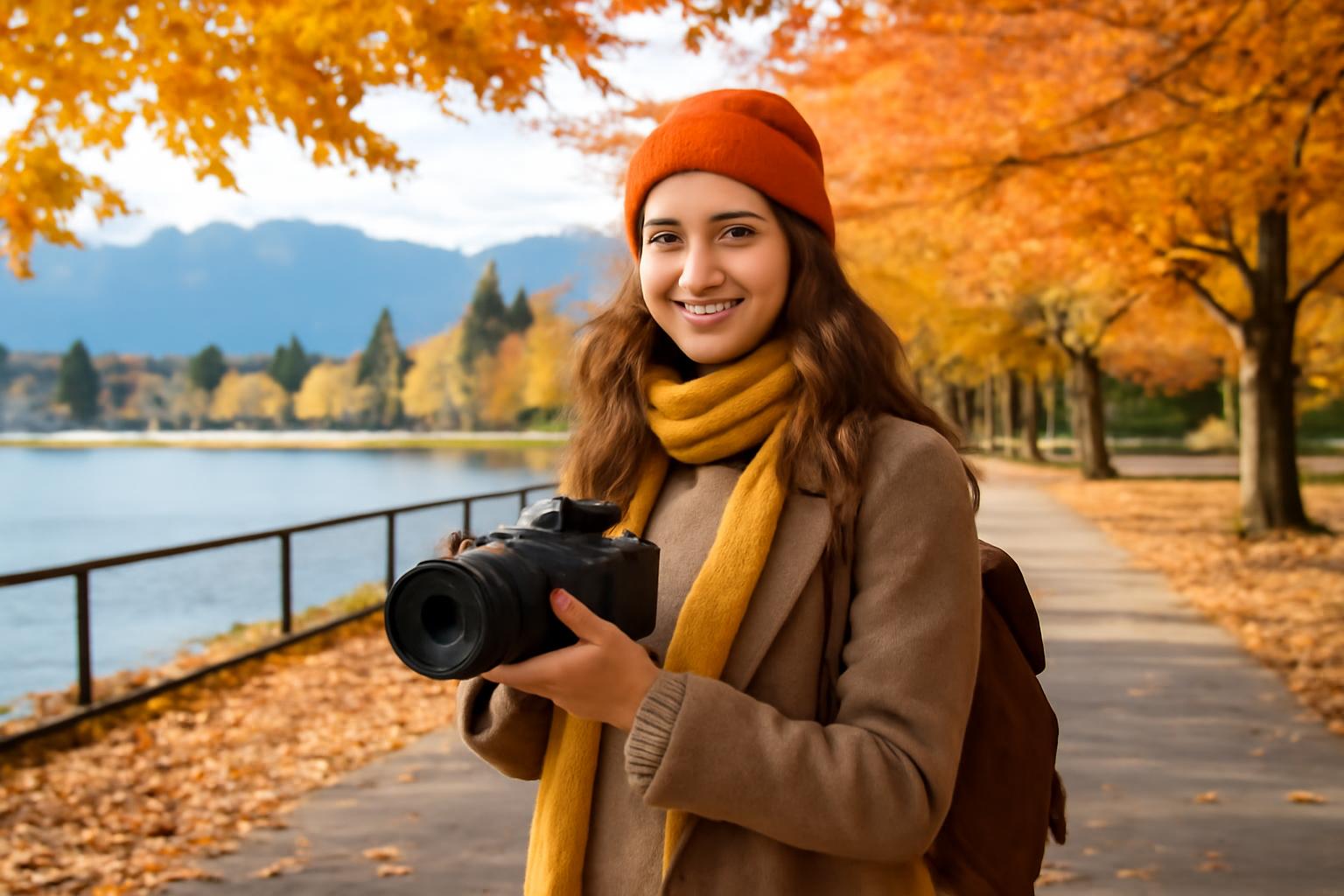
Autumn is one of the most forgiving seasons for outdoor photography. It brings built-in color, textured backgrounds, layered clothing, and atmospheric weather that can make even a simple portrait feel more intentional. Instead of fighting flat summer greenery or hard midday light, you often get yellow, rust, red, brown, fog, damp ground, and lower-angle sun that add shape to a frame before you even raise the camera.
It is also a short season. Peak color can move quickly, a windy afternoon can strip a scene, and the same grove can look flat in front light but luminous once the sun shifts behind the leaves. That is why a strong autumn session is less about luck than about preparation: pick a concept that fits the location, understand what kind of light you want, style the subject so they belong in the landscape, and have a fallback plan for weather or fading foliage.
This guide is built for amateur photographers and portrait shooters who want practical, outdoor-focused ideas rather than vague seasonal inspiration. It covers why fall works so well, which types of locations and activities create better sessions, how to light foliage and faces, what settings make a reliable starting point, how to protect gear in damp conditions, how to track changing color, and how to edit for a believable fall finish.
Why Autumn Excels for Photoshoots
Autumn works unusually well because several useful conditions arrive at once. The lower sun angle can stretch warm-looking light, weather becomes more changeable, fog and rain are more common, and the season itself can be extended by moving across elevation or latitude. The Photo Hikes also notes a practical advantage that matters on real shoots: many tourist spots and trails are less crowded once summer ends, which can make access, scouting, and framing easier during a short session (The Photo Hikes).
For portraits, that translates into more variety without much extra styling. Jackets, knitwear, boots, mugs, scarves, and blankets all feel natural in frame. Even a quiet walk through leaves gives hands something to do and creates natural movement.
For landscapes and environmental portraits, fall adds depth. Branches, trunks, leaf litter, low mist, and patchy light can create layers from foreground to background. A scene that would feel plain in another season often gains structure once the canopy changes and the forest floor starts participating in the image.
The tradeoff is timing. There is no single universal “best week” for autumn color. Peak depends on region, elevation, tree species, rainfall, frost, and wind. That sounds inconvenient, but it also means the season can last longer than many photographers assume if they stop treating it as one date and start treating it as a moving window.
11 Outdoor Autumn Photoshoot Concepts
A good autumn concept does two jobs at once: it uses the season visually, and it gives the subject something real to interact with. A roundup from Seeking The Now highlights several outdoor ideas that consistently suit fall, including roads, state fairs, lakes, campfires, hot springs, cabins, trails, fields, cornfields, and canoes (Seeking The Now). Expanded into shoot planning terms, these are 11 concepts that regularly deliver useful variety:
-
Curving fall road portrait Look for a quiet road lined with color, ideally with a bend rather than a straight tunnel of trees. Curves keep the composition from feeling static and give you a built-in leading line. This setup suits solo portraits, couples, seniors, and editorial-style lifestyle sessions. Have the subject walk, turn back toward the camera, pause by the shoulder, or interact with a parked car only where it is clearly safe and permitted.
-
State fair at dusk If a local fair overlaps with fall, it can give you color, motion, and atmosphere without needing elaborate props. Shoot around sunset into blue hour so you can mix portraits with ride lights, signs, and motion blur. The visual contrast is what makes this work: cozy clothing against bright carnival color.
-
Foggy lake sunrise Lakes and ponds are strong fall locations because they can add reflections, mist, docks, reeds, and negative space. A blanket, a thermos, or a simple folding chair is often enough to make the subject look occupied. This concept is especially good for quieter portraits that need mood more than energy.
-
Campfire storytelling session A fire gives people immediate actions: warming hands, pouring a drink, adjusting a blanket, roasting food, or looking into the flames. That keeps the shoot from becoming a sequence of stiff standing poses. Compositions are strongest when the fire supports the scene rather than dominating it.
-
Hot springs or steam scene Where you have legal access to a safe steamy location, rising vapor can soften the background and heighten the feeling of cold air around the subject. The effect is strongest when the styling stays simple and the composition avoids clutter.
-
Cabin-edge cozy portraits You do not need a dramatic mountain lodge. A porch, doorway, stack of wood, bench, or covered corner can be enough. This concept is also practical on mixed-weather days because it gives you a sheltered fallback without fully moving indoors.
-
Hiking trail narrative Trails are effective because they give you several shot types in one route: wide establishing frames, walking candids, seated breaks on logs, leaf details under boots, and mid-length portraits where the path leads into the image. It is one of the easiest ways to make a session feel like a story instead of a single backdrop.
-
Open field or tall-grass fashion set Not every strong autumn session needs bright trees. Dry grasses, seed heads, and low sun can create a softer, quieter version of fall. This is useful when tree color is late, patchy, or already past peak. Wind becomes part of the scene rather than a problem you have to erase.
-
Classic foliage-wall portrait Dense autumn color in a park, grove, or forest edge still works when you handle it carefully. The difference between generic and effective usually comes down to light direction, separation from the background, and keeping the subject from wearing the exact color of the trees.
-
Cornfield or corn maze shoot Corn gives you texture and structure even when the canopy is disappointing. The rows create paths and repeating lines, which help families and children because the setting already suggests exploration and movement.
-
Canoe on still water A canoe adds immediate shape and story. It works best when the water is calm and the surrounding color is simple enough that the boat reads clearly. Keep wardrobe controlled so the subject, boat, and background complement one another instead of competing.
Commercial autumn imagery tends to repeat a familiar set of motifs—fields, forests, layered outfits, couples, and families—which is useful as a style check even if it should not be treated as proof of what every shoot needs. If you want a classic look, those themes remain dependable. If you want something less expected, keep the seasonal wardrobe and mood but place the subject somewhere different: a bridge, a small urban park, a lakeside pullout, a vine-covered wall, or a sheltered porch.
When deciding among concepts, think less about trends and more about whether the location gives you room to move, visual depth behind the subject, and a backup angle if the weather changes. The best autumn idea is usually the one that still works when conditions become imperfect.
Mastering Lighting for Vibrant Foliage
Autumn color is less about finding the brightest leaves than about putting leaves in the right light. Warm edge-of-day light often flatters people, and mornings can add mist that makes a scene feel deeper and quieter. But the best light depends on what you are prioritizing in that specific frame.
If you care most about the foliage itself, light direction matters more than the label “golden hour.” The Photographer’s Ephemeris argues that front-lit foliage often looks flat and opaque, while backlit foliage becomes more translucent and visibly luminous. The same guide also points out that overcast skies and twilight can be excellent for autumn color because they reduce glare and give you softer, more even contrast across the frame (The Photographer’s Ephemeris).
That is why apparently conflicting advice about autumn light can all be true at once:
- Backlight is often best when you want leaves to glow.
- Overcast light is often best when you want clean, saturated color across many leaves at once.
- Twilight or fog is often best when you want mood, shape, and layering rather than punchy contrast.
A practical way to shoot fall is to choose a lighting goal before each frame instead of trying to optimize everything at once.
For a portrait-first frame, place the subject in flattering, soft light and let the foliage work as color and atmosphere. The background does not need to be equally bright as long as the subject separates clearly.
For a foliage-first frame, simplify. Step back from the subject if needed, reduce distractions, and wait for even light or a cloud. Dense color often looks richer when the exposure is not fighting bright hotspots.
For a glow frame, get below the canopy or work at an angle where light comes through the leaves instead of bouncing straight back into the lens. Even modest backlight can make a big difference.
For a moody frame, stop chasing brightness. Fog, drizzle, and dusk can all turn a busy scene into layered shapes, especially near water or in woods where the background naturally recedes.
A polarizer can help once the light is already working. It reduces glare on leaf surfaces and can deepen apparent color, but it is a control tool, not a permanent default. If the scene depends on reflections in water, wet pavement, or rain-darkened leaves, removing too much reflected light can also remove atmosphere. Rotate the filter until the scene looks balanced, not until every bit of sheen disappears.
For people in foliage, remember that the light that flatters leaves does not always flatter skin. A cluster of brilliant backlit trees can leave a face too dark if you are not careful.
If you keep only three ideas in mind, make them these: front light often weakens fall foliage, softer light usually gives cleaner color, and backlight is what makes autumn leaves look alive.
Portrait Poses and Styling with Fall Elements
Autumn portraits usually feel strongest when the wardrobe belongs in the environment. Digital Photography School recommends earth tones, layers, boots, scarves, and natural use of leaves as props—whether tossed, gathered, climbed through, or used as part of the setting—because those elements naturally fit the season’s color and mood (Digital Photography School).
The easiest mistake is matching the background too exactly. If the whole scene is orange and yellow, dressing the subject in the same bright orange can make them disappear. A stronger palette is usually built around related but quieter tones: cream, camel, olive, rust, charcoal, denim, burgundy, chocolate, muted mustard, soft blue, or warm neutrals. These harmonize with the setting without making the subject vanish into it.
Texture matters as much as color. Knit sweaters, wool coats, denim, corduroy, boots, scarves, and blankets create visual variety that reads well even when the pose is simple. This is especially helpful for family sessions, where the clothing has to do some of the styling work before people have fully relaxed.
For posing, start with actions rather than fixed positions. Ask subjects to:
- walk slowly toward or away from the camera
- brush leaves with a boot
- adjust a scarf or coat collar
- hold a mug with both hands
- sit on a blanket and lean in
- look at the trees, then at one another
- pause mid-walk instead of planting both feet stiffly
Autumn is particularly good at solving awkward hands. Pockets, jackets, blanket edges, leaf stems, hat brims, mugs, and coat lapels all give people something natural to do. That matters because the visual richness of fall can make a stiff pose feel even stiffer.
Leaf interaction is useful when it looks believable. A small toss of leaves can create movement. Gathering a handful while kneeling can anchor the foreground. Lying in a leaf pile can work for children or playful couple shots. An overhead frame of someone seated in leaves can also be strong if the colors are clean and the wardrobe contrasts enough.
For couples, cooler weather helps. Leaning together, sharing a blanket, touching foreheads, or tucking hands into each other’s coat pockets all feel seasonally motivated.
For solo portraits, the same principle applies: give the subject a reason to be there. Sitting on a log, wrapping a coat tighter, stepping through leaves, leaning on a railing, or holding a thermos almost always looks more natural than simply facing the camera and waiting for instructions.
When you want a softer, dreamy background, open the aperture. When you want leaves, texture, and multiple faces to remain sharp, stop down. Digital Photography School recommends treating 1/125 second or faster as a useful handheld starting point for fall portraits, shooting RAW, keeping ISO low when possible, and experimenting with aperture depending on how much background detail you want; the same guide suggests Cloudy white balance as a possible starting point, though it should be watched carefully so skin does not turn too warm (Digital Photography School).
Natural expression matters more than another scarf or another branch of color. Autumn scenes are already visually full, so the expression is what keeps the image from feeling like a catalog layout. Prompts often work better than commands:
- “Walk toward me and bump shoulders.”
- “Tell them something unexpected.”
- “Wrap the blanket tighter.”
- “Brush that leaf off their sleeve.”
- “Look at the trees first, then back at me.”
The goal is not to manufacture spontaneity. It is to create enough real action that expression follows.
Gear, Settings, and Foliage Timing Essentials
You do not need a huge kit for a strong autumn shoot, but you do need a sensible starting point. In a Sony Alpha Universe profile, George Ilstrup describes using a 16–35mm wide zoom for expansive fall scenes, usually around f/5.6 to f/10, with a low ISO, a polarizer in daylight, and RAW capture for flexibility in post-processing (Sony Alpha Universe).
That is a solid landscape baseline because it prioritizes detail, color control, and editing headroom. For portraits, your settings usually shift toward subject movement and separation rather than edge-to-edge sharpness.
A simple fall portrait starting point is to keep the shutter at 1/125 second or faster when shooting handheld, keep ISO as low as conditions allow, and choose white balance deliberately instead of assuming extra warmth always helps. Cloudy white balance can suit autumn scenes, but it is best treated as an option rather than a rule because skin can become too orange quickly in already-warm surroundings (Digital Photography School).
A practical framework looks like this:
- Wide landscape: prioritize depth and clarity; a wider lens and a moderate aperture help show the setting.
-
Single-person portrait: use enough aperture to separate the subject while preserving some autumn context.
-
Detail shot: move closer or use a longer focal length to isolate bark, leaves, droplets, or hands.
Lens choice is mostly about what role you want foliage to play. Many good autumn sessions include both approaches, which is why it helps to think in sequences: wide scene, mid-length portrait, tight detail, candid movement, then one experimental frame.
Timing matters as much as gear. The best-looking location in your area may simply be early, late, or temporarily stripped by wind. Regional foliage forecasts, state park or natural-resource updates, and color maps are useful because they turn “maybe this weekend” into something more strategic. The Click Community recommends checking those resources regularly and adapting quickly because weather and frost can move a location from not-quite-ready to past-prime in a very short span (The Click Community).
When a literal composition feels messy, abstract treatment can save the session. Rick Berk recommends experimenting with intentional camera movement at slow shutter speeds in the 1/4 to 1/30 second range for painterly foliage images; he also notes that these autumn foliage techniques can be applied whether you are shooting with a dedicated camera or a phone (Rick Berk Fine Art Photography).
That matters because not every fall scene deserves a conventional wide shot. If the color is good but the composition is chaotic, vertical pans through tree trunks, slight rotations during exposure, or gentle upward movement can turn clutter into something expressive.
If you shoot RAW, small corrections become much easier later: recovering bright leaves, balancing skin against warm surroundings, and separating similar yellows and oranges without the file falling apart too quickly.
Handling Autumn Weather and Gear Protection
One of the best autumn habits is to stop dividing weather into “good” and “bad.” Rain, cloud, fog, and wind are not automatic reasons to cancel. They simply change the kind of pictures that are available and the amount of preparation required.
Creatively, weather can do a lot of the storytelling for you. Rain deepens color, adds droplets, and creates puddle reflections. Fog introduces layers and separation, especially around trees and water. Cloud cover can simplify contrast and make foliage look cleaner. Wind can add movement, but it can also make portraits much harder to control.
Safety comes first. Photofocus notes that fog can challenge autofocus and that wooded areas are not a good place to work in high winds because of the risk of falling branches, trees, or other debris (Photofocus).
The practical kit for variable fall weather is not glamorous, but it matters: dress in layers, keep outerwear and footwear weather-appropriate, carry lens cloths where you can reach them quickly, and think through how you will keep the camera dry before the rain starts rather than after it arrives. Even a modest shoot feels longer when the photographer is cold, wet, and rushing.
Humidity is a different problem from rain. Photography Life explains that humidity can cause temporary fogging and, over longer periods, contribute to fungus or mold growth in lenses. Useful prevention includes letting gear acclimate in a sealed bag when moving between temperature extremes, drying equipment thoroughly before storage, using silica gel, and keeping long-term storage below about 70% relative humidity (Photography Life).
A few habits make autumn sessions much easier:
- Keep one microfiber cloth in an easy-access pocket.
- Avoid unnecessary lens changes in damp wind.
- Let cold gear warm gradually before opening the bag indoors.
- Dry wet equipment before sealing it away.
- Pack an extra layer for yourself if the session may run long.
Prepared photographers wait longer, think better, and make better decisions. In fall, patience often matters as much as settings.
Tracking Peak Colors and Backup Strategies
Peak color is not a date you can fully lock in weeks ahead. It moves in waves, and those waves can speed up or stall depending on weather. Frost, rain, wind, and local tree mix can all change a location faster than casual photographers expect.
That is why foliage planning works best when it happens on three levels. First, determine the broader seasonal window in your region. Second, check updated local forecasts and park or state resources in the days before the shoot. Third, scout the specific stand of trees you want to use and ask whether the light will suit it at the hour you can actually be there. The Click Community recommends relying on current regional forecasts, apps, and park information rather than assuming past timing will repeat exactly, and also suggests pivoting to details such as fallen leaves, acorns, and textures if the canopy has already passed peak (The Click Community).
If you can travel even a little, autumn can last longer than it first appears. That is why short drives can sometimes extend your usable season more effectively than waiting for your nearest park to cooperate.
Scouting matters because “peak” on a map does not guarantee a good session. The best trees might be front-lit when you arrive, boxed in by distracting infrastructure, or too crowded to use comfortably. A quick pre-visit, roadside check, or even a deliberate detour the day before can save a full shoot.
If you miss peak, the session is not ruined. Shift the shot list rather than forcing a big-canopy look that is no longer there. Useful fall backups include:
- isolated branches that still hold color
- leaf litter on trails or roads
- acorns, bark, mushrooms, and seed heads
- evergreens mixed with remaining yellow trees
- foggy water, dry grass, or cornfields
- wardrobe-led portraits where the seasonal styling carries more of the mood
Late fall can actually produce more distinctive work than peak color because the frames become simpler and more atmospheric. Bare branches, wet ground, and a few surviving leaves often feel quieter and more cinematic than a full wall of color.
Post-Processing for Realistic Fall Glow
Autumn editing usually fails in one of two ways: the whole frame turns neon, or the whole frame turns muddy orange. A more reliable approach is to correct tone before pushing color.
Start with the file’s structure. Get exposure where it belongs. Set clean black and white points. Recover bright leaves if they are too hot. Open shadow areas carefully so forest scenes stay readable without going flat. Then make smaller color decisions once the image already feels balanced.
That order matters because autumn color depends on separation as much as saturation. If reds, yellows, greens, bark, sky, and skin all collapse into the same warm soup, the image loses realism even if it looks “vibrant.”
A practical workflow is:
- balance exposure
- clean up highlights and shadows
- establish contrast with restraint
- adjust the tone curve only as much as needed
- refine reds, yellows, and greens selectively
- sharpen or add clarity last, once color is settled
Be especially careful with skin. Fall backgrounds are already doing a lot of warming, so portraits usually need less global warmth than photographers think.
It also helps to treat the subject and the foliage a little differently. Leaves can usually withstand more color intensity than skin can. Local adjustments make this easier: keep faces believable, then deepen the background only enough to separate the subject from it.
If you photographed tall trees while tilting the camera upward, look at the edges of the frame before exporting. Converging trunks and collapsing treetops can make an otherwise strong forest image feel awkward. A modest vertical correction is often enough.
The final test is simple: the image should still feel like a place someone could stand in. Autumn already has character. Post-processing works best when it reveals that character instead of inventing a louder season.
When is golden hour best for autumn photoshoots?
Autumn’s lower sun angle can make edge-of-day light feel more accessible than summer light, and mornings in particular can add fog in valleys, lakes, and meadows (The Photo Hikes).
For foliage alone, golden hour is not automatically best if the leaves are front-lit. Use it when the light direction helps the scene—especially side light or backlight—not simply because the clock says it is golden hour.
Do polarizers always improve fall foliage shots?
No. Polarizers often help when reflected light is washing color off the leaf surface, but they are not automatically better in every scene. Rick Berk recommends rotating the filter and stopping where the effect looks most pleasing, rather than assuming maximum polarization is the goal (Rick Berk Fine Art Photography).
How to protect gear from rain and humidity?
Treat wet weather and moisture as two related but different problems. For active shooting, keep the camera covered as early as possible, minimize unnecessary bag opening, and avoid storing wet gear without drying it. For humidity, acclimate gear gradually between temperature changes, use silica gel when needed, and store equipment dry; Photography Life also recommends a rain cover for your bag and notes that long-term storage should stay below roughly 70% relative humidity (Photography Life).
What if I miss peak foliage timing?
Do not force a full-canopy picture if the canopy is already gone. The Click Community recommends pivoting to details such as fallen leaves, acorns, and seasonal textures, which can still communicate autumn very clearly even after peak color has passed.
For portraits, that usually means leaning more on styling, mood, tighter framing, and locations that still have selective pockets of color rather than broad walls of foliage.
Ideal clothing for fall portrait sessions?
The most reliable starting point is layered clothing in earthy or muted tones rather than bright athletic color or exact tree-match shades. Digital Photography School specifically recommends layers, boots, scarves, and earth-toned styling because they fit the season visually and help subjects look more natural in the setting (Digital Photography School).
That usually looks more polished and less staged.