
Pack for One Night Without Bringing a Weekend’s Worth
Keep medication, ID, wallet, keys, phone, tickets and travel documents in an easy-access pocket or personal item, not at the bottom of your bag.
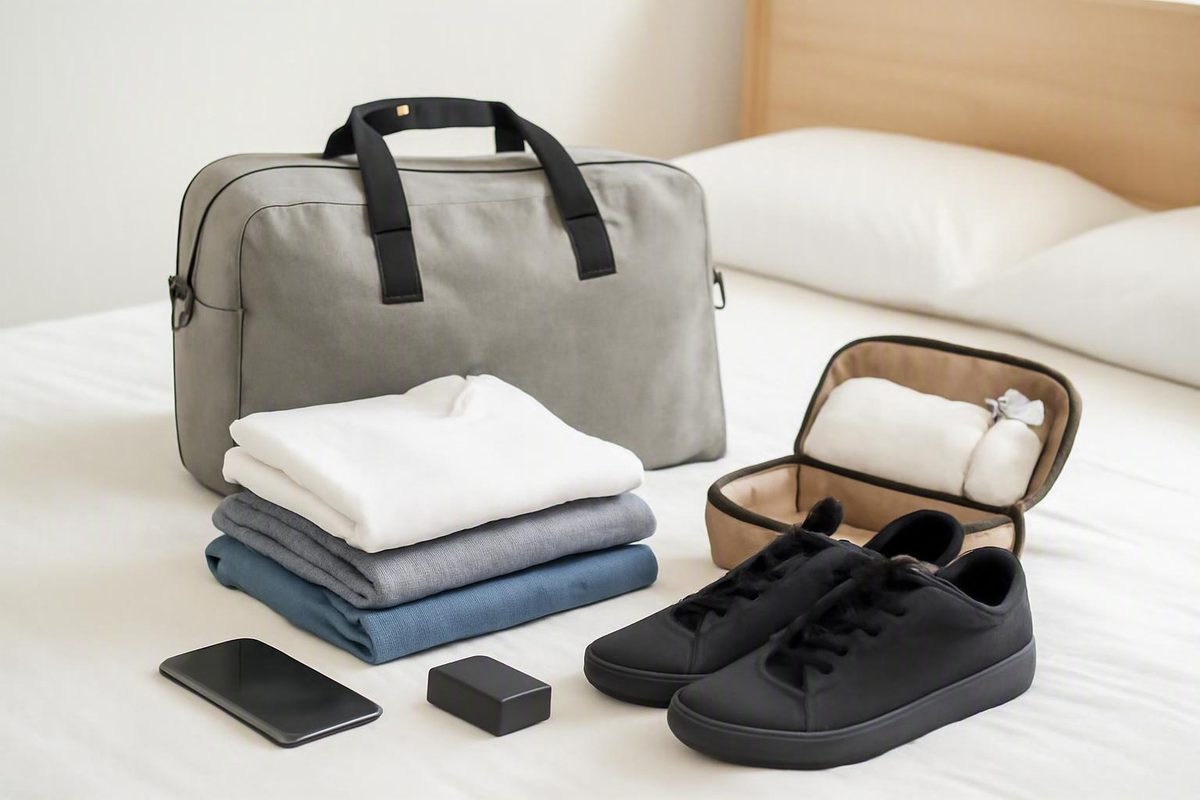
A useful overnight packing list starts with consequences, not possibilities. First secure what would be difficult, costly, or unsafe to replace: required medication, identification, payment methods, keys, phone, charging equipment, and necessary travel details. Then pack for an ordinary night and the following day. Add extras only when the forecast, itinerary, transportation, lodging, health needs, accessibility needs, childcare responsibilities, or dress code provides a clear reason.
The quick overnight packing checklist
For a typical one-night stay, use this baseline. The clothing quantities—an arrival outfit, sleepwear, and a complete outfit with clean undergarments for the following day—reflect one-night packing guidance rather than a rigid rule (wikiHow’s fact-checked overnight-bag guide).
Wear
- [ ] Arrival outfit
- [ ] One appropriate pair of shoes
- [ ] Weather-appropriate outer layer, if required
- [ ] Everyday accessories you need, such as glasses or a hearing device
Pack one
- [ ] One complete outfit for the next day
- [ ] One sleepwear set
- [ ] One pair of underwear
- [ ] One pair of socks
- [ ] Toothbrush
- [ ] Toothpaste
- [ ] Deodorant
- [ ] Essential skin-care products
- [ ] Essential hair-care or grooming products
- [ ] Menstrual products, if needed
- [ ] Glasses case, contact lenses, solution, or other vision supplies, if applicable
- [ ] Required medication
- [ ] Phone
- [ ] Charger and required cable
- [ ] Identification
- [ ] Wallet and payment method
- [ ] Keys
- [ ] Tickets, reservation details, or itinerary
- [ ] Necessary travel documents
Keep the medication, identification, wallet, keys, phone, tickets, and travel documents in an easy-access pocket or personal item rather than at the bottom of the main compartment.
Add if needed
- [ ] Spare underwear or socks
- [ ] Rain layer or umbrella
- [ ] Warm outerwear or additional layers
- [ ] Second pair of shoes
- [ ] Formal, work, exercise, swimming, or outdoor clothing
- [ ] Laptop, tablet, headphones, or e-reader
- [ ] Power bank
- [ ] Reusable water bottle
- [ ] Snacks
- [ ] Eye mask, earplugs, travel pillow, book, or comfort item
- [ ] Childcare, accessibility, sensory, or medical supplies
- [ ] Separate bag for wet or dirty clothing
Verify with the accommodation
- [ ] Soap and shampoo
- [ ] Towels
- [ ] Bedding and pillow
- [ ] Hair dryer
- [ ] Refrigerator or other storage you expect to use
- [ ] Pool, gym, or activity access
- [ ] Accessibility arrangements
- [ ] Camp bedding, labeling, electronics, and medication policies
Optional items should remain visibly separate from essentials. A book, snack, second pair of shoes, entertainment device, or comfort upgrade may be worthwhile, but none belongs on every traveler’s list.
Treat the checklist as a starting point. Override the minimalist baseline when health, hygiene, accessibility, childcare, severe weather, probable delays, multiple activities, or a dress code requires more. The smallest useful list will not be identical for every traveler.
How many clothes to pack for one night
The standard one-night clothing formula is:
- Wear an arrival outfit.
- Pack a sleepwear set.
- Pack a complete outfit for the next day.
- Pack a clean pair of underwear and a clean pair of socks.
This formula is consistent with one-night hotel guidance that places the next day’s outfit, sleepwear, undergarments, and socks in the basic kit (one-night hotel packing guide).
Choose complete outfits before putting anything in the bag. If tomorrow’s outfit requires a specific shirt, trousers, underwear, socks, and accessories, pack that combination rather than several tops and bottoms to decide between later. The aim is to pack for a known itinerary instead of a collection of possible scenarios.
A clean pair of underwear and socks is a reasonable baseline for the following day. Add a spare when there is a foreseeable reason, such as:
- Heavy rain
- Exercise
- A muddy or wet activity
- A long or disruption-prone journey
- A hygiene need
- A meaningful chance that clothing will become wet or dirty
- Childcare circumstances in which spills or accidents are likely
Layers are useful when temperatures may change. A base layer, versatile mid-layer, and suitable outer layer may cover more conditions than several unrelated outfits. That does not mean day clothes must double as pajamas, and a jacket should not be treated as a dependable substitute for bedding where guests are required to supply their own.
A second pair of shoes is conditional. The pair worn during travel may be sufficient for a hotel stop, casual visit, or simple road-trip break. Pack another pair when the plans include:
- A formal event
- A workplace footwear requirement
- Exercise
- Swimming facilities where sandals would be useful
- Wet or snowy conditions
- Hiking or another specialized activity
- A substantial chance that the primary pair will become soaked or dirty
Because shoes occupy significant bag space, the additional pair should have a distinct purpose. If both pairs would serve the same casual activities, consider choosing the more versatile option and leaving the other at home.
Adjust the clothing module to the trip’s purpose:
- Business: Choose a complete, wrinkle-conscious work outfit, appropriate shoes, undergarments, and necessary accessories.
- Wedding or formal event: Pack the required clothing, dress shoes, belt, jewelry, tie, hosiery, or other outfit-specific pieces.
- Exercise: Add activewear and activity-appropriate footwear.
- Swimming: Add a swimsuit when swimming is confirmed or genuinely likely.
- Outdoor activity: Add clothing suited to the actual environment and planned activity rather than generic outdoor gear.
Minimal quantities should be abandoned when circumstances demand it. Severe weather, multiple dress codes, medical needs, childcare, extended time outdoors, likely delays, and a substantial risk of getting wet or dirty can all justify additional clothing.
Toiletries, medication, and personal-care essentials
Build the toiletry kit around what you will actually use before bed and the following morning.
Minimal personal-care list
- Toothbrush and toothpaste
- Deodorant
- Essential facial or body skin care
- Essential hair products
- Necessary grooming products
- Menstrual products, when needed
- Glasses, case, or cleaning cloth
- Contact lenses, solution, and case, when applicable
Use small quantities or travel-size containers when practical. For an overnight stay, a smaller amount may be sufficient when the product can be transferred and identified without creating confusion. Keep products in their usual packaging when transferring them would make the contents unclear or conflict with instructions applicable to that product.
Medication is not a comfort upgrade. Bring required prescription medication and identify any related supplies you need. General travel checklists consistently place medication among the items that should remain accessible during the journey rather than buried in checked or hard-to-reach luggage (SmarterTravel’s packing checklist).
Do not build a universal collection of over-the-counter medicines merely because broad travel lists include them. The appropriate health kit depends on your established needs, professional guidance, destination, transportation, and activities. A product that is routine for one traveler may be unnecessary or unsuitable for another.
Use these individualized prompts:
- Do you need spare glasses or another vision backup?
- Do you need contact lenses, solution, a case, or cleaning supplies?
- Do you use a medical device or mobility aid?
- Does a medication have storage requirements you need to confirm?
- Will medical equipment require a power source, batteries, an adapter, or a charging cable?
- Do you need menstrual or continence supplies?
- Would sensory supports, communication tools, or sleep equipment be useful?
- Is there an accessibility item that cannot reasonably be obtained at the destination?
If you use specialized medication or equipment, ask the appropriate clinician, carrier, accommodation, or program what storage, power, transport, or handoff procedures apply. A general overnight checklist cannot establish a universal procedure.
Before removing toiletries or linens from your list, ask the hotel, host, or camp what is supplied. Do not assume that soap, shampoo, towels, bedding, pillows, hair dryers, or refrigerators will be available. Hotel packing guidance also recommends checking the specific property’s listed amenities before relying on them (hotel packing guide for adults and families).
Place toiletries in a leak-resistant pouch. Keep medication, eyewear, and health items needed during the journey in a separate accessible location. If a product has specific handling instructions, follow those instructions and obtain individualized guidance where necessary.
What to keep in an easy-access pocket or personal item
Keep high-consequence items separate from clothing and within reach:
- [ ] Identification
- [ ] Wallet
- [ ] Payment cards or another payment method
- [ ] Keys
- [ ] Required medication
- [ ] Phone
- [ ] Charger, cable, or power bank
- [ ] Tickets
- [ ] Reservation or meeting details
- [ ] Necessary travel documents
- [ ] Medical or accessibility items needed during the journey
The organizing principle is simple: if an item would be difficult, costly, or unsafe to replace, do not bury it beneath pajamas and shoes. The same applies to anything you may need before reaching the accommodation.
Fragile or frequently used electronics belong in a protected, accessible area rather than loose among shoes, liquids, or metal objects. Specialized luggage is not necessary to create separation; a padded sleeve or ordinary protective pouch may be sufficient.
Use a leak-resistant pouch for toiletries. Carry a separate reusable bag, household zip-top bag, or other suitable container for wet or dirty items. Packing cubes can be convenient, but they are optional organizers rather than necessities.
A simple bag map works for many overnight trips:
| Bag area | What goes there |
|---|---|
| Quick-access pocket or personal item | Identification, wallet, keys, medication, phone, tickets, reservations |
| Protected area | Electronics, chargers, eyewear, fragile items |
| Main compartment | Next-day outfit, sleepwear, underwear, socks |
| Toiletry pouch | Toothbrush, toothpaste, deodorant, liquids, grooming products |
| Separate return space | Wet swimsuit, damp towel, dirty socks, worn clothing |
For air travel, verify current identification, liquid, battery, medication, carry-on, and document requirements with the relevant government, airport, and carrier before departure. Use their current instructions rather than a general commercial packing summary.
For a drive, rail journey, or bus trip, keep the items needed en route accessible. Depending on the journey, that may include tickets, route information, medication, water, charging equipment, a snack, or a weather layer. Pack for the journey as well as the overnight stay, but do not treat every possible delay as a reason to duplicate the entire bag.
Add only what the forecast and itinerary require
Instead of building one enormous “just in case” list, use modules. Add a module only when a known condition activates it.
Wet-weather module
- Rain jacket, poncho, or umbrella
- Footwear suitable for the expected conditions
- Spare socks when getting wet is plausible
- Protective pouch for electronics or documents
- Separate space for damp clothing
Choose the rain solution that fits your transportation and expected time outside. An umbrella may suit a short urban walk; a hands-free rain layer may be more practical while carrying luggage or spending longer outdoors.
Cold-weather module
- Outerwear appropriate for the forecast
- Useful insulating layers
- Hat, gloves, or scarf when conditions call for them
- Suitable footwear
- Additional protection for extended outdoor exposure
Pack for the forecast temperature, wind, precipitation, and time outdoors. A short walk between a car and a hotel creates different needs from an evening outdoor event.
Hot or sunny module
- Breathable clothing
- Sunscreen you normally use
- Hat, sunglasses, or other sun protection
- Reusable water bottle where appropriate
- A change of clothing if heat and exertion are likely to make the first outfit unsuitable
Outdoor module
- Activity-appropriate clothing
- Suitable footwear
- Insect protection when conditions warrant it
- Water and food appropriate to the outing
- Destination-specific safety supplies
- Navigation or lighting equipment required by the activity
Base this module on the actual destination and activity. A short supervised group activity and an independent hike do not create identical equipment needs.
Swimming module
- Swimsuit
- Sandals, if useful
- Goggles or personally necessary swim gear
- Separate bag for wet clothing
- Towel, unless the accommodation confirms one is supplied
Confirm that the pool, beach, spa, or swimming session will be available before packing for it.
Work or event module
- Required outfit
- Appropriate shoes
- Accessories
- Grooming products
- Laptop and charger, if needed
- Presentation equipment or work materials
- Meeting, venue, or event details
- Backup access to essential files, when appropriate
Check the outfit as a complete set. Formal clothing will not serve its intended purpose if the corresponding shoes, belt, hosiery, tie, or required accessory remains at home.
Comfort and entertainment module
- Headphones
- Book or e-reader
- Eye mask
- Earplugs
- Snacks
- Travel pillow
- Small comfort object
These items may improve a particular journey or sleeping environment, but they are not universal necessities. Bring them when you expect to use them, not merely because there is spare room.
Apply one decision test to every optional item:
Is this required by the forecast, itinerary, dress code, health needs, transportation, or a confirmed lack of amenities?
If the answer is no, leave it out. If the answer is “possibly,” identify the actual scenario and its likelihood. Spare dry socks for forecast rain have a clear purpose; specialized equipment for an activity that is not on the itinerary does not.
Adjust the list for a hotel, host stay, child, or camp
The lodging type determines what should be added.
Hotel
Keep the basic list, then confirm:
- Soap, shampoo, and other toiletries
- Towels and bedding
- Hair dryer
- Refrigerator or other required storage
- Pool or gym access
- Parking, check-in, or digital-access requirements
- Accessibility features
- Any appliance you expect to use
Do not pack around an assumed amenity. Conversely, bulky duplicates can be left behind once the property has confirmed that suitable supplies are available.
Friend or family home
Ask what the host provides, particularly towels, bedding, and shower products. Bring personal toiletries, medication, chargers, and anything the host would not reasonably know you need. Add an eye mask, earplugs, pillow, or another sleep-comfort item only when it is useful to you.
Business trip or formal event
Prioritize the required outcome. Pack the complete outfit, appropriate shoes, accessories, grooming supplies, work devices, charging equipment, meeting or event details, and necessary materials. Casual backup options are secondary to ensuring that the required clothing and equipment are complete.
Child staying overnight
Depending on age and needs, add:
- Spare clothing
- Wipes or age-appropriate hygiene supplies
- Snacks, where permitted
- Water bottle
- Entertainment for the journey or downtime
- Pajamas and a comfort object
- Night-light or familiar sleep support
- Necessary medication and medical supplies
- Contact information and required documentation
A child may need more contingency clothing than an adult when spills, outdoor play, toileting, or weather exposure are likely. Necessary medical supplies and supervision arrangements are requirements, not optional extras.
Camp or group stay
Confirm whether participants must bring:
- Sleeping bag, sheets, or a blanket
- Pillow
- Bath or swimming towels
- Flashlight
- Reusable water bottle
- Laundry bag
- Outdoor clothing and protection
- Labeled belongings
- Toiletries
- Specific footwear
- Forms, identification, or program materials
Institutional requirements vary. For example, the Camp Judson overnight list asks participants to bring bedding or a sleeping bag, a pillow, several types of towels, toiletries, a water bottle, and a flashlight. Those requirements demonstrate what one camp may request; they are not a universal camp checklist.
Follow the program’s duration-specific instructions rather than copying week-long quantities.
Confirm the electronics policy as well. A phone or tablet that is acceptable at a hotel may be restricted by a camp. Camp RIO, for example, publishes institution-specific instructions about labeled belongings, entertainment electronics, and medication preparation on its overnight packing list. Parents and guardians should obtain the actual program’s medication handoff, labeling, storage, and documentation instructions rather than transferring another institution’s rules.
For any lodging or program, confirm accessibility, mobility, dietary, sensory, storage, and supervision arrangements directly. Some needs cannot be addressed merely by adding another item to the bag; the accommodation or program may need to make arrangements before arrival.
Choose a small bag and pack it without overfilling it
A small backpack, duffel, tote, weekender, or compact carry-on can all work for one night. Choose the format according to:
- Transportation
- Carrying comfort
- Mobility and accessibility
- Weather exposure
- Organization needs
- Formal clothing
- Medical, work, or activity equipment
- Whether you need your hands free
A backpack may be convenient for walking or transit, while a structured bag may better protect formal clothing or electronics. A tote may be adequate for a simple car trip but awkward during a long transfer. No single format is appropriate for every overnight stay.
Use a smaller bag as a practical boundary, not an inflexible rule. Medical equipment, childcare supplies, camp bedding, mobility aids, or specialized activity gear may require additional space. The goal is to exclude unnecessary belongings, not force essential items into an unsuitable bag.
Pack in this order:
- Write down the itinerary from departure to return.
- Check the weather, dress code, transportation, and amenities.
- Lay out complete outfits.
- Secure medication, identification, payment methods, keys, and travel details.
- Add the clothing baseline.
- Add minimal toiletries.
- Add only the activated weather, activity, work, or childcare modules.
- Remove duplicate options.
Limit footwear because shoes consume substantial room and may soil nearby items. Wear the pair suited to most of the trip and add another only when it has a distinct function. Do not impose a one-pair rule when formal clothing, exercise, weather, or another activity requires different footwear.
Use organizers you already own: ordinary pouches, reusable bags, a protective sleeve, or packing cubes. The function matters more than the product. Separate liquids from electronics, clean clothes from shoes, and dry items from anything likely to return wet.
Leave behind
- Duplicate outfits serving the same purpose
- Multiple “maybe” tops or bottoms
- Full-size products when a smaller quantity is practical
- Electronics not required by the journey or plans
- Specialized gear for speculative activities
- Extra shoes without a distinct use
- Towels, bedding, or toiletries confirmed as supplied
- Comfort items you do not realistically expect to use
A compact bag does not guarantee a better trip. It simply gives unnecessary items less room to accumulate and can make the bag easier to carry and organize.
The five-minute departure check and return-trip sweep
Immediately before leaving, say the critical items aloud or check them off:
- [ ] Medication
- [ ] Identification
- [ ] Wallet
- [ ] Payment method
- [ ] Keys
- [ ] Phone
- [ ] Charger and required cables
- [ ] Tickets
- [ ] Reservation details
- [ ] Necessary travel documents
Then recheck the conditions that determine the optional modules:
- [ ] Forecast
- [ ] Itinerary
- [ ] Dress code
- [ ] Transportation requirements
- [ ] Lodging amenities
- [ ] Camp or destination policies
- [ ] Medical arrangements
- [ ] Accessibility arrangements
- [ ] Childcare and supervision arrangements
- [ ] Dietary or food-storage arrangements
Required medical, accessibility, childcare, and food-related arrangements should not be treated as optional packing extras. Confirm them before departure rather than assuming they can be resolved after arrival.
Inspect the bag itself. Make sure liquids are closed and contained, electronics are protected, and there is a separate place for wet or dirty items on the return journey. Confirm that medication and documents needed during travel remain accessible.
Before returning home, conduct a deliberate room sweep:
- Check every electrical outlet for chargers and adapters.
- Check the bathroom counter, shower, and towel hooks.
- Open drawers and inspect the closet.
- Check around and beneath bedding.
- Check the refrigerator.
- Look under the bed and behind furniture you used.
- Inspect windowsills, desks, and bedside tables.
- Check balconies, entryways, and places where clothing was hung to dry.
Deliberately account for chargers, toiletries, medication, eyewear, keys, documents, wet swimwear, and children’s comfort objects. Do not rely on a quick glance around the room.
The compact rule is: secure what is difficult to replace, pack one ordinary night’s needs, and let verified conditions determine the rest.
Overnight packing list FAQs
How many outfits should I pack for one night?
Wear an arrival outfit and pack a complete outfit for the following day, along with sleepwear, a clean pair of underwear, and clean socks. Add a spare only when rain, exercise, delays, hygiene needs, childcare, or a likely mess provides a specific reason. This baseline aligns with minimalist one-night guidance while remaining subject to the traveler’s plans and needs (minimalist overnight packing guide).
Choose the outfits before packing. A decided outfit is generally more space-conscious than several interchangeable options.
Do I need a second pair of shoes for an overnight trip?
Not usually. One suitable pair worn during travel may cover a simple hotel or host stay.
Pack a second pair for a formal event, workplace requirement, exercise, swimming, wet weather, or a specialized activity. The additional pair should perform a job the first pair cannot.
What toiletries can I leave behind for a hotel stay?
Leave behind only products the hotel has confirmed it supplies in a form you can use. Ask about soap, shampoo, conditioner, towels, bedding, a hair dryer, and any other amenity relevant to your routine.
Even when basic toiletries are supplied, you may still need a toothbrush, toothpaste, deodorant, personal skin or hair products, menstrual products, medication, and vision-care supplies.
What should I add for an overnight camp stay?
Ask the camp whether you need bedding, a pillow, towels, a flashlight, a reusable water bottle, a laundry bag, outdoor protection, specific footwear, and labeled belongings. Bring personal toiletries, appropriate clothing, required medical supplies, and a permitted comfort item when useful.
Follow the camp’s own duration-specific list. Confirm its electronics policy and obtain its exact medication handoff, labeling, storage, and documentation procedures.
What is the easiest way to avoid overpacking for one night?
Write down the itinerary, check the forecast and amenities, and choose complete outfits before opening the bag. Start with high-consequence essentials and the one-night clothing baseline. Add an optional item only when the forecast, itinerary, dress code, transportation, health needs, or confirmed lack of amenities justifies it.
Before closing the bag, remove duplicate outfit options, unnecessary electronics, oversized toiletries, speculative activity gear, and anything confirmed as supplied. Complete the five-minute departure check, then repeat the process in reverse with a careful room sweep before returning home.