
How To Plan An Accessible Trip On Vancouver’s Trolleybuses
Explore Vancouver’s new trolleybus layout, ramp access, mobility-aid limits and stop checks, with a trip-readiness tool that separates upgrades from guarantees.
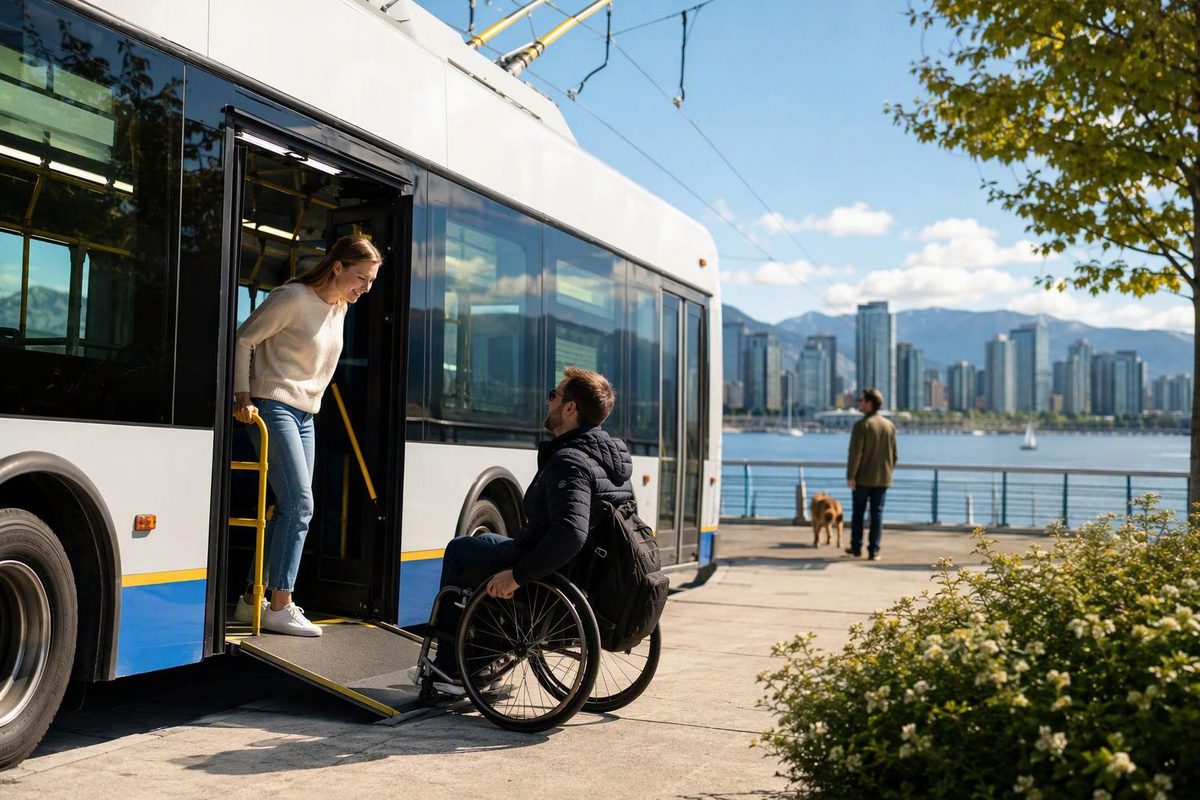
Vancouver’s new trolleybus improves accessibility with a fully low-floor interior, illuminated Braille-embossed stop buttons, clearly marked red priority seats and an additional exit. The practical verdict is to plan around accessible stops and your boarding needs, not a guaranteed new vehicle. The new layout can make moving through the bus easier, but it does not establish whether a particular stop is suitable or whether your mobility aid can manoeuvre aboard.
TransLink announced a September 2026 service launch for the first vehicle. Its fleet-renewal page describes that planned timetable but does not confirm the actual launch or identify particular passenger departures. Replacement of the existing fleet is planned over several years, so the announcement does not mean every trolleybus has the new layout. TransLink fleet-renewal details
Choose your stop-check status, mobility-aid situation and need for the new layout; the tool shows what remains to resolve.
Check Your Trolleybus Trip
Check Stops And Mobility-Aid Fit
Check boarding, destination and transfer stops through TransLink’s Trip Planner or call 604-953-3333. Confirm your aid’s dimensions, combined weight and ability to manoeuvre aboard.
You are not relying on the new layout. Existing buses also have ramps and priority seating; request the ramp if needed.
Published Conventional-Bus Limits
| Measurement | Limit |
|---|---|
| Length | 122 cm (48 in.) |
| Width | 61 cm (24 in.) |
| Rider + aid weight | 273 kg (600 lb.) |
Include accessories. Some four-wheel scooters within these limits still have too wide a turning radius. An attendant is required if you need help entering or exiting.
The New Layout Improves Movement Inside The Bus
TransLink describes the new vehicle’s accessibility and comfort features in its new-trolleybus introduction. These changes address different parts of the journey: moving through the interior, finding a stop request, recognizing priority seating and leaving the vehicle.
| Feature | What Changes | What It Does Not Establish |
|---|---|---|
| Fully low-floor interior | Low floors extend from front to back. | Whether the roadside stop is accessible. |
| Illuminated, Braille-embossed stop buttons | Stop requests use identifiable buttons throughout the vehicle. | That every trolleybus has these buttons. |
| Red priority seats | Priority seating is easier to identify visually. | That a priority seat will be vacant. |
| Additional rear exit | The new 40-foot trolleybus has three doors. | Which door you should use with a mobility aid. |
| Air conditioning | TransLink’s first air-conditioned trolleybus adds climate control. | That an assigned bus will have it. |
The fully low-floor layout is the central interior change. It removes the need to negotiate a raised rear-floor section when moving through this vehicle. That is distinct from getting across the gap between the roadside and the bus: a rider who needs the ramp should still ask for it.
Treat the features as a description of the new vehicle, not a checklist that every bus on your journey must satisfy. During a multi-year replacement, the useful travel plan is one that can accommodate the existing accessible fleet rather than depend entirely on this particular interior.
Red Requests A Stop; Green Operates The Exit
The new trolleybus replaces the familiar yellow pull cord with “Stop” buttons throughout the vehicle. TransLink describes those buttons as illuminated and Braille-embossed, providing visual and tactile ways to identify them.
There are two different functions to recognize: the red button requests a stop, while a green button on the door is used to exit. A stop request and an exit-door action are not interchangeable. Follow the instructions at the door and ask the operator if you are unsure which control to use. These functions are described in the fleet-renewal details linked above.
For a first ride, identify the stop-request control before you need to leave. If you are accustomed to reaching for a yellow cord, the change to buttons is worth anticipating rather than discovering at your destination.
The additional rear exit gives passengers another way out and is intended to help reduce congestion. It does not establish a new boarding procedure for wheelchair or scooter users. Do not interpret the presence of another door as permission to use it for ramp access; tell the operator what assistance or boarding arrangement you need.
Check The Boarding And Destination Stops Separately
A fully low-floor bus does not make every roadside stop accessible. TransLink says some stops are not properly set up for safe boarding and exiting with a mobility aid. The vehicle and the stop therefore need separate checks.
Before travelling, check both your boarding stop and your destination stop using TransLink’s Trip Planner, or call Customer Information at 604-953-3333. For a transfer, check each stop involved. These are TransLink’s instructions in its accessible-transit guidance.
Checking only where you start leaves the arrival unresolved. A stop that works for boarding does not establish that the stop where you intend to get off is suitable. Similarly, checking the destination on an outbound journey does not settle the boarding location for the return.
For a transfer, identify the actual locations where you will leave one bus and board the next. Treat both as part of the accessibility check, rather than assuming a connection shown in a journey plan establishes safe mobility-aid access at every stop.
The remaining street journey needs its own assessment. Stop accessibility does not describe the entire path between the bus and a shop, accommodation or waterfront destination. Keep that path separate in your planning so a suitable bus stop is not mistaken for confirmation of the whole route.
Mobility-Aid Limits Apply To Conventional Buses
TransLink publishes the following limits for wheelchairs and scooters on conventional buses. They are not presented as new allowances created by the trolleybus redesign.
| Measurement | Published Limit | Include In Your Check |
|---|---|---|
| Length | 122 cm (48 in.) | Accessories such as baskets and bumpers. |
| Width | 61 cm (24 in.) | Accessories such as baskets and bumpers. |
| Combined weight | 273 kg (600 lb.) | Rider and mobility aid together. |
Use the complete travel configuration when checking dimensions. Measuring only the main frame can leave out a basket or bumper that affects the space the aid occupies. For weight, the published limit is the combined rider-and-aid weight, not the aid’s weight alone.
The limits are a screening check, not a guarantee of manoeuvrability. TransLink says some four-wheel scooters within these dimensions still have too wide a turning radius. Riders may need to make a U-turn inside the bus. An aid can therefore satisfy the listed measurements without establishing that it can make the required movement aboard.
If you do not know a measurement or combined weight, leave it unresolved rather than treating it as zero or assuming it falls within the limit. Ask Customer Information about the situation before relying on conventional-bus travel. If an aid exceeds a published limit, the new low-floor layout is not evidence that the limit has changed.
These dimensions, weight limits and turning caveats come from the accessible-transit guidance linked above. That guidance does not provide a separate new-trolleybus limit or a turning-radius figure to calculate a guaranteed fit.
Ask For The Ramp And Distinguish Assistance Needs
At the stop, let the operator know if you need the ramp. Neither the low floor nor the additional exit removes that need. The interior design and the boarding arrangement solve different parts of access.
TransLink requires an attendant if you need help entering or exiting. It also says operators may assist wheelchair customers with securement once aboard. Those statements should not be collapsed into a general promise that an operator will provide every kind of assistance.
For planning purposes, separate help getting onto or off the vehicle from help with securement inside it. If entering or exiting requires assistance, arrange the attendant required by TransLink’s guidance rather than counting on onboard securement assistance to cover that stage.
The red priority seats are useful for recognizing the designated seating, but their colour cannot establish availability on a particular trip. Likewise, a fully low-floor interior does not answer whether you will need boarding assistance. Base those decisions on your own needs and the published guidance, not on the appearance of the vehicle.
Existing Buses Remain Part Of Accessible Travel
You do not need to seek out the new trolleybus simply to use accessible transit. Existing buses also have accessibility features, including ramps and priority seating, as described in TransLink’s accessibility overview.
The meaningful distinction is between needing accessible boarding and needing a particular new feature. A ramp requirement can be planned around the accessible fleet and suitable stops. A requirement for the fully low-floor interior, by contrast, depends on receiving the new vehicle—and the fleet-renewal information does not identify departures that guarantee it.
The same distinction applies to air conditioning. It is a stated feature of the new trolleybus, not a basis for assuming that every trolleybus trip will offer climate control. If that feature affects whether you can make the journey, do not leave vehicle uncertainty out of the plan.
Avoid treating an older trolleybus as automatically unsuitable merely because it lacks the new design. Equally, do not treat the new trolleybus as automatically suitable because it has more accessible-looking features. Stop suitability, mobility-aid fit and assistance needs remain the deciding checks.
A Transfer Adds More Locations To Verify
For a neighbourhood-to-neighbourhood journey, a direct trip reduces the number of boarding and exiting locations you need to assess. It does not remove the need to check the start and finish, but it avoids adding a transfer whose individual stops are still unresolved.
If a transfer is necessary, keep the accessibility questions attached to each leg. Confirm where you leave the first vehicle, where you board the next and whether the connection between those locations works for you. Do not let the new trolleybus’s interior features distract from a transfer that is the more uncertain part of the journey.
Apply the same approach to a return trip. The return boarding location and the final stop deserve their own check; they should not be inferred from an accessible outbound stop. This is especially useful when organizing a visitor day around more than one neighbourhood.
Our car-free Vancouver planning guide helps organize district-to-district journeys. Use it to shape the day, then resolve the specific stop and boarding questions through TransLink. A neighbourhood itinerary and an accessibility check serve different purposes.
Resolve These Questions Before Depending On The Upgrade
A workable plan has separate answers for the vehicle, the stops and the rider. The new trolleybus announcement answers what the new interior offers. It does not answer which passenger departure will provide that interior, whether your chosen stops are accessible or whether your aid can turn aboard.
If all relevant stops have been checked, your mobility aid meets the published limits and your assistance arrangements are resolved, the remaining new-vehicle question is whether you specifically need its upgraded layout. Meeting the size and weight limits still leaves the turning-radius caveat; it is not a boarding guarantee.
If any of those checks remain unknown, name the uncertainty when contacting Customer Information. A question about a particular boarding stop is different from a question about scooter manoeuvrability or securing a wheelchair. Giving the actual unresolved issue makes the conversation more useful than asking whether the new bus is simply “accessible.”
The strongest plan does not assume the upgrade solves every part of the trip. It uses the new features when available, checks the locations where boarding and exiting happen, and avoids relying on an unconfirmed vehicle assignment.