
Is This Seedless Boxelder the Right Shade Tree for Your Yard?
Seller estimates reflect different climates, ages, irrigation and regional observations. Reserve space for a broad crown, not the smallest figure.
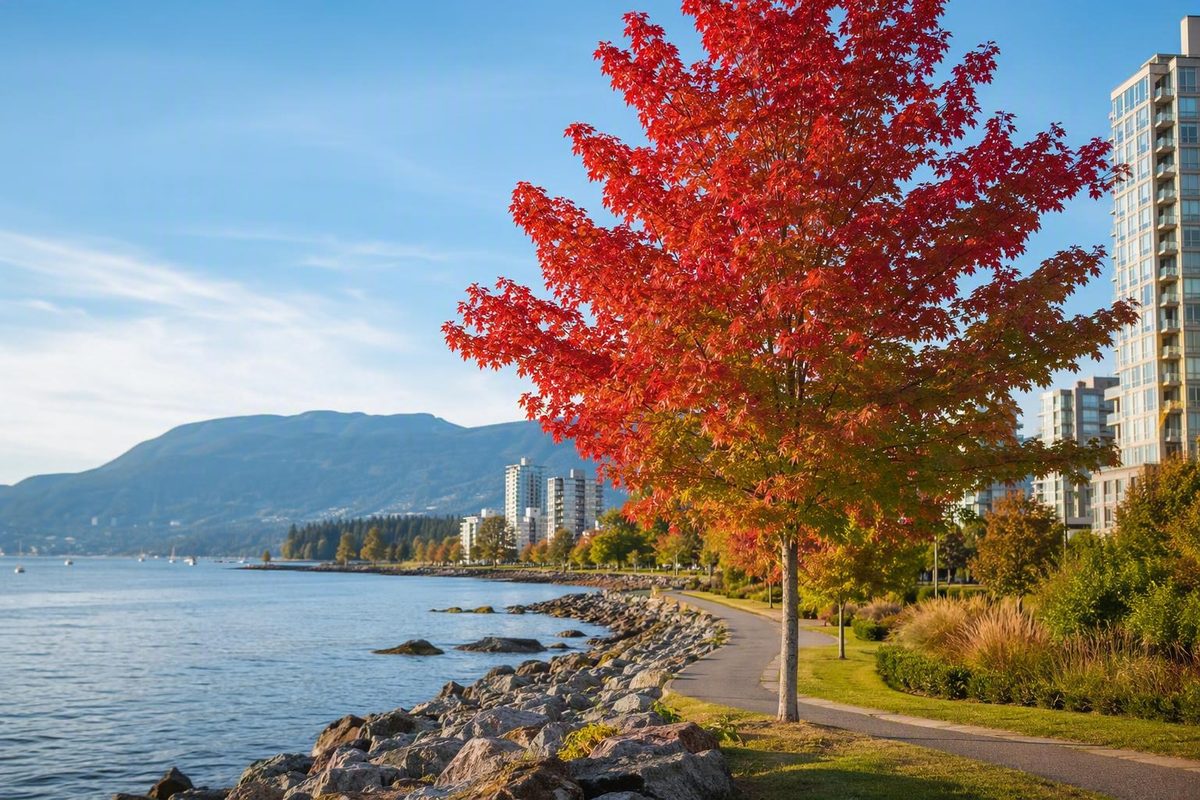
The Sensation maple tree is often promoted as a colorful, seedless, relatively fast-growing solution for difficult landscapes. There is substance behind that description, particularly in cold and dry parts of the Intermountain West. There are also enough uncertainties to make careful site evaluation important.
This tree is a cultivated boxelder rather than a compact ornamental maple. Its strongest attributes are a rounded shade canopy, warm fall color, cold hardiness, and freedom from the heavy seed crop produced by female boxelders. Its limitations include inconsistent mature-size estimates, possible basal suckering, and uncertainty about whether improved branching fully overcomes the structural weaknesses associated with boxelder wood.
The practical question is not whether Acer negundo ‘Sensation’ is universally good or bad. It is whether its mature size, regional adaptability, irrigation needs, and maintenance tradeoffs fit your particular yard.
What is a Sensation maple tree?
Sensation maple is the cultivar Acer negundo ‘Sensation’. The species Acer negundo is commonly called boxelder maple, box elder, or Manitoba maple. ‘Sensation’ is the cultivar name, not a separate maple species.
That distinction matters when shopping. This is not a Japanese maple, Tatarian maple, or a hybrid between those groups. It is a selected form of boxelder valued for its seedlessness, rounded habit, and fall color.
‘Sensation’ is propagated as a male clone. Commercially produced trees should therefore preserve the selected tree’s defining characteristics rather than represent random seedlings of the species. Its cultivar profile lists Acer negundo ‘Sensation’ as the botanical identity.
The difference between species and cultivar also affects claims about native status. Boxelder may be native within a particular region, but ‘Sensation’ is a cultivated clone selected from that species. Homeowners seeking locally sourced native plants should not consider those ideas interchangeable.
The cultivar’s reported history is unusually specific. J. Frank Schmidt & Son says Warren Carnefix of Fruitland Nursery discovered the original tree growing near an abandoned Idaho homestead. The same profile describes its seedlessness and more controlled growth as traits of the selected tree. That history supports describing ‘Sensation’ as a discovered and propagated selection; it does not establish that the tree was intentionally bred to meet a predetermined set of landscape objectives.
Evidence about the cultivar falls into three broad categories:
- Established identity traits: its botanical identity, male clonal status, and lack of seed production.
- General extension guidance: broader information about boxelder characteristics, maple irrigation, pruning, and regional concerns.
- Commercial observations: nursery descriptions of mature size, growth, crown shape, fall color, structural improvement, and difficult-site performance.
Nursery observations can be useful, especially when several regional sellers report similar characteristics. They are not equivalent to independent, long-term trials across multiple climates. Sensation is best understood as an ornamental, seedless selection of boxelder—not as a completely different kind of maple or a flawless redesign of the species.
Size, shape, growth rate, and seasonal appearance
For residential planning, a practical working range is approximately 25–35 feet tall and 20–35 feet wide. The lower end comes from listings such as Pine Lane Nursery’s estimate of 25–30 feet high and 20–25 feet wide. That nursery also classifies the tree as an upright-rounded shade tree.
At the upper end of the main cluster, CreekSide Tree Nursery lists 30–35 feet of height and 25–35 feet of spread. Its listing describes a rounded, moderate-growing deciduous shade tree. Taken together, these dimensions provide a useful planning range, but not a guaranteed stopping point.
One Wyoming seller forecasts a substantially larger mature tree: 40–50 feet tall and 30–40 feet wide. Those larger dimensions appear in the Wyoming Plant Company listing. Because sellers may base “mature” size on different climates, ages, irrigation levels, and regional observations, it is safer to reserve space for a broad crown than to design around the smallest published figure.
Crown and landscape presence
Young Sensation maples are generally described as upright-rounded. It should be considered a medium-sized deciduous shade tree rather than a compact ornamental maple.
That distinction has practical consequences. The tree can provide meaningful summer shade, but it may eventually dominate a small front yard. It is a poor fit where the crown must remain narrow, where branches would grow directly into a building, or where overhead utility lines limit available height.
Leaves and fall color
Because Sensation is a boxelder, its foliage differs from the familiar single, palm-shaped leaves associated with many maples. It has compound leaves made up of multiple leaflets.
Summer foliage is generally described as medium green. Some commercial profiles report copper-red emerging leaves that become green as they mature. Autumn color is most often described as red or orange-red, although orange, pink, and yellow tones may also appear.
Fall color should be treated as potential rather than a guarantee. A brilliant red display may occur, but the same tree can look different from one year or site to another.
How fast does it grow?
Published descriptions range from moderate to fast. One Wyoming retailer claims that annual extension can sometimes approach three feet, although this is a commercial estimate rather than a guaranteed rate. The same seller characterizes the tree as exceptionally fast-growing under its regional conditions.
Other listings classify the cultivar as moderate-growing while describing it as more controlled or uniform than ordinary boxelder. These statements are not necessarily contradictory. A tree can produce shade relatively quickly while still growing in a more orderly way than the species from which it was selected.
The most defensible practical description is moderate to fast growth, with a reportedly more controlled crown than ordinary boxelder. Do not use a fixed annual growth figure to calculate exactly when the canopy will reach a desired size.
Hardiness, sunlight, soil, and climate fit
Zone 4 is the most consistent cold-hardiness baseline across the available descriptions, but published ranges are not uniform. Some listings are more specific or more expansive.
For example, one Idaho nursery lists the tree for Zones 3–6. Its profile also recommends full sun and gives a mature size of 30–35 feet by 20–25 feet.
Another gardening profile gives a broader Zones 4–8 range while separately mentioning a Zone 4b rating. Those inconsistencies illustrate why the broadest online zone range should not be treated as conclusive.
Full sun is the best-supported exposure. Some nursery sources also allow partial shade or semi-shade, but a sunny location is the more conservative choice when the goals include a full canopy and strong fall color.
Western nurseries commonly promote Sensation for difficult landscapes, including alkaline or otherwise challenging soils and sites that may be wet or dry. Pine Lane Nursery, for example, lists both low and moderate water categories and describes the tree as adaptable to wet or dry sites. Those are regional commercial observations, not proof of universal soil or moisture tolerance.
Utah State University Extension reports that boxelders generally tolerate the heat and drought common in the Intermountain West. That broader species characteristic helps explain the cultivar’s popularity in parts of Colorado, Idaho, Utah, and Wyoming. It does not prove that every Sensation maple will tolerate every combination of drought, compaction, poor drainage, wind, elevation, or soil chemistry.
A winter hardiness rating also addresses only part of climate compatibility. It does not establish performance in:
- Sustained summer humidity
- Substantially hotter low-desert conditions
- Mild coastal climates
- Prolonged soil saturation
- Restricted or compacted street-tree pits
- Sites affected by stresses not examined in the available material
There is not enough evidence here to claim proven performance in Vancouver or coastal British Columbia. Homeowners outside the cold, dry western regions most strongly represented in the available sources should ask a local extension service, municipal arborist, or established nursery whether the cultivar has performed well nearby.
Before planting, check four points:
- Does the local winter minimum fit the tree’s reported hardiness?
- Has the cultivar—not merely the boxelder species—grown successfully in the area?
- Can the site provide adequate sunlight and establishment irrigation?
- Do local soil drainage, summer heat, humidity, and pH match conditions where the cultivar is known to perform?
Broad adaptability is a potential advantage, but it is not a substitute for local experience.
Planting, watering, and establishment care
A drought-tolerant reputation does not mean a newly planted Sensation maple can establish without regular water. The tree needs time and suitable moisture to extend roots into the surrounding soil.
Utah State University Extension’s general maple guidance recommends watering newly planted trees regularly and wetting the soil to a depth of approximately 12 inches (Maples in the Landscape, Utah State University Extension). That is regional guidance for maples, not a cultivar-specific schedule for every soil and climate.
Water the root zone, not just the trunk
A brief splash that darkens only the top layer does not show that the active root zone has been wetted.
Avoid following a universal calendar such as “once a week” without checking conditions. Irrigation frequency should reflect:
- Rainfall
- Temperature and wind
- Soil texture
- Drainage
- Root-ball moisture
- Seasonal growth
- Local watering restrictions
Check moisture in and immediately outside the root ball instead of relying only on surface appearance.
One Wyoming retailer assigns the cultivar an intermittent deep-watering category in which the upper several inches of soil are allowed to dry between irrigations. That may be useful regional guidance for established trees, but it should not override direct moisture checks or the closer attention needed during establishment.
Once established, the tree may need supplemental water less frequently, particularly in regions where boxelder’s general drought tolerance is expressed. Prolonged dry periods can still justify irrigation. Drought tolerance means a tree may cope with some moisture deficit better than less-adapted choices; it does not mean water has no effect on health, canopy density, or growth.
Plan for the mature tree before digging
Choose the location according to the future canopy rather than the size of the container or trunk at purchase. Even the lower published dimensions describe a substantial shade tree.
Avoid obvious conflicts with:
- Buildings and rooflines
- Neighboring properties
- Overhead utility lines
- Narrow planting strips
- Access routes and visibility areas
- Sites that cannot accommodate a broad canopy
The available evidence does not establish that Sensation’s roots are safe beside foundations, sidewalks, driveways, drains, or sewer lines. It also does not support one universal setback from infrastructure. Soil conditions, available rooting volume, irrigation, construction, and local standards all matter.
For exact spacing from pavement, foundations, property boundaries, and utilities, use local arboricultural or municipal guidance. If the only available location is directly beneath utility lines or inside a highly confined root zone, choose a tree whose documented mature form fits that space.
Seeds, boxelder bugs, and seasonal litter
One of Sensation’s clearest advantages over female boxelder trees is its male clonal status. It does not produce the abundant winged seeds associated with seed-bearing boxelders.
That means less seed litter and fewer unwanted seedlings attributable to the planted tree. It does not eliminate leaf drop, twig litter, pruning needs, or other routine aspects of tree ownership.
Seedlessness also helps explain the boxelder-bug claim. Boxelder bugs feed on developing seeds, so a male tree without a seed crop may be less attractive than a female boxelder. Utah State University Extension describes this as reduced attraction rather than immunity. Its boxelder guidance connects the absence of seeds with lower attraction to the tree.
Categorical promises of “no boxelder bugs” go beyond the evidence. Insects can move among neighboring trees, yards, and sheltered areas.
Planting this cultivar therefore cannot guarantee:
- No boxelder bugs on the tree
- No insects elsewhere in the yard
- No seasonal movement toward a building
- Resistance to every other insect or disease
- A maintenance-free landscape
The available material does not provide a complete, cultivar-specific disease and pest profile. Seedlessness is a meaningful benefit, but it should not be interpreted as broad pest resistance.
Branch structure, pruning, suckers, and storm risk
Several nursery sources describe Sensation as having better branch angles, stronger wood, improved branching, or a more uniform crown than ordinary boxelder. These comparative descriptions suggest that the cultivar may be easier to develop into a serviceable shade-tree form.
The evidence remains limited, however. The commercial profiles do not cite independent structural trials or quantify long-term branch failure. “Improved” should therefore be read as potentially better than ordinary boxelder, not as proof of non-brittle wood or storm resistance.
Utah State University Extension warns that boxelder wood may be brittle. Its guidance does not state that ‘Sensation’ eliminates this broader boxelder concern. That limitation matters when placing the tree where branch failure would have serious consequences.
Early structural training
Select a nursery tree with a sound main trunk and reasonably distributed branches. Gradual early training can address competing leaders, damaged growth, and weakly positioned branches before they become large. The available evidence does not support a rigid, cultivar-specific pruning calendar.
One nursery reports that basal suckering can occur while the tree is young. If the goal is a single-trunk shade tree, remove unwanted suckers while they are still small rather than repeatedly allowing them to become large.
Maples generally require relatively little pruning after a sound early structure has been established. Individual needs will still depend on branch development, site constraints, and damage. Because cultivar-specific evidence about lifespan, quantified wood strength, and long-term breakage rates is unavailable, owners should not assume that the cultivar name removes the need for normal structural care. Where brittle wood or branch condition creates concern, seek local professional assessment rather than relying on promotional claims of improved strength.
Pros, cons, and how to decide before buying
Sensation maple occupies a useful but specific landscape niche. It combines several clear benefits with enough uncertainty to rule out a blanket recommendation.
Potential advantages
- No seed crop: The male clone avoids the abundant seeds produced by female boxelders.
- Reduced seed litter: This can be helpful around lawns, planting beds, and outdoor living areas.
- Potentially lower boxelder-bug attraction: The absence of developing seeds may make it less attractive than a female tree, although not insect-proof.
- Substantial shade: Its rounded or spreading crown can provide useful summer cover.
- Cold hardiness: The available listings consistently place it among cold-hardy landscape trees.
- Warm fall color: Red and orange-red predominate, with possible pink, orange, or yellow variation.
- Relatively prompt canopy development: Its practical growth rate is best described as moderate to fast.
- Reportedly more controlled form: Multiple commercial profiles describe a more uniform habit than ordinary boxelder.
- Possible regional adaptability: Western nurseries report success in dry, cold, alkaline, or otherwise challenging landscapes.
The final two benefits come mainly from commercial observations. They are good reasons to investigate the tree locally, not universal performance guarantees.
Potential disadvantages
- Uncertain final size: Published estimates differ substantially.
- Broad canopy: This is a shade tree, not a compact ornamental.
- Conflicting growth labels: Commercial sources describe it as moderate, fast, or exceptionally fast.
- Possible basal suckering: Young trees may require sucker removal.
- Residual structural concerns: Improved branching does not prove that boxelder’s brittle-wood issue has disappeared.
- Variable fall color: A brilliant red display cannot be guaranteed every year.
- Establishment irrigation: Drought tolerance does not remove the need for regular early watering.
- Limited independent cultivar evidence: Long-term size, lifespan, structural performance, and adaptability across climates remain insufficiently documented.
Who is most likely to appreciate it?
Sensation may appeal to someone seeking a medium-sized, relatively quick shade tree for a cold or dry western landscape. It is especially attractive where seed litter is a major objection to ordinary boxelder and where there is enough room for a rounded canopy.
The best candidate will also accept the need for establishment irrigation, possible sucker removal, early structural training, and some uncertainty about ultimate size and regional performance.
When should you choose something else?
Reconsider Sensation if you require:
- Guaranteed compact dimensions
- A tree suitable beneath overhead utilities
- Proven non-brittle wood
- A maintenance-free tree
- Documented performance in a climate not covered by the evidence
- A tree for a highly confined planting pit
- Certainty about roots near foundations, pavement, or underground services
Those requirements demand evidence the available cultivar descriptions do not provide.
What to verify at the nursery
Before buying, check the following:
- Botanical label: It should read Acer negundo ‘Sensation’, not merely “boxelder” or “Sensation maple.”
- Current sale size: Ask for the actual container size or trunk caliper instead of relying on a generic online image.
- Visible structure: Look for a sound trunk and reasonably distributed branches without obvious major damage.
- Basal growth: Check for suckers and ask how they have been managed.
- Local experience: Ask where established specimens can be seen and how they have handled local conditions.
- Expected local size: Request dimensions based on nearby trees rather than relying only on a national database.
- Warranty: Confirm what is covered and whether watering or planting records are required.
- Availability and delivery: Verify current stock, sale size, delivery area, and any shipping restrictions.
Retail prices, inventory, container sizes, and delivery policies are temporary and location-specific. Confirm them directly before making a planting plan.
Use five factors for the final decision:
- Mature space: Can the yard accommodate a broad shade canopy, including the possibility that the tree exceeds common estimates?
- Climate fit: Is there credible evidence that the cultivar performs well locally?
- Water: Can you irrigate it during establishment and extended dry periods?
- Maintenance tolerance: Are you willing to manage suckers and early branch structure?
- Local advice: Can a nursery, extension professional, or municipal arborist address site-specific uncertainty?
Frequently asked questions
Is a Sensation maple the same tree as a boxelder?
It is a cultivated form of boxelder. Its botanical name is Acer negundo ‘Sensation’, and boxelder is also known as Manitoba maple. ‘Sensation’ identifies the selected male clone rather than a separate species.
The cultivar differs from a typical seed-grown boxelder because it does not produce seeds and is commercially described as having a more rounded, controlled crown. Those traits do not make it botanically separate from boxelder or prove that every boxelder weakness has been eliminated.
How big does a Sensation maple tree get?
Plan for approximately 25–35 feet in height and 20–35 feet in width, while allowing for the possibility of a larger tree. An Idaho listing gives 30–35 feet of height and 20–25 feet of spread, which falls within the main cluster of published estimates. Its dimensions should still be treated as planning guidance rather than an exact limit.
At least one regional seller predicts a substantially larger mature tree. Do not place Sensation where success depends on it remaining at the smallest advertised dimensions.
Does a seedless Sensation maple attract boxelder bugs?
It may be less attractive than a female, seed-producing boxelder because it does not provide developing seeds. That is a relative reduction, not immunity.
A male Sensation maple cannot guarantee a bug-free tree, yard, or home, and seedlessness should not be interpreted as resistance to every insect or disease.
How fast does a Sensation maple grow?
Moderate to fast is the most useful practical description. Commercial listings vary, with some calling it moderate-growing and others reporting rapid extension under favorable regional conditions.
Descriptions of slower or more controlled growth generally compare the cultivar with ordinary boxelder. They do not necessarily mean that Sensation is slow by general landscape standards.
Is Sensation maple drought-tolerant?
The broader boxelder species tolerates the heat and drought characteristic of parts of the Intermountain West, and regional nurseries commonly promote Sensation for relatively dry or difficult sites. That makes post-establishment drought tolerance plausible in the areas where it is already grown successfully.
A new tree still requires regular, deep irrigation while its roots establish. Established trees may also need supplemental water during prolonged dry weather. Outside the Intermountain West, verify local performance before relying on regional drought-tolerance claims.
Final takeaway: Sensation is best understood as a seedless ornamental boxelder selection, not a flawless replacement for every other shade tree. Its fall color, lack of seeds, cold hardiness, and reportedly controlled crown make it worth considering, especially in parts of the Intermountain West. The decision should still account for a broad canopy, uncertain final dimensions, establishment watering, possible suckering, and the structural concerns associated with boxelder wood. Outside the regions represented by the evidence, confirm local performance before planting.